Ausbeulstation: The Professional Dent-Repair Workstation Changing Modern Body-Shop Repairs
From small parking dents to complex steel-panel damage, the right repair station can change how quickly—and how precisely—a body shop restores damaged sheet metal.

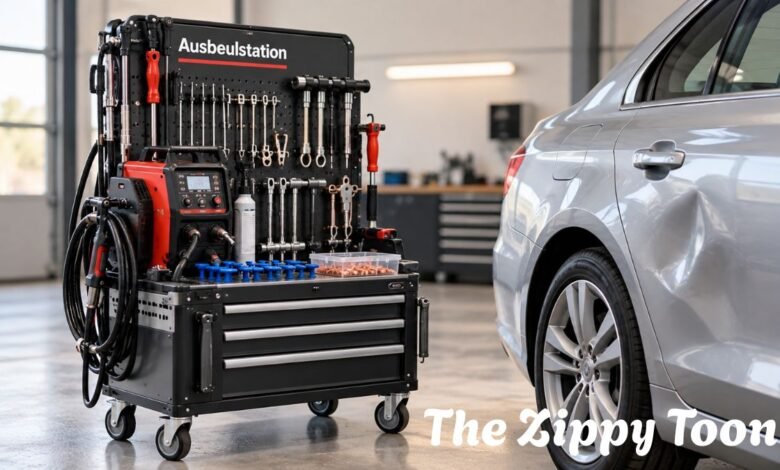
A dent that looks minor from the outside can become an expensive repair once stretched metal, damaged paint, restricted rear access, or a complex vehicle panel enters the equation. That is why professional body shops increasingly rely on organized dent-repair systems rather than a loose collection of hammers and pullers.
The German term Ausbeulstation is becoming more visible in searches for professional collision-repair equipment. It refers not simply to one dent-removal tool, but to an integrated workstation built around pulling, straightening, welding, glue-repair, and sheet-metal correction equipment.
Modern systems can handle steel and, when equipped appropriately, aluminum. Manufacturers including Telwin and KRAUSS TOOLS sell mobile repair stations that combine trolleys, pulling bars, hooks, spotters, electrodes, slide hammers, and other body-repair accessories.
An Ausbeulstation is a professional body-repair workstation designed to organize and support dent straightening, pulling and sheet-metal correction. Depending on its configuration, it can combine a welding spotter, pulling bridges, slide hammers, glue-repair equipment, and steel or aluminum tools in one mobile workshop system.
What an Ausbeulstation Actually Does to Damaged Body Panels
The word comes from the German verb ausbeulen, meaning to straighten or remove dents. In practical workshop use, an Ausbeulstation is a dent-repair or body-straightening station.
Its purpose is straightforward: give the technician controlled ways to return distorted sheet metal toward its correct shape.
The exact process varies considerably.
A shallow dent with intact paint may sometimes be repaired using paintless or glue-assisted methods. More substantial steel damage may require attaching temporary pulling points to the metal. Pulling bars, hooks, bridges or slide hammers can then apply controlled force to the damaged area.
KRAUSS TOOLS, for example, describes its Car Body Repair System 1500 as an inverter-based body-repair system capable of spot welding, attaching dent-pulling stars and loops, correcting hail-type dents, and heating or shrinking sheet metal with a carbon electrode.
That range of functions explains why the word station matters. It describes a coordinated working system rather than a single handheld device.
The Typical Repair Sequence
A professional repair commonly begins with inspection.
The technician evaluates the dent’s shape, panel material, paint condition, accessibility behind the panel, and the amount of metal stretching.
The repair method is then selected.
If glue pulling or conventional paintless dent repair is appropriate, technicians may avoid welding to the surface. When a spotter-based technique is required, technicians can temporarily weld attachment points to the damaged steel so they can apply controlled pulling force.
The panel is repeatedly measured and worked, rather than pulled outward in one aggressive movement.
Fine correction follows the larger movement.
High points may need controlled tapping, while stretched areas can require specialist shrinking or reshaping procedures. Any repair that compromises the coating or paint system will normally require the relevant refinishing process afterward.
Inside the Mobile Workstation: The Equipment That Matters
An Ausbeulstation can look like an ordinary industrial trolley at first glance, but professional versions may carry a surprisingly extensive collection of body-repair equipment.
Telwin describes its Combo Alu & Steel system as a mobile workshop solution designed for both aluminum and steel repairs. Its configuration includes a multi-lever kit, compact puller, traction bar, dent-pulling box, multi-hooks, and a dedicated pull system.
A typical professional setup may include:
- Body-repair spotter or dent-pulling power source
- Welding gun and grounding equipment
- Slide hammer
- Pulling bridge or traction bar
- Multi-hook pulling claws
- Dent-pulling washers, stars, pins or tabs
- Lever pullers
- Body hammers
- Glue-pulling tabs and adhesive equipment
- Suction or vacuum-assisted accessories
- Carbon or shrinking electrodes on compatible systems
- Tool drawers and storage panels
- Mobile trolley with workshop-grade castors
The contents vary significantly between entry-level stations and larger collision-repair systems.
Why the Trolley Is More Than Storage
Mobility may seem like a minor feature, yet it has practical value.
Instead of repeatedly walking between a damaged vehicle and a fixed tool cabinet, a technician can move the station beside the repair area. Telwin specifically describes several of its body-repair stations as wheeled systems intended to keep equipment accessible and improve movement within the work area.
For a busy workshop handling several vehicles, that organization can reduce unnecessary tool changes and interruptions.
It can also make missing accessories easier to notice before repair work begins.
Steel and Aluminum Demand Different Repair Thinking
One of the most important distinctions in modern collision repair is panel material.
Steel and aluminum cannot simply be treated as identical sheet metal.
Manufacturers therefore offer dedicated steel stations, aluminum stations, and combined systems. Telwin separately markets a Steel Station, Alu Station Deluxe and Combo Alu & Steel platform.
That separation is significant.
Different materials can require different attachment techniques, equipment settings and repair procedures. Professional shops also need to follow the vehicle manufacturer’s repair instructions for structural or material-sensitive components.
Steel Spotter Repairs
Steel repair stations frequently use resistance or spotter-based techniques.
A technician can attach washers, stars, pins, or similar pulling points to accessible exterior metal and then use pulling equipment to reshape the damaged area.
KRAUSS lists spot welding, butt welding, welded pulling stars and sheet-metal shrinking among the functions supported by its professional body-repair stations.
Aluminum Repair Stations
Aluminum requires suitable equipment and procedures.
Telwin’s Alu Station Deluxe is specifically presented as a complete body-shop system for aluminum repair, while its combined station accommodates equipment for both aluminum and steel work.
This distinction matters most when a workshop repairs modern vehicles made of multiple materials.
Select the correct repair technique based on the actual panel and the vehicle manufacturer’s repair information—not simply the tool closest at hand.
Ausbeulstation vs Paintless Dent Repair: The Difference Is Important
One common misconception is that every repair performed with an Ausbeulstation qualifies as Paintless Dent Repair, or PDR.
That is not necessarily true.
PDR is intended to reshape appropriate dents while preserving the existing paint finish. An Ausbeulstation, by contrast, is a broader workshop concept. It may contain PDR or glue-pulling equipment, but it may also contain welding and surface-working tools.
Telwin’s Smart Repair Trolley illustrates the overlap. The manufacturer describes it as suitable for steel and aluminum repairs and includes tools for both sheet-metal straightening and glue-based repair techniques.
A welding-based pulling operation therefore should not automatically be described as paintless.
If welding, grinding or coating removal becomes necessary, refinishing may also become part of the repair.
When Glue Pulling Makes Sense
Glue-assisted dent pulling attaches a temporary tab to the painted surface rather than welding a pulling point directly onto the panel.
For suitable damage, this can provide an external pulling method without initially removing the coating.
Telwin’s current smart-repair equipment combines glue-repair accessories with extractor hammers, suction components, heat-management tools and conventional sheet-metal equipment, demonstrating how modern stations increasingly support multiple repair strategies from one trolley.
The Workshop Economics Behind a Well-Equipped Dent Station
An Ausbeulstation represents more than a collection of repair tools.
Its commercial value comes from workflow.
Keeping pulling equipment, accessories, and consumables beside the vehicle can simplify repetitive body-repair tasks. A technician can switch between pullers, hooks and finishing tools without rebuilding the working area each time.
The potential economic benefit is particularly relevant when a damaged panel can be repaired correctly rather than replaced.
However, repairability should always be determined by damage severity, panel construction, and manufacturer repair procedures. A repair station does not justify saving a component that should instead be replaced.
Large professional systems can also represent a significant capital purchase.
For example, KRAUSS TOOLS currently lists different body-repair systems with substantially different equipment levels, weights, and electrical specifications. Its System 1500 is listed at 42 kg, the System 3200 at 49 kg, while the larger System 4200 configuration is listed at 225 kg and includes several pulling bridges and a considerably larger accessory package.
That scale difference is more useful to understand than simply comparing product names.
What to Check Before Buying an Ausbeulstation
Workshop owners should first identify what kind of repairs the station will actually perform.
A shop specializing mainly in small cosmetic dents has different requirements from a collision center carrying out extensive steel-panel repairs.
1. Supported Panel Materials
Determine whether the system is intended for steel, aluminum, or both.
2. Available Electrical Supply
High-output equipment may require electrical service that is not available at every workshop.
The KRAUSS System 3200, for instance, specifies a 400 V two-phase supply and a 32 A slow-blow protection requirement.
3. Included Pulling Hardware
Compare the actual contents, not just the number of accessories.
Pulling bridges, multihooks, slide hammers and lever systems may have a greater effect on daily usability than dozens of minor consumables.
4. Workshop Mobility
Check trolley dimensions, castor design, cable management and available storage.
The station should fit beside a vehicle without creating an obstacle in the repair bay.
5. Consumables and Replacement Accessories
Washers, electrodes, glue tabs, pins, and other consumables need to remain readily available after purchase.
6. Training and Repair Information
Powerful equipment does not substitute for repair knowledge.
Technicians must understand metal behavior, heat control, pulling direction, surface protection, and manufacturer-specific repair limitations.
The Fast Answer File
- Meaning: Ausbeulstation means a professional dent/body-straightening station.
- Primary environment: Collision-repair and automotive body shops.
- Typical materials: Steel, aluminum, or both, depending on equipment.
- Common tools: Spotter, slide hammer, pulling bridge, hooks, dent tabs and body hammers.
- Mobility: Many systems are installed on wheeled workshop trolleys.
- PDR compatibility: Some stations support glue-based or paintless techniques, but not every Ausbeulstation repair is paintless.
- Main advantage: Multiple dent-repair tools are organized into one movable work platform.
- Key limitation: Repair procedures must still match the vehicle material, damage, and manufacturer requirements.
FAQs.
What is an Ausbeulstation?
An Ausbeulstation is an integrated automotive dent-repair workstation used to straighten damaged body panels. Professional versions typically organize pulling tools, spotters, hooks, slide hammers, bridges, and other sheet-metal equipment on a mobile trolley so technicians can perform several repair operations from one organized platform.
Can an Ausbeulstation remove dents without repainting?
An Ausbeulstation can support paint-preserving dent repair when the damage and chosen technique allow it, particularly with appropriate glue-pulling or PDR methods. Spot-welded pulling, grinding or surface preparation can disturb the coating, however, so the term Ausbeulstation should not automatically be interpreted as paintless dent repair.
Can the same Ausbeulstation repair steel and aluminum?
A combined Ausbeulstation can support both steel and aluminum when specifically designed and equipped for those materials. Manufacturers also sell separate steel and aluminum stations because their repair processes and equipment requirements differ. Telwin, for example, markets dedicated and combined body-shop configurations.
What is a dent-repair spotter?
A body-repair spotter is equipment used to create controlled attachment or welding points on appropriate sheet metal so pulling tools can act on a damaged area. Professional systems may support washers, dent stars, pins, or related accessories, allowing technicians to pull damaged metal from the exterior.
Is an Ausbeulstation suitable for hail damage?
An Ausbeulstation can handle certain hail-related dents, depending on the panel, paint condition, and available equipment. KRAUSS specifically lists correcting hail-type dents among the applications for its Car Body Repair System 1500. Some shallow hail dents may instead be better suited to conventional paintless dent-repair techniques.
Is an Ausbeulstation only for professional mechanics?
A professional Ausbeulstation is primarily body-shop equipment because some configurations involve high-current welding, metal shrinking, pulling force, and specialized repair decisions. Operators need appropriate training, personal protective equipment, and knowledge of vehicle repair procedures. Manufacturer instructions should always take priority over generic dent-removal advice.
Why the Ausbeulstation Is Becoming a Complete Repair Platform
The most important development isn’t a single new hammer, puller, or welding attachment.
It is integration.
Current equipment shows how body repair is moving toward mobile systems that combine traditional sheet-metal correction with spotter technology, glue pulling, traction tools and organized consumable storage.
Telwin’s newer Smart Repair Trolley models, for example, integrate steel and aluminum straightening equipment with glue-repair accessories in one mobile workstation. At the same time, heavier systems from manufacturers such as KRAUSS combine spotter technology with multiple pulling mechanisms.
That makes Ausbeulstation a useful term for understanding modern dent repair: it is less about one machine and more about creating a controlled repair environment around the damaged panel.
For vehicle owners, the equipment itself is only part of the equation. A skilled technician still needs to determine whether the metal can be repaired safely, whether the original finish can be preserved, and whether replacement is more appropriate.
For body shops, however, a properly configured Ausbeulstation can put many of the essential tools for that decision—and the repair that follows—within arm’s reach.
Editorial Disclaimer
Product specifications, prices, accessories, and availability can change by market and manufacturer revision. This article explains the Ausbeulstation as professional automotive body-repair equipment and does not replace vehicle-manufacturer repair procedures, equipment manuals, technician training, or workplace safety requirements. Always verify the exact panel material, repair method, and equipment specification before performing collision repair.