x2VOL: How the Student Service-Hour Platform Works, What It Tracks, and What Changed in 2026
From verified volunteer hours to work-based learning and a new AI analysis feature, x2VOL is becoming more than a digital replacement for paper service logs.

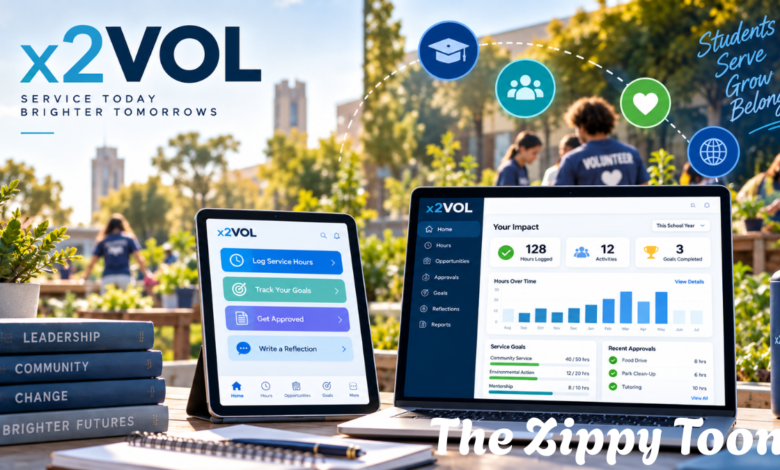
For students trying to meet community-service requirements, one missing verification can make or break their progress. For counselors overseeing hundreds or thousands of submissions, spreadsheets and paper forms can become an administrative burden. x2VOL brings records, approvals, goals, reflections, and opportunities into one system.
The platform is primarily used in K-12 education for community service, service learning, work-based learning, internships, and career and technical education-related experiences. Students can record what they did and how long they participated, while schools can review progress and approve or deny submitted hours.
The product also entered a new phase in September 2026. x2VOL announced impactIQ, an optional AI-powered feature intended to analyze students’ accumulated experiences and reflections for patterns involving skills, interests, social-emotional development, career readiness, and other outcomes.
BLUF: x2VOL is a digital K-12 service and experiential-learning management platform made by intelliVOL. It lets students record service or work-based learning experiences, obtain verification, track requirements, and maintain a history of their activities. Educators can also approve submissions, set goals, and generate reports.
x2VOL Turns Volunteer Hours Into Verifiable Student Records
The basic x2VOL workflow is straightforward: a student completes an eligible experience and records it digitally instead of relying on a handwritten service sheet.
Depending on the school’s configuration, submissions can include the organization, activity description, date, number of hours, verification contact, relevant goal, and a reflection on the experience.
Verification is a particularly important distinction. x2VOL is not simply a personal stopwatch or volunteer diary. Schools can use a verification-and-approval process, so submitted activity becomes part of an accountable student record.
One current school implementation illustrates the process. St. Pius X High School instructs students to enter the organization and service description, identify an adult verification contact, record the date and hours, select the applicable goal, and submit the entry for review.
That creates a basic chain:
Student experience → digital submission → third-party verification where required → school review → approved record
The individual school or program controls the exact rules. Using x2VOL does not automatically make every activity eligible for service credit.
Logging x2VOL Hours: What Usually Happens After the Work Is Done
A typical student submission begins inside the student’s x2VOL account.
1. Record the experience
The student identifies the activity or project and enters information such as the organization, dates, and hours.
2. Connect the activity to the correct requirement
Schools can create goals or categories, allowing an experience to be counted toward the appropriate program requirement rather than sitting as an unclassified entry.
3. Add supporting information
Depending on configuration and activity, students may write a reflection, provide verification information, or attach supporting files.
The mobile help documentation says students can attach photos or files to submissions, create recurring projects, and update verification-contact information.
4. Obtain verification and approval
Where verification is required, the designated contact confirms the student’s activity. School staff can subsequently review the submission under their own rules.
This is why students should not assume that entering five hours instantly means five approved hours. Submitted, verified, and approved hours can represent different stages of the process.
The x2VOL Mobile App Is Becoming a Bigger Part of the System.
x2VOL is available on both iOS and Android.
Its official support documentation says the mobile application is intended for student users and supports activities including logging and editing hours, signing up for opportunities, viewing goal progress, resending verification emails, managing verification contacts, adding attachments, and creating recurring projects.
The Android version is particularly notable because the current Google Play listing describes the application as newly available there and shows an update dated August 12, 2026. The listing categorizes x2VOL as an education app.
The iOS App Store currently lists the application as free and identifies IntelliVOL as the developer.
x2VOL’s own mobile-product page says the redesigned experience aims to let students handle the service workflow directly from their phones, including registration, logging hours, monitoring progress, and handling verification-related tasks.
x2VOL Mobile Snapshot
- Platform type: Education/service tracking
- Primary mobile audience: Students
- iOS availability: Yes
- Android availability: Yes
- Student app cost: Listed as free
- Core mobile use: Recording and managing service experiences
- Staff access: Staff and organization users can use the web platform through a browser
A 75-Million-Hour Milestone Shows the Scale Behind x2VOL
x2VOL says it was founded in 2009 and has accumulated a substantial archive of student service activity.
In November 2024, the company announced that its platform had passed 75 million approved hours of community service and work-based learning. Its current homepage likewise states that the platform has recorded more than 75 million approved service hours.
That figure is a company-reported metric, not an independently audited usage count. Still, it provides useful context for the database’s scale and the product’s longevity.
Another institutional milestone came in September 2024, when x2VOL announced approved-vendor status for New York City Public Schools for tracking and verifying service associated with the system’s Chancellor’s Service Endorsement.
Real-world school documentation also confirms continuing use. Prairie Grove High School, for example, tells students affected by Arkansas community-service graduation requirements that they must log applicable hours in x2VOL to receive credit.
These examples show why searches for “x2VOL” often come from students rather than technology buyers: for many users, the platform is connected directly to a school requirement.
impactIQ Pushes x2VOL Beyond Simple Hour Tracking
The most consequential recent change came on September 22, 2026, when x2VOL announced impactIQ.
Rather than merely counting completed hours, impactIQ analyzes information already recorded across a student’s x2VOL history, including experiences and reflections. According to the company’s announcement, the system is intended to identify patterns involving interests, emotional development, skills, and accomplishments.
The announced analysis areas include:
- Social-emotional learning
- Employability skills
- Career and work-based-learning development
- Corporal Works of Mercy for participating faith-based schools
That represents a meaningful product shift. A conventional service tracker answers “How many approved hours did this student complete?”
impactIQ attempts to answer a more complicated question:
“What do these experiences collectively suggest about what the student learned and developed?”
The company says impactIQ is off by default for existing customers and must be enabled by administrators. It also says information sent through the AI workflow is de-identified and is not used to train external models. Those statements come from x2VOL’s own launch materials and should be understood as vendor representations rather than an independent privacy audit.
For schools considering the feature, that makes local review of privacy policies, contractual terms, student-data requirements, and district AI policies particularly important.
Pricing Is Not Publicly Standardized on the Main x2VOL Site.
Anyone searching for an exact current x2VOL school price may notice an important omission: the main site does not publish a simple public institutional price table.
Instead, schools and districts are directed to request pricing.
That means the public website can’t state a reliable current school or district subscription price without guessing.
The student mobile application itself is listed as free, and x2VOL’s support documentation states that the iOS and Android student apps can be downloaded without in-app purchases.
Older references to legacy individual products or historical prices should therefore not automatically be treated as x2VOL’s current institutional cost.
Where x2VOL Fits in a Student’s Academic Record
One of x2VOL’s longstanding concepts is the Official Service Transcript, which is intended to give students a documented history of service experiences rather than leaving those records scattered across paper certificates or individual organizations.
The current x2VOL homepage says students can access their service history and send an Official Service Transcript to colleges.
That should not be confused with a conventional academic transcript containing course grades and GPA. It focuses specifically on service activity.
For students, a centralized history can help them recall multi-year participation for scholarship applications, college applications, resumes, or interviews. The value, however, depends on the receiving institution’s policies; possessing an x2VOL record does not guarantee that a college, scholarship provider, or employer will give the activities any particular weight.
The Bigger Shift: Schools Are Recording More Than Classroom Performance
x2VOL started from a practical problem: schools needed a more manageable way to collect and validate student service records.
Its current direction is broader.
Community service, internships, and work-based-learning experiences generate information that traditional grades rarely capture: where students spent their time, which causes attracted them, which professional environments they experienced, what responsibilities they handled, and what they said they learned.
x2VOL increasingly positions that information as structured educational data rather than administrative paperwork.
That shift also raises the stakes. The more a system moves from recording an experience to interpreting a student’s development, the more carefully schools need to distinguish documented facts from automated analysis.
For students, however, the core function remains much simpler: complete the experience, record it accurately, obtain the required verification, and make sure the school actually approves it.
FAQs.
What is x2VOL used for?
x2VOL is a digital platform for recording and managing student service and experiential-learning activities. Schools use it for community service, service learning, work-based learning, and CTE-related programs. Students can submit experiences and monitor requirements, while educators can review hours and generate progress reports.
How do I log service hours in x2VOL?
Logging x2VOL hours generally requires entering the activity, organization, date, duration, and verification information before submitting the experience. The exact steps and approval rules can vary by school. Students should follow their school’s x2VOL instructions because schools configure categories, reflection requirements, and verification procedures locally.
Does entering hours in x2VOL mean they are automatically approved?
No. A submitted x2VOL entry is not necessarily an approved service record. Schools can require verification by an activity supervisor and subsequent approval by authorized school staff. Students should check the status of their submissions rather than assuming that every entered hour has already been credited.
Is there an x2VOL app?
Yes. x2VOL has student applications for iOS and Android. Current documentation says students can log hours, edit entries, sign up for opportunities, monitor goals, manage verification contacts, and attach supporting files from the mobile application.
Is x2VOL free?
The x2VOL student mobile app is currently offered free, but institutional x2VOL pricing is not publicly listed as a single standard price on the company’s main website. Schools and districts are directed to request pricing, so subscription costs may depend on the implementation.
What is x2VOL impactIQ?
impactIQ is an optional AI-powered x2VOL feature announced on September 22, 2026. It analyzes accumulated student experiences and reflections to surface patterns involving skills, growth, interests, and impact. The company says administrators control whether it is enabled and that its AI workflow uses de-identified data.