Orianne Cevey: The Untold Story Behind Phil Collins’ Divorce, Their Second Chance and a $20 Million Legal Battle
From building a jewelry business in Switzerland to a headline-making reconciliation with Phil Collins, Orianne Cevey's life reveals a complicated story of ambition, family, extraordinary wealth, and a relationship that couldn't survive its second beginning.

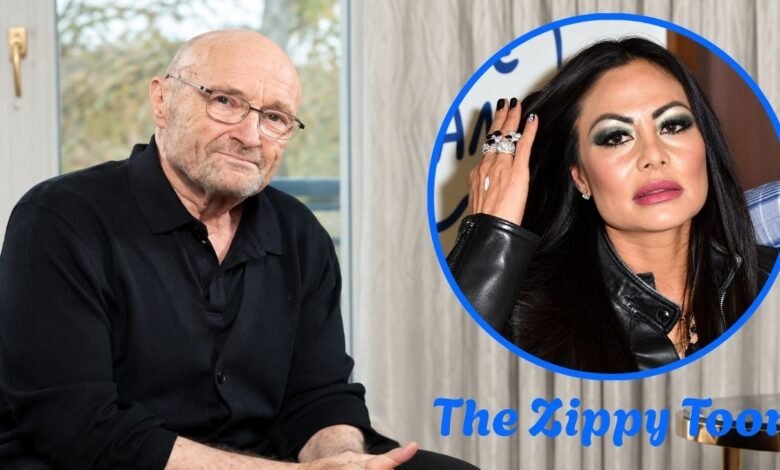
Orianne Cevey once appeared to have found her way back to the man she had divorced in one of Britain’s most expensive celebrity separations. After years apart, she and Phil Collins reunited, shared a home in Miami, and spoke publicly about possibly marrying again. What followed wasn’t another wedding, but a bitter dispute over a waterfront mansion and millions of dollars.
The story has remained relevant well beyond the courtroom. A 2023 luxury auction brought their shared possessions back into public view, while Cevey’s Father’s Day tribute to Collins in 2024 offered a striking contrast to their earlier legal confrontation. Their history is no longer simply a celebrity divorce story. It raises questions about what remains after a marriage, a reconciliation and years of financial disagreements.
Behind those headlines stands a Swiss businesswoman who created her own jewelry collections, helped establish a charitable foundation and rebuilt her professional life after a serious medical setback. Understanding Cevey requires looking at her independent career alongside her relationship with one of Britain’s most successful musicians.
Orianne Cevey is a Swiss jewelry designer, entrepreneur and former wife of Phil Collins. They married in 1999, divorced in 2008 and reunited around 2015–2016 without remarrying. Their final separation in 2020 led to a Miami property dispute, with Cevey’s approximately $20 million claim dismissed in August 2022.
Quick Bio
| Detail | Verified information |
|---|---|
| Full name | Orianne Cevey |
| Known professionally as | Orianne Collins |
| Nationality | Swiss |
| Profession | Jewellery designer and entrepreneur |
| Business ventures | OC Jewellery, OC Home and OC Spa |
| First husband | Phil Collins |
| Marriage to Collins | 1999–2008 |
| Second husband | Charles Fouad Mejjati |
| Third husband | Thomas Bates, married in 2020 |
| Children | Three sons, including Nicholas and Matthew Collins |
| Philanthropy | Little Dreams Foundation and Never Give Up Foundation |
| Reported divorce settlement | Approximately £25 million in 2008 |
| Current personal wealth | Not independently verified |
Before Phil Collins: A Swiss Entrepreneur With Plans of Her Own
Long before the divorce settlement and Miami property dispute, Cevey was developing professional ambitions in Switzerland. Her early interests were connected to fashion, design and business rather than entertainment.
In a December 2021 interview with entrepreneur Adam Mendler, she recalled wanting to become a fashion designer when she was just 12. Pursuing that ambition would have required traveling abroad, but family circumstances led her to stay in Switzerland and study commercial subjects and international management.
She subsequently worked in marketing and communications. The experience introduced her to commercial planning, client relationships and the practical demands of developing a business. In the same interview, she explained that she established her own public relations, events and communications agency in 1995, an important milestone that preceded her marriage to Collins.
Jewelry eventually became her principal creative outlet. Rather than immediately launching a large luxury brand, Cevey experimented with collections, collaborations and retail concepts. She said she used customer feedback and sales performance to decide which products drew interest.
Her business approach combined creative decisions with commercial observation. She was interested not only in designing pieces but also in understanding how customers discovered a brand and why they returned.
That distinction matters because her career is frequently reduced to a single biographical description: Phil Collins’ former wife. Her account shows she had entrepreneurial ambitions and professional experience outside her marriage.
A Meeting in Switzerland That Changed Two Lives
From a 1994 Tour to a 1999 Wedding
Cevey met Phil Collins in 1994 while working as a translator during his tour of Switzerland. Collins was already internationally famous for his work with Genesis and a highly successful solo recording career.
Their relationship developed despite their different professional circumstances and considerable age difference. By 1997, Collins was publicly discussing his life in Switzerland and his decision to live near Geneva. In an interview with The Washington Post, he said he relocated because he had fallen in love with a woman who lived there.
The couple married in Switzerland in July 1999. Their wedding drew substantial media attention, reflecting Collins’ celebrity status and public fascination with his personal life.
They subsequently became parents to two sons, Nicholas, commonly known as Nic, and Matthew, also spelled Mathew in some published records.
Family responsibilities gradually took on a greater place in Collins’ life. After decades of recording and touring, he increasingly spoke about wanting to be present for his younger children.
The £25 Million Divorce That Made Headlines
Their marriage began to unravel in 2006, when the couple separated after approximately seven years together. Their divorce was finalized in 2008.
The settlement was reportedly worth £25 million, widely described at the time as a record for a British celebrity divorce. Contemporary reporting also put the sum at about US$46.68 million, based on exchange rates at the time.
The figure made international headlines, but it tells only part of the story.
Collins spent much of his adult life working in music, while Cevey developed her professional interests and raised their children. Their separation also involved difficult decisions about family arrangements and where the children would live.
Following the divorce, Cevey married investment banker Charles Fouad Mejjati. The couple had a son together, and she settled in Miami.
Collins later described the emotional effects of living apart from his younger sons in interviews with The Guardian. His reflections indicated that living apart from his children was a particularly difficult consequence of the breakdown.
Why Their Unexpected Reconciliation Seemed Like a New Beginning
In 2015 and early 2016, reports began emerging that Collins and Cevey had renewed their relationship. For observers familiar with their expensive divorce, the reconciliation came as no surprise.
Collins confirmed their renewed closeness in a February 2016 interview with The Guardian, saying they had missed each other and come to believe their original separation had been a mistake.
Cevey offered a similar perspective in a February 2016 interview reported by Agence France-Presse and published by The Guardian. She described their separation as a mistake and acknowledged that their bond had remained strong because of their children.
The reconciliation also followed a difficult period in Cevey’s personal life. She said that complications following surgery in 2014 had left her severely paralyzed and requiring extensive rehabilitation.
During her recovery, Collins helped care for Nicholas and Matthew. Cevey subsequently credited his support with strengthening their relationship and helping her reconsider their separation.
For a time, the couple appeared to have restored their family life. Collins moved to Miami, where he could live with Cevey and spend more time with their sons.
They even publicly discussed another wedding. In 2016, Cevey said they hoped to marry again eventually.
The distinction is important: Collins and Cevey reconciled romantically but did not legally remarry. Their history included one marriage, one divorce, and a later reunion.
The renewed relationship lasted several years before ending in 2020.
The Miami Mansion Dispute: How a Second Separation Became a Courtroom Fight
The second breakdown became public in October 2020, when reports revealed that Cevey had married another man, Thomas Bates, in Las Vegas on August 2 that year.
The marriage complicated an already strained situation because Cevey had been living in a Miami Beach property owned through a company associated with Collins.
Collins’ lawyers subsequently filed legal proceedings seeking possession of the home. Court filings alleged that Cevey and Bates had refused to vacate the property and had restricted access to it.
Cevey disputed the accusations and asserted that she had a financial interest in the residence.
The $39.25 Million Property Sale
The home, situated at 5800 North Bay Road in Miami Beach, was a substantial waterfront estate. Collins bought it in 2015 for about $33 million.
After the possession dispute, the Miami Herald reported that the property sold in January 2021 for $39.25 million. The buyers were private equity businessman Orlando Bravo and his wife, Katy Bravo.
Cevey claimed Collins had promised her a share of the sale proceeds as part of their reconciliation and living arrangements. Collins denied making the agreement on which her claim relied.
The legal disagreement therefore extended beyond occupancy. It concerned whether a legally enforceable promise had entitled Cevey to part of the property’s value.
Why the $20 Million Claim Was Dismissed
In August 2022, Florida Judge Alan Fine dismissed Cevey’s approximately $20 million claim.
Contemporaneous reports in Vanity Fair, The Independent, and Page Six stated that the judge cited ten violations of court orders. The dismissal followed prolonged litigation and disputes over compliance with the court’s directions.
That outcome was significant, but its legal meaning should not be exaggerated. The reported dismissal ended that specific claim; it should not be described as a comprehensive judicial ruling on every allegation the former couple made about one another.
The court battle became the defining public event of their second separation. It also illustrated a recurring danger in high-value personal relationships: when expectations concerning shared homes and financial arrangements are contested, private disagreements can become expensive legal proceedings.
Jewelry, Philanthropy and the Health Crisis That Shaped Her Career
Cevey’s work as a designer offers a different perspective from the legal reporting that has dominated her public reputation.
She established OC Jewelry and expanded her commercial interests into home and spa-related collections. Her jewelry business included products at different price points, with collections for men and children as well as luxury customers.
In her 2021 interview with Adam Mendler, she described opening a Miami concept-store pop-up in 2017 and, the following year, a flagship OC Jewelry & Spa location in the Miami Design District.
Those developments followed her lengthy recovery from the complications of surgery in 2014. According to her account, she underwent intensive physical rehabilitation after being left unable to move normally.
Her recovery experience also influenced her charitable interests.
Little Dreams Foundation and Never Give Up
In February 2000, Cevey and Collins established the Little Dreams Foundation to help talented children pursue opportunities in music, sports, and the arts.
The organization supported young people through coaching, equipment, training and mentoring. Its activities later extended to Miami, where the couple participated in fundraising events and programs for aspiring performers.
Historical US nonprofit filings, available through ProPublica’s Nonprofit Explorer, identify both Phil Collins and Orianne Collins in the foundation’s leadership records.
Cevey was also associated with the Never Give Up Foundation, which she described as an initiative supporting people affected by spinal cord injuries.
These activities demonstrate that her public work has included charitable programs beyond jewelry retail.
Her professional history is not fully documented through public financial statements, and the current operating status of every business or foundation associated with her cannot be established from historical interviews alone. Nevertheless, interviews, nonprofit records and contemporary commercial reporting provide evidence of substantial activity outside her marriage.
The Financial Reality: What the Divorce Settlement Reveals—and What It Does Not
Money has been central to public interest in Cevey, but several widely repeated figures refer to different things.
The approximately £25 million divorce settlement was a reported historical payment in 2008. It does not establish how much money she has today.
The $39.25 million Miami property sale was the transaction price for a residence associated with Collins. It does not represent Cevey’s personal wealth or a payment made to her.
The approximately $20 million lawsuit represented a disputed claim, not an amount she was awarded.
Another major financial event came in December 2023, when Miami-based Kodner Galleries organized an auction featuring jewelry, furnishings and possessions associated with the former couple. Jewelry trade publication JCK reported that the planned sale included items with an aggregate value exceeding $4 million.
However, auction estimates and catalog valuations do not reflect personal net worth. Before drawing financial conclusions, actual sale proceeds, ownership interests, transaction expenses, and any outstanding liabilities would need to be established.
Orianne Cevey’s current net worth remains unverified. No sufficiently comprehensive, authoritative public financial disclosure establishes her current assets, debts, investment holdings, and ownership interests.
Assigning a precise current fortune based on her divorce settlement or luxury purchases would be speculative.
The Collins Family Connection That Outlasted the Relationship
Cevey and Collins remain linked through their children, even though their romantic relationship ended.
Their older son, Nicholas “Nic” Collins, pursued a professional music career and became a drummer. He performed alongside his father, including during the later stages of Collins’ touring career.
Their younger son, Matthew (Mathew) Collins, followed a different interest and pursued football. These contrasting career paths show how the children developed their own identities despite their father’s international reputation.
Cevey also has a third son from her marriage to Charles Fouad Mejjati.
Public information does not establish the complete private arrangements among family members following the legal dispute, and it would be inappropriate to infer personal relationships from isolated appearances or social media activity.
Still, one public gesture attracted attention in June 2024, when Cevey posted a Father’s Day message acknowledging Collins and his role as a father.
The South China Morning Post later covered the message as it revisited the couple’s turbulent history.
The post should not be interpreted as evidence of another reconciliation. It does, however, illustrate that public acknowledgment of a former spouse can continue even after serious disagreements.
Beyond the Headlines, a More Complicated Personal History. Orianne Cevey’s public life cannot be reduced to a divorce settlement, a famous former husband or an expensive court case. She built businesses, participated in charitable work, raised three sons and described recovering from a medical crisis that fundamentally changed her circumstances. At the same time, the documented financial and l
(FAQs)
Who is Orianne Cevey and what does she do?
Orianne Cevey is a Swiss jewelry designer, entrepreneur, and philanthropist best known publicly for her marriage to British musician Phil Collins. She founded and developed jewelry-related businesses under the OC name and supported charitable initiatives for young people and individuals affected by spinal injuries. Her professional career also includes earlier experience in marketing, communications and public relations.
Did Orianne Cevey marry Phil Collins twice?
No. Orianne Cevey and Phil Collins married once, in July 1999, and their divorce was finalized in 2008. They renewed their romantic relationship around 2015–2016 and publicly discussed possibly remarrying. However, they never completed a second legal marriage. Their reconciliation ended in 2020, followed by litigation over Collins’ Miami Beach residence.
How much money did Orianne Cevey receive from Phil Collins?
Orianne Cevey reportedly received about £25 million in her 2008 divorce settlement with Phil Collins, roughly $46 million at exchange rates reported around that time. The payment was widely described as a British celebrity-divorce record. The settlement is a historical financial figure, not an independently verified measure of her current personal wealth.
What happened between Orianne Cevey and Thomas Bates?
Orianne Cevey married Thomas Bates in Las Vegas in August 2020, around the time her renewed relationship with Phil Collins ended. Bates became involved in the subsequent dispute over Collins’ Miami Beach home. In December 2021, Cevey publicly announced that she was separating from Bates. A definitive current marital status should not be assumed without updated legal documentation.
Why did Orianne Cevey lose the $20 million lawsuit?
Orianne Cevey’s approximately $20 million property claim against Phil Collins was dismissed by a Florida judge in August 2022. Contemporary reporting stated that Judge Alan Fine identified ten violations of court orders during the litigation. The claim concerned her alleged entitlement to proceeds from the sale of Collins’ Miami residence. The dismissal did not establish that she had received the disputed funds.
You might also like:Erin Slaver: The Talented Violinist Who Built a Musical Career Beyond Chris Carmack’s Fame
Editorial Disclaimer
This profile distinguishes documented events, statements made in interviews, allegations contained in legal proceedings, and reported financial figures. Private financial records, present-day asset valuations and the final legal status of certain personal arrangements have not been independently verified. Historical reports are attributed to their original publication dates and should not be interpreted as confirmation of current circumstances.