The journey from raw animal hide to beautifully finished leather involves several careful stages, each contributing to the material’s strength, texture, appearance, and durability. Among these stages, Sammying plays a particularly important role, although many people outside the leather industry have never heard of it. This mechanical operation helps manufacturers remove excess moisture from processed hides, making the material easier to handle and prepare for further treatment.
Leather manufacturing is not simply about tanning animal skins and turning them into finished products. It requires precise control of moisture, thickness, flexibility, and surface quality throughout production. When hides contain too much water, subsequent operations can become difficult, inefficient, or inconsistent. Sammying addresses this challenge by removing excess moisture without fully drying the leather. Although it may seem straightforward, the process’s effectiveness depends on specialized equipment, careful handling, and an understanding of how wet leather responds to pressure.
This article explores what sammying is, its role in leather manufacturing, the machinery involved, its advantages, and why proper moisture management is essential for producing consistent, high-quality leather.
What Is Sammying in Leather Manufacturing?
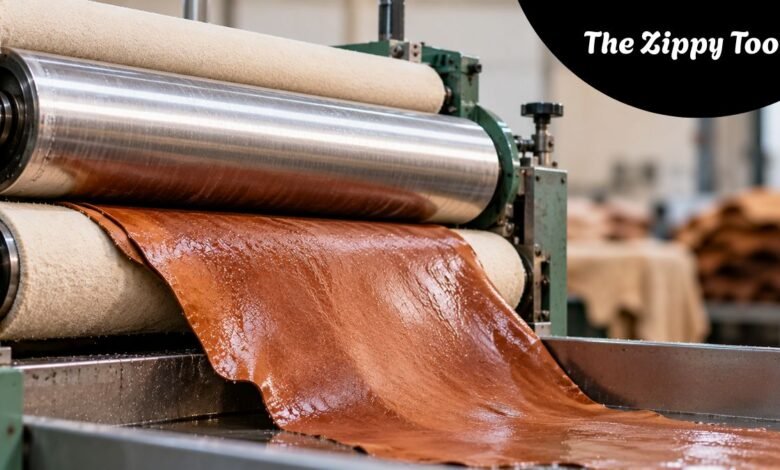
Sammying is a mechanical dewatering process that removes excess moisture from hides and skins after tanning or other wet-processing operations. During leather production, animal hides undergo several treatments involving water and chemical solutions. These treatments leave the material saturated, making it heavy and potentially difficult to process further. Sammying reduces the amount of liquid retained in the leather through controlled mechanical pressure, typically applied with specialized rollers.
The main purpose is not to dry the leather completely, but to bring its moisture content closer to a level suitable for the next manufacturing operation. Removing excess water improves handling and creates more consistent working conditions in subsequent stages. Depending on the production method, these stages may include splitting, shaving, retanning, setting out, or drying.
The process is also known as samming, while the equipment is commonly called a sammying machine or wringer. Unlike ordinary drying, which relies on evaporation or other moisture-removal techniques, sammying extracts liquid primarily through pressure. This distinction makes it an important part of efficient industrial leather processing.
Why Is Sammying Important in Leather Production?
Moisture significantly affects how leather behaves during manufacturing. Leather with excessive moisture can be difficult to handle, and its condition can vary across different areas of a hide. These inconsistencies can complicate operations that require stable thickness, predictable movement, or an even surface. By mechanically removing excess moisture, sammying helps manufacturers establish more controlled conditions before further processing.
One important advantage is improved production efficiency. Mechanical dewatering reduces the water that must be removed during later drying. Because evaporating water generally requires energy, removing moisture earlier can reduce the burden on drying equipment.
Sammying also supports better material handling. Wet hides can be heavy, slippery, and difficult to position correctly. Reducing excess liquid makes them more manageable and helps workers transfer them between processing stages. However, the operation must be carefully adjusted, because excessive pressure or unsuitable machine settings can introduce new quality problems.
For manufacturers, successful moisture management is therefore not simply a matter of working faster. It supports consistent processing, efficient equipment use, and better control of the final leather product.
How Does the Sammying Process Work?
The operation begins when wet leather is prepared for mechanical dewatering. After a suitable tanning or wet-processing stage, workers remove the hides from the processing equipment and let them drain as required by the production method. Workers then prepare the material for feeding into a sammying machine, ensuring it is properly positioned and free of folds that could interfere with the pressing action.
Once the leather enters the machine, a pressing mechanism applies controlled pressure across its surface. In many industrial systems, the hides travel between rollers supported by absorbent felts. These components help squeeze out excess liquid while supporting the material during movement. As the rollers compress the wet leather, they squeeze out excess water from its fibrous structure and direct it away from the pressing area.
The pressure must be strong enough to remove unwanted moisture without unnecessarily damaging the leather. Machine operators can adjust pressing force, feeding speed, and other settings based on the material’s thickness, condition, and intended use. After processing, the leather exits with reduced moisture content while remaining sufficiently damp for the operations that follow.
This combination of mechanical pressure, careful feeding, and controlled drainage makes sammying a practical way to manage moisture in commercial leather production.
Types of Sammying Machines Used in Tanneries
Modern tanneries use different equipment configurations depending on production requirements, hide dimensions, and the type of leather being manufactured. One widely used option is the through-feed sammying machine, which transports hides continuously through a pressing system. This arrangement is particularly useful in operations where large quantities of leather must be processed with consistent handling and controlled pressure.
Some facilities use alternative or press-type systems that handle leather in separate operating cycles rather than continuously. Their suitability depends on factory layout, material characteristics, machine design, and production volume. Equipment selection therefore depends on more than processing speed alone.
Another important category is the combined sammying and setting-out machine. This equipment removes moisture while also spreading and flattening wet leather. Combining these operations reduces separate handling stages and prepares the material for subsequent processing, particularly after certain dyeing or finishing treatments.
Machine quality also depends on supporting components. Absorbent felts, pressure rollers, hydraulic systems, feeding arrangements, and safety mechanisms all contribute to performance. Regular inspection and maintenance are necessary because damaged felts, uneven pressure, or misaligned components may affect the material being processed.
How Sammying Affects Leather Quality
The quality of finished leather depends on multiple manufacturing stages, and sammying helps set suitable moisture conditions for later treatment. When performed correctly, the process can reduce excessive wetness and support more predictable handling during mechanical operations. This matters because leather is a natural material with variations in thickness, fiber structure, and flexibility.
Consistent moisture control is particularly valuable when manufacturers need to shave leather to a specified thickness or prepare it for further processing. Excessively wet or unevenly conditioned material can be harder to manage accurately. Mechanical dewatering therefore supports process stability, although it does not independently determine the final quality of leather.
Some sammying systems also help reduce folds and improve the presentation of wet hides as they move through processing equipment. However, these benefits depend on correct machine operation. Improper feeding can create creases, while excessive pressure may leave undesirable marks or affect delicate material.
Good results require a balance between effective moisture removal and protection of the leather’s natural structure. Manufacturers must consider the intended product, whether it is footwear, upholstery, clothing, or accessories, before deciding how aggressively the material should be processed.
The Difference Between Sammying, Setting Out, and Drying
These three operations are closely connected, but they serve different purposes within leather manufacturing. Sammying primarily removes excess liquid through mechanical compression. Setting out spreads, flattens, and smooths leather while also removing some moisture. Drying, meanwhile, reduces remaining moisture to levels suitable for further processing, storage, or finishing.
The distinction becomes clearer when considering a wet hide emerging from a tanning operation. It may first undergo mechanical dewatering to remove surplus water. Additional operations may then improve its shape, surface condition, or thickness. Later drying techniques help bring the leather toward the condition required for subsequent manufacturing stages.
A single production line may combine some of these functions, depending on the machinery available. For example, specialized equipment can perform sammying and setting out together. Nevertheless, mechanical dewatering is not a substitute for complete drying, and the correct sequence depends on the type of leather and the manufacturing system.
Understanding these differences helps explain why moisture removal involves more than a single operation.
Common Challenges During Sammying
Despite its practical benefits, sammying requires careful supervision because wet leather can respond differently to pressure. One common challenge is uneven moisture removal. If the pressing force is inconsistent or the material enters the machine with folds, some areas may retain more liquid than others. This can complicate subsequent processing and potentially contribute to variations in material appearance or handling.
Another difficulty involves excessive mechanical pressure. Applying more force does not automatically produce better results. Depending on the leather type, unsuitable settings may create pressure marks, unwanted creases, or other defects. Delicate skins and thicker hides may require different adjustments to reduce moisture without unnecessary damage.
Equipment maintenance is equally important. Worn felts, poor roller alignment, drainage problems, and feeding-system issues may reduce operating efficiency. Workers must also follow machinery safety procedures because industrial pressing equipment presents serious pinch-point and entanglement hazards.
Successful operation depends on knowledgeable personnel, suitable machine settings, routine inspections, and consistent quality checks. A well-maintained machine operated correctly is generally more valuable than one used simply at its highest possible pressure or speed.
Environmental Benefits and Responsible Manufacturing
Leather production requires careful management of water consumption, chemical handling, energy use, and wastewater. Within this larger manufacturing system, mechanical dewatering offers a useful way to improve process efficiency. Removing excess liquid before later drying stages reduces the moisture load drying equipment must handle, potentially lowering energy requirements.
However, the environmental benefits should not be overstated. Sammying does not eliminate the water or chemicals used during tanning. The expelled liquid may contain substances from earlier treatment stages and must be collected and managed appropriately. Proper wastewater treatment and compliance with applicable environmental regulations remain essential responsibilities for leather manufacturers.
Modern factories increasingly consider equipment efficiency, waste management, and material consistency together rather than treating them as separate concerns. Responsible leather manufacturing involves evaluating the complete production process, including the use of chemicals, water, electricity, and maintenance resources.
Sammying supports this broader effort when it is integrated into a carefully managed system. Its value lies in controlling moisture removal and reducing unnecessary processing demands, not in making leather production environmentally harmless.
Where Is Sammying Used?
Sammying matters across many sectors of the leather industry because many finished products start with hides that require controlled processing. Leather for shoes, handbags, belts, jackets, furniture, and vehicle upholstery may undergo mechanical moisture-removal operations during manufacture. The precise production route varies by animal skin, tanning method, desired texture, thickness, and performance requirements.
For example, leather intended for footwear must undergo operations that achieve the right thickness and handling characteristics. Upholstery leather may require careful processing to maintain a consistent surface across relatively large pieces of material. Fashion leather can present additional challenges because softness and visual appearance are important.
Although consumers rarely encounter the term, the process helps prepare materials used in many familiar products. Its importance becomes clearer when you look beyond the finished item and consider the detailed manufacturing work involved.
Conclusion
Sammying is an important but often overlooked stage in leather manufacturing. By removing excess moisture from wet hides, it helps manufacturers improve material handling, maintain more consistent processing conditions, and prepare leather for subsequent operations. The process’s effectiveness depends on appropriate machinery, controlled pressure, careful feeding, and proper maintenance.
As the leather industry continues to focus on production quality, resource efficiency, and responsible manufacturing, mechanical moisture control remains a valuable part of the overall process. Understanding sammying clarifies the technical work behind everyday leather products and explains why even a seemingly simple manufacturing stage can make a meaningful difference.
(FAQs)
What does sammying mean?
Sammying is a mechanical process in leather manufacturing that removes excess water from wet hides or skins, usually by pressing them through specialized machinery.
Is sammying the same as drying?
No. Sammying removes surplus liquid primarily through pressure, while drying removes additional moisture using techniques such as controlled air circulation or vacuum drying.
What is a sammying machine?
A sammying machine is industrial equipment that squeezes excess liquid from wet leather. Many models use pressure rollers and absorbent felts to support the material during dewatering.
Why is sammying necessary?
It improves leather handling, sets more suitable moisture conditions for subsequent operations, and can reduce the amount of water later drying equipment must remove.
Does sammying make leather stronger?
It does not automatically increase leather strength. Its main contribution is controlled moisture reduction, which supports subsequent manufacturing operations and can help manufacturers maintain consistent processing conditions.
Is sammying used outside leather manufacturing?
The word occasionally appears in informal online contexts with unrelated meanings. However, its established industrial use refers to moisture management during leather processing.