Change address on V5: The Complete DVLA Guide to Updating Your Vehicle Log Book Quickly and Easily
Everything UK vehicle owners and registered keepers need to know about changing their V5C address, avoiding mistakes, and keeping their vehicle records up to date.

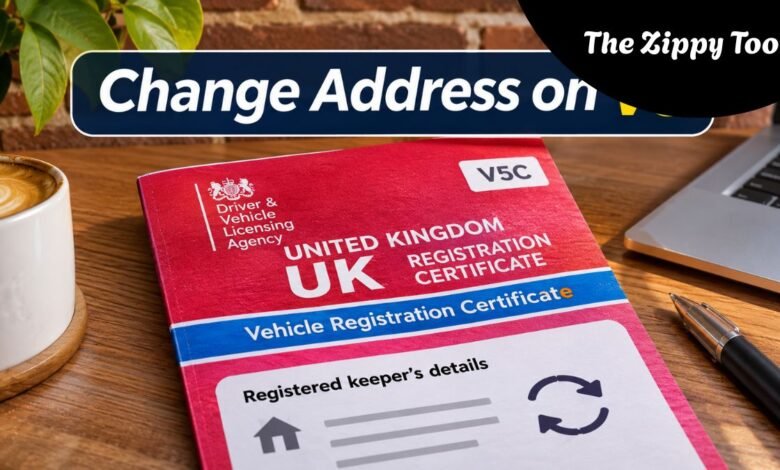
Moving to a new home brings several responsibilities, including updating important vehicle documents. One essential task for UK motorists is to change the address on the V5, ensuring that the Driver and Vehicle Licensing Agency (DVLA) has the correct details for the vehicle’s registered keeper. Although this process may seem complicated, the DVLA provides straightforward ways to complete it online or by post. Keeping your vehicle registration information accurate is important because official correspondence, vehicle-related notices, and other communications may be sent to the address recorded on your log book.
The V5C registration certificate, commonly called the V5 or vehicle log book, contains essential information about a vehicle and its registered keeper. Not updating this document after moving can create unnecessary difficulties, including missed correspondence and potential financial penalties. Fortunately, changing your address is normally free and requires only a few basic details.
This article explains how to update your V5C address, what documents you need, how long the process takes, and which common mistakes to avoid when notifying the DVLA about your move.
What Does Change Address on V5 Mean?
The phrase change address on V5 refers to updating the registered keeper’s address on a vehicle’s V5C registration certificate. This document is issued by the DVLA and serves as the official record of the person responsible for registering and managing a vehicle in the United Kingdom.
The V5C includes the vehicle registration number, make, model, technical characteristics, and registered keeper details. The V5C is not legal proof of vehicle ownership. Instead, it identifies the registered keeper, who may be different from the person or company that legally owns the vehicle.
When you move to a different address, you must inform the DVLA to keep its registration records accurate. Updating your address does not change the vehicle’s ownership or registration number. It simply ensures the existing registered keeper’s contact information is recorded correctly.
Why Is It Important to Change Your Address on the V5C?
Maintaining accurate vehicle records is a legal responsibility for registered keepers. The DVLA requires motorists to notify the agency when their address changes, and failing to do so can result in a fine of up to £1,000. This requirement helps authorities maintain accurate records and contact the right person when needed.
An outdated address can also create practical problems. For example, if correspondence about your vehicle is sent to your previous home, you might not receive it promptly. Parking enforcement notices, vehicle-related communications, and other important letters may be delayed or missed entirely. Although updating your address cannot prevent every administrative issue, it reduces the likelihood of correspondence being sent to the wrong location.
Correct vehicle registration information can also simplify future transactions, particularly when selling a car, transferring registration details, or requesting replacement documents. Updating your V5C soon after moving is therefore a sensible way to avoid unnecessary complications.
How to Change Address on V5 Online
For eligible registered keepers, the DVLA online address change service is generally the simplest method. It allows you to update your details without posting your existing V5C to the DVLA. The service is designed for people changing their address to another UK address while keeping the same registered keeper.
Before starting, make sure you have your vehicle registration number, V5C log book reference number, and a complete new UK address available. Also check whether your vehicle tax is due within the next four weeks, because you may need to renew it using your current V5C before submitting the address change.
Visit the official GOV.UK website and search for the service titled “Change your address on your vehicle log book (V5C).” Select the online service, enter the requested vehicle and document information, and provide your new address. Carefully review the details before submitting your application, ensuring the house number, street name, and postcode are accurate.
The online service normally operates Monday to Friday from 7 am to 9 pm and weekends from 7 am to 8 pm. After you complete the request, keep any confirmation or reference details provided. The DVLA will process the update and issue an updated registration certificate.
How to Change Address on V5 by Post
Although the online service is convenient, some motorists prefer to update their vehicle log book by post. Postal applications are also required in certain situations, including when a person needs to change their name and address at the same time.
The process depends on which version of the V5C you possess. For a new-style V5C, identifiable by its multi-coloured numbered blocks on the front cover, enter the new address in Section 3. Then send the complete log book to the DVLA address printed in that section.
If you have an older-style V5C without the multi-colored numbered blocks, enter your new address in Section 6. Sign the relevant declaration and send the complete document to the DVLA address provided in Section 8.
Do not complete the new keeper section merely because you have moved house. A change of address is different from transferring a vehicle to another person. Also avoid using a PO Box address because the DVLA requires an appropriate residential or business address for the registered keeper.
Check the form carefully before sending it, and make sure you pay the correct postage. Keeping a record of when you posted the application can be helpful if you need to follow up later.
What Documents Do You Need to Change Your V5C Address?
Updating your V5C address is usually straightforward because the DVLA already holds the vehicle’s registration information. For an ordinary online address change, you generally need your vehicle registration number, your V5C document reference number, and your new UK address.
The document reference number appears on your existing V5C certificate and helps the DVLA identify the correct record. Keep this number confidential and enter it only through the official DVLA service. Sharing photographs of your complete log book or displaying its reference number publicly may expose sensitive vehicle information.
When applying by post, your existing log book is the primary document required for a straightforward address update. You may need additional documentation if you are also changing your name or dealing with an unusual registration situation. Checking the requirements before starting helps prevent incomplete applications and processing delays.
How Long Does It Take to Receive an Updated V5C?
Processing times depend on how you submit your application and whether the DVLA needs to investigate any details. Online applications are generally processed more quickly than postal requests, making the digital service a popular choice for eligible motorists.
DVLA service guidance indicates that V5C certificates requested through online services can typically arrive within 5 to 7 working days, although delivery is not guaranteed within that period. Postal applications may take longer because the paperwork must be delivered, reviewed, processed, and returned.
If your updated log book has not arrived after four weeks, DVLA guidance advises you to contact the agency to investigate the delay. There is also an important six-week deadline: if your new V5C has not arrived and you fail to notify the DVLA within six weeks, you may have to pay £25 for a replacement.
Always make sure your address is entered correctly, as even a small postcode or house-number error can prevent the certificate from reaching you.
Can You Change Your V5 Address Without the Log Book?
Losing your V5C can complicate the process, especially if the address the DVLA has on file is no longer correct. The standard online address-change service requires information from the existing log book and cannot be used if the document is lost.
In this situation, follow the DVLA’s separate guidance to obtain a replacement V5C and correct your registered keeper details. Depending on your circumstances, this may involve completing a V62 application form and submitting it by post.
A replacement V5C application may cost £25. Don’t assume an ordinary online duplicate logbook application will solve an address problem, because that service can send the replacement to the address already held on the DVLA system.
If you have lost your log book and moved house, follow the correct procedure to update your address rather than requesting a document that could be delivered to your previous property.
How Much Does It Cost to Change Address on V5?
One advantage of updating your registered keeper address is that the DVLA normally does not charge a fee for a straightforward change of address on an existing V5C certificate.
Whether you complete an eligible application online or send your existing log book by post, the administrative address update itself is generally free. Postal applicants must still pay the appropriate postage costs.
However, different charges may apply if your registration document is missing, damaged, or requires replacement through another procedure. In relevant circumstances, the standard replacement log book fee is £25.
It is also sensible to avoid unofficial websites that charge unnecessary service fees for a task you can usually do yourself through the official government service.
Do You Need to Update Your Driving License Separately?
A common misunderstanding is that changing the address on a V5C automatically updates every other DVLA record. In reality, the vehicle log book and driving license are separate records, and motorists must update each one when required.
If you hold a full or provisional UK driving license, you should update the address recorded on that license through the appropriate DVLA service. Changing the V5C address alone does not complete this requirement.
You must also update your vehicle tax Direct Debit details if you pay by Direct Debit. If you have an unassigned personalized registration number, your V750 certificate of entitlement or V778 retention document may also need updating.
Additionally, notify your vehicle insurer of your new address. Your location may affect the insurer’s assessment of risk and the terms of your policy. Reviewing these related documents after moving helps ensure your important motoring records remain consistent.
What Happens If You Change Your Name and Address Together?
If you have recently married, legally changed your name, or experienced another change requiring both your name and address to be updated, the ordinary online address-change service is not appropriate.
The DVLA requires combined name and address changes to be completed by post. You must enter the new details in the correct section of the V5C, depending on whether you have the newer or older document format.
You will also need evidence supporting your name change, such as a copy of a marriage certificate or deed poll. Where the registered keeper is a business that has changed its name, evidence such as a Companies House certificate of incorporation may be required.
Submitting the appropriate supporting information with the V5C helps the DVLA verify the changes and prevents avoidable delays.
Common Mistakes to Avoid When Changing Your V5 Address
One common mistake is assuming that updating a driving license also changes the address on the vehicle log book. These are separate processes, and completing one does not automatically complete the other.
Another mistake is entering an incorrect postcode, omitting part of the address, or submitting details of a previous address. Taking an extra moment to review your information can prevent delivery problems and administrative complications.
Some motorists mistakenly complete the new keeper section when changing their address by post. This is unnecessary when the registered keeper remains the same and can confuse the application’s purpose.
Vehicle tax is another detail worth checking. If your vehicle needs taxing within four weeks, DVLA guidance says you should tax it using the existing V5C before completing the online address change. Postal applicants may also be able to use a Post Office branch that handles vehicle tax.
Finally, don’t delay the update just because your vehicle is currently running without problems. A correct registration address is an ongoing legal responsibility, not something needed only when a vehicle is sold.
(FAQs)
1. Can I change my V5 address online for free?
Yes. Eligible registered keepers can normally update their V5C address through the official DVLA online service without paying an administrative fee. You will need your vehicle registration number, V5C reference number, and new UK address.
2. Can I still drive while waiting for my updated V5C?
Yes. You can generally continue driving while waiting for your updated registration certificate, provided your vehicle is properly taxed, insured, roadworthy, and otherwise legally permitted to be used on the road.
3. Will changing my V5 address affect my vehicle tax?
Changing your registered keeper address does not automatically cancel your existing vehicle tax. However, you must separately update your vehicle tax Direct Debit details, if applicable, and check whether your tax needs renewing before changing the V5C.
4. What happens if I forget to update my V5C address?
Notifying the DVLA of an address change can result in a fine of up to £1,000. You may also miss important correspondence if documents or notices continue arriving at your previous address.
5. Can I change my V5 address if I move abroad?
The standard online V5C address-change service is intended for new UK addresses. If you are moving abroad and taking your vehicle with you, different registration and export procedures may apply. Follow the DVLA’s guidance for taking vehicles out of the country.
Conclusion
Knowing how to change your address on the V5 is an important part of managing your responsibilities as a vehicle’s registered keeper. Whether you choose the convenient online service or complete the process by post, keeping your V5C registration certificate accurate helps prevent missed communications, administrative difficulties, and potential penalties.
The process is normally free, requires only basic vehicle and address information, and can often be completed without significant paperwork. However, motorists should remember that changing their V5C address does not automatically update their driving license, vehicle tax Direct Debit, or insurance policy.
By following the correct DVLA address change procedure, checking your information carefully, and keeping track of your updated documents, you can complete this essential task confidently and maintain accurate vehicle registration records after moving home.