Adeline Nwosu: The Nigerian Mother Behind Vick Hope’s Powerful Story of Identity and Resilience
Long before Vick Hope became a familiar voice in British broadcasting, Adeline Nwosu was shaping the values, cultural identity and determination that would follow her daughter into public life.

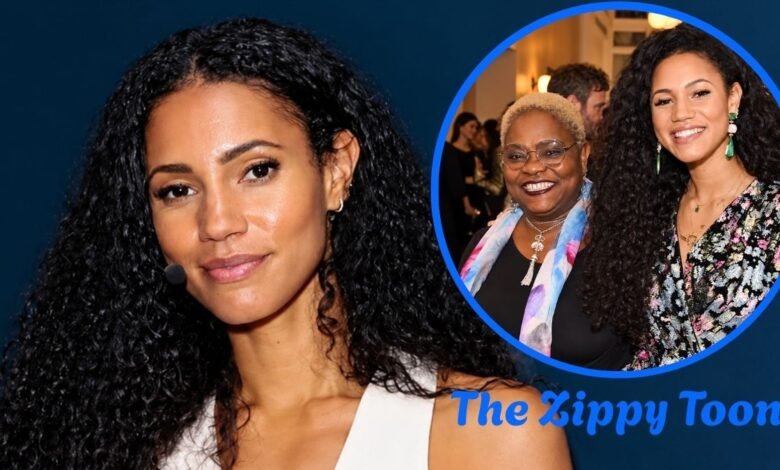
As Vick Hope has become increasingly visible across British television, radio and literary culture, interest has naturally expanded beyond her career to the family that raised her. One name appears repeatedly in that story: Adeline Nwosu, Vick Hope’s Nigerian mother.
Adeline is not a conventional celebrity, nor does she appear to have pursued public fame independently. Yet unusually detailed first-person accounts from both mother and daughter reveal a compelling family history connecting Nigeria, Newcastle upon Tyne, Northumberland and Cambridge.
That history matters because Vick has spoken openly about being raised in a mixed-race household and about how her mother’s experiences affected her understanding of identity, education, gratitude and resilience. Adeline herself has described growing up during Nigeria’s civil war before eventually moving to England.
BLUF: Adeline Nwosu is the Nigerian mother of British broadcaster Vick Hope and the wife of Englishman Nigel Hope. Public interviews show that her childhood in wartime Nigeria, later move to England, emphasis on education, and strong Nigerian identity significantly influenced how Vick Hope was raised.
Bio Summary
| Detail | Information |
|---|
| Full Name | Adeline Nwosu |
| Known For | Mother of British presenter Vick Hope |
| Nationality / Heritage | Nigerian |
| Husband | Nigel Hope |
| Daughter | Vick Hope |
| Children | Vick Hope and three sons |
| Family Base | Newcastle upon Tyne / Northumberland, England |
| Public Profile | Private individual; occasionally appears with Vick Hope |
| Notable Connection | Vick Hope’s Nigerian heritage comes through her mother |
| Profession | Not publicly confirmed |
| Net Worth | Not publicly verified |
From Wartime Nigeria to a New Childhood in England
Some of the clearest information about Adeline Nwosu comes directly from The Guardian’s November 2021 interview with mother and daughter.
Adeline, referred to affectionately as “Ady”, said she grew up in Nigeria during the civil war. She recalled food shortages, hearing bombs and having to find shelter. Her childhood also involved practical responsibilities including growing crops and fetching water.
Those experiences later became an important part of her parenting.
After the war, Adeline said she came to England to live with her grandmother. She arrived without speaking English and, less than a year later, was expected to sit the 11-plus examination. She recalled understanding basic vocabulary but struggling with terms such as “surname,” illustrating how quickly she had been placed into a completely different educational and cultural environment.
Her early experiences appear to explain several principles she subsequently passed to her children: do not waste food, appreciate basic resources, take education seriously and learn how to look after yourself.
Channel 4 later published Vick’s account of the same influence. Speaking ahead of Shipwrecked, Vick explained that her mother came from a rural Nigerian village, had grown up during war and wanted her children to possess practical survival skills.
Adeline’s relevance to Vick Hope’s biography is therefore not simply genealogical; her experiences help explain several values Vick has publicly associated with her upbringing.
The Nwosu-Hope Household Combined Nigerian and Geordie Roots
Vick Hope was born Victoria Nwayawu Nwosu-Hope in Newcastle upon Tyne in 1989. Her parents are Adeline Nwosu and Nigel Hope, and she grew up with three younger brothers. The family later moved from Newcastle into Northumberland.
That household combined two distinct backgrounds: Adeline’s Nigerian heritage and Nigel’s English roots, specifically northern English.
Vick has repeatedly discussed the significance of that combination. In a Marie Claire essay about belonging and British identity, she recalled being the only mixed-race pupil at her school and struggling as a child with feeling different from her classmates.
The Guardian interview provides perhaps the clearest account of Adeline’s response. Vick remembered her mother teaching her not to think of herself as inadequately “half” of something, but to understand that both sides of her parentage belonged to her identity.
Why Adeline Nwosu’s Nigerian heritage matters in Vick Hope’s story
Vick’s Nigerian heritage has remained publicly significant well into adulthood.
In a Channel 4 interview before the Paris 2024 Paralympic Games, Vick explicitly described herself as “half Nigerian” while discussing disability funding in her mother’s country.
Her full name, Victoria Nwayawu Nwosu-Hope, also visibly preserves both sides of her family identity.
The influence extended into everyday family life. Vick has spoken about her mother’s Nigerian cooking and said that during the pandemic, Adeline conducted online cooking sessions for family members.
Education Became One of Adeline’s Strongest Priorities
Adeline’s own difficult introduction to the British education system appears to have shaped how strongly she valued education for her daughter.
She described Vick as naturally scholarly and recalled being comfortable with her daughter’s decision to leave home for the University of Cambridge. Vick subsequently studied modern languages at Emmanuel College, Cambridge.
The connection is striking: Adeline had arrived in England unable to speak English. At the same time, her daughter would eventually study languages at one of Britain’s best-known universities and build a career centered heavily on communication.
Vick has credited her mother with being a gifted storyteller and conversationalist, characteristics she believes she inherited.
That makes Adeline’s influence particularly relevant to understanding Vick’s later work as a broadcaster rather than merely an interesting family detail.
Public Appearances Show a Close Mother-Daughter Relationship
Adeline maintains a substantially lower public profile than her daughter, but she has occasionally appeared with Vick at cultural events.
One clearly documented occasion came on 14 June 2023, when Adeline Nwosu and Vick Hope attended the Women’s Prize for Fiction winner ceremony at Bedford Square Gardens in London. Getty Images recorded the pair together at the event.
The connection was particularly fitting because Vick has an established relationship with the Women’s Prize. She served as a Women’s Prize for Fiction judge in 2021 and later became host of the organization’s Bookshelfie podcast.
The joint Guardian feature also demonstrates that their relationship extends beyond occasional event photographs. Both women spoke about one another in personal detail, covering childhood, family routines, race, education, and communication.
What Is Known About Adeline Nwosu’s Career?
There is no sufficiently authoritative public evidence establishing a specific profession or detailed career history for Adeline Nwosu.
This distinction matters because biography pages frequently repeat unsupported claims about occupations, ages, and personal details when writing about celebrities’ relatives.
Reliable sources provide meaningful information about Adeline’s childhood, family, and parenting, but they do not provide sufficient verified information to construct an independent professional biography.
Accordingly, claims about her workplace, qualifications, exact birth date, or professional title should not be presented as fact without stronger primary documentation.
Her Financial Position Is Not Publicly Established
No credible public financial records or authoritative media profiles provide an independently verified valuation of Adeline Nwosu’s personal wealth, income, property portfolio, or business assets.
Any website that assigns her a specific personal fortune should therefore be treated with caution unless it provides credible financial documentation.
Vick Hope’s fame—and her marriage to musician and producer Calvin Harris—should also not be used to infer Adeline’s personal finances. Family association is not evidence of individual wealth.
FAQs.
Who is Adeline Nwosu?
Adeline Nwosu is the Nigerian mother of British broadcaster Vick Hope. She is married to Nigel Hope, Vick’s English father, and is publicly known mainly through Vick’s interviews, family features, and occasional appearances at cultural events.
Is Adeline Nwosu Nigerian?
Yes. Adeline Nwosu is Nigerian. She has personally discussed growing up in Nigeria during the civil war, while Vick Hope has repeatedly described her mother as Nigerian and herself as half Nigerian.
Who is Adeline Nwosu’s husband?
Adeline Nwosu’s husband is Nigel Hope, an Englishman associated with Newcastle and the North East. Together they raised Vick Hope and her three younger brothers.
How did Adeline Nwosu influence Vick Hope?
Adeline influenced Vick through education, Nigerian culture, self-reliance, and a strong approach to mixed-race identity. Vick has said that her mother’s wartime experiences fostered gratitude and awareness, while Adeline’s communication skills and storytelling have also influenced her.
Does Adeline Nwosu attend events with Vick Hope?
Yes, on documented occasions. Adeline accompanied Vick Hope to the Women’s Prize for Fiction winner ceremony at London’s Bedford Square Gardens on 14 June 2023.
What is Adeline Nwosu’s net worth?
Adeline Nwosu’s personal net worth is not publicly verified. Reliable sources reviewed for this profile do not provide authoritative figures for her income, assets, or net worth, so publishing a precise estimate would be speculative.
Why Adeline Nwosu’s Story Deserves Accuracy, Not Celebrity Mythmaking
Adeline Nwosu occupies an unusual position in public-interest biography. She is not famous because of a conventional entertainment career. Yet, enough first-person material exists to show that she played a meaningful role in shaping one of Britain’s recognizable broadcasters.
Her documented story moves from a childhood affected by war in Nigeria to immigration, language barriers, and family life in northern England. Its influence is evident in how Vick Hope discusses identity, education, gratitude, communication, and Nigerian heritage.
That story is compelling without invented ages, careers, or fortunes. In Adeline Nwosu’s case, the verified facts already explain why readers looking beyond Vick Hope’s television and radio career keep arriving at her mother’s name.
You might also like:The Overlooked Story of Don Saroyan, Carol Burnett’s First Husband Before Her Television Breakthrough
Editorial Disclaimer:
This profile uses publicly available interviews and reputable published sources. Adeline Nwosu is primarily a private individual, so unverified claims concerning her age, occupation, finances, residence, and other private details have been deliberately excluded. Information may be updated if stronger primary documentation becomes publicly available.