Comisaco: Inside Uruguay’s Important Irrigation System and Its Role in Rice Farming

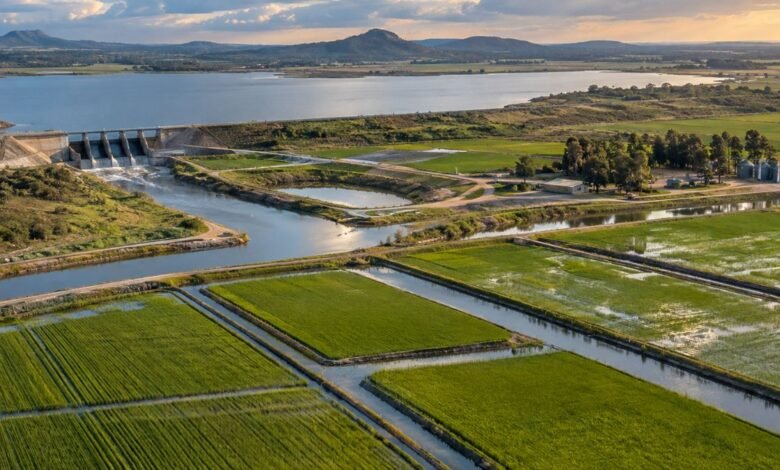
Comisaco is a name closely associated with agricultural irrigation and water management in Uruguay. More specifically, Comisaco S.A. administers the irrigation system around the India Muerta Dam in the department of Rocha. The system has played an important role in supplying water to rice-growing areas, where dependable irrigation is essential for maintaining productive farming operations.
Unlike a conventional consumer-facing company, Comisaco operates within an agricultural infrastructure network. Its significance is therefore best understood through the connection between water storage, irrigation canals, rice cultivation, and regional agricultural development. The India Muerta irrigation system demonstrates how carefully managed water resources can support farming across a large rural area.
What Is Comisaco?
Comisaco S.A. is an organization associated with SAMAN S.A. and COOPAR S.A., two established names within Uruguay’s rice industry. Public information from both companies identifies Comisaco with the administration of the concession connected to the India Muerta Dam.
The organization is primarily associated with irrigation services rather than the commercial sale of rice. Its role centers on managing water infrastructure that enables agricultural producers to obtain water required for cultivation.
This distinction is important when understanding Comisaco. Although its activities are closely connected to the rice sector, it should not be described simply as a rice producer. Water management and irrigation services are central to its operations.
Comisaco and the India Muerta Dam
The India Muerta Dam is located in Rocha, between Velázquez and Lascano. It forms the core of an extensive irrigation network that serves one of Uruguay’s major rice-producing regions.
The reservoir has a reported useful storage capacity of approximately 127.5 million cubic meters of water. Information published by companies associated with Comisaco states that the irrigation system can provide water for around 10,000 hectares of rice cultivation annually.
The reservoir distributes water through an extensive network of canals, allowing agricultural land away from the reservoir to benefit from the system.
Why the Reservoir Matters
Rice cultivation requires reliable access to substantial quantities of water. Rainfall alone may not always provide the consistency farmers need during important stages of production.
A large reservoir creates an opportunity to capture water and distribute it when agricultural demand increases. This makes irrigation infrastructure particularly valuable in regions where rice represents an important part of rural economic activity.
History of Comisaco and Irrigation Development
The India Muerta irrigation project dates back several decades. Government planning to regulate water in the India Muerta area emerged as part of a broader effort to improve water management in Rocha.
Construction work on the dam began during the early 1980s, and irrigation became available for rice production during the 1982 growing season. The broader project included the reservoir, canals, and supporting infrastructure needed to move water to agricultural properties.
Comisaco became involved in administering this irrigation system through SAMAN and COOPAR.
Building an Agricultural Water Network
Constructing a reservoir is only one part of a successful irrigation project. Water also has to reach farms efficiently.
That requires canals, control structures, monitoring systems, and organized distribution. The India Muerta system consequently developed into something considerably larger than a single dam.
Its infrastructure allows stored water to reach agricultural areas, where rice farmers can use it during cultivation. Managing such a system requires coordination between infrastructure operators and producers using irrigation services.
Comisaco and Uruguay’s Rice Industry
Uruguay has developed a highly organized rice production sector, and irrigation is one of its foundations. Rice differs from many other crops because controlled access to water strongly influences production.
Comisaco’s connection with irrigation therefore places it within an important part of the agricultural supply chain.
Rather than focusing on processing or selling rice, the organization helps support the conditions under which rice can be grown.
Reliable Water for Rice Farming
For agricultural producers, predictable water availability can improve planning throughout a growing season. Farmers need to know whether sufficient irrigation will be available before committing land and resources to production.
Reservoir-based irrigation can reduce dependence on short-term rainfall patterns by storing water for later agricultural use.
This does not eliminate every climate-related risk, but it provides farmers with an important water-management tool.
Water Distribution Requires Coordination
Large irrigation networks cannot operate efficiently without careful coordination. Operators must consider water levels, canal flows, seasonal demand, and individual agricultural requirements.
Modern agricultural irrigation also increasingly benefits from monitoring technology that helps operators understand water levels and flows more accurately.
Accurate measurement supports better decisions about how water moves through a network and how available resources are distributed.
Economic Importance of Comisaco’s Irrigation Role
Agricultural infrastructure can influence an economy far beyond the boundaries of individual farms. When irrigation supports rice cultivation, the effects extend into transportation, processing, agricultural services, employment and exports.
The India Muerta system has therefore become part of a broader regional agricultural structure.
Farm productivity also influences businesses that supply machinery, fuel, maintenance services and professional expertise. A dependable irrigation network can support greater continuity throughout this interconnected agricultural economy.
Supporting Rural Production in Rocha
Rocha is widely known for its natural landscapes, but agriculture also plays an important role in the department.
Irrigation infrastructure enables productive activity across agricultural areas where water availability might otherwise create greater limitations. For rice-growing communities, the connection between land and managed water resources is especially significant.
Comisaco’s role should consequently be viewed within the wider development of irrigated agriculture in eastern Uruguay.
Water Management and Environmental Responsibility
Major irrigation projects inevitably raise questions about how water resources interact with surrounding ecosystems.
Water management must balance agricultural requirements with environmental considerations, regulation, and long-term resource availability. This is especially relevant in landscapes containing wetlands and complex drainage systems.
The India Muerta project has been part of broader discussions about water management and landscape change in Rocha over the years.
Why Sustainable Irrigation Matters
Efficient irrigation is increasingly important as agriculture responds to changing weather conditions and pressure on natural resources.
Water should be measured, distributed, and used carefully. Improving efficiency can help agricultural areas obtain the water they require while reducing unnecessary losses.
Technology, monitoring equipment, and better management practices can all support more precise irrigation systems.
The Value of Long-Term Planning
Reservoir management is not simply about responding to immediate agricultural demand. Operators must also consider storage levels, expected seasonal requirements, and infrastructure maintenance.
Long-term planning becomes especially important when rainfall varies significantly between seasons.
The Future of Comisaco and Agricultural Irrigation
Comisaco’s future importance is closely connected to the future of irrigation itself. Agriculture increasingly needs systems that can respond to water scarcity, climate variability, and demands for efficient resource management.
Infrastructure built decades ago can remain valuable with appropriate maintenance, monitoring, and operational improvements.
Digital measurement technologies may also provide increasingly detailed information about reservoir levels, canal flows and agricultural water consumption.
Comisaco as Part of a Wider Agricultural System
Comisaco illustrates an important principle of modern agriculture: successful food production depends on more than farmers and fields.
Reservoirs, canals, water-management organizations, agricultural processors, and technical specialists all contribute to the wider production system.
In Uruguay’s rice-growing regions, irrigation infrastructure provides one of the links connecting these elements.
Conclusion
Comisaco is best understood as an important participant in Uruguay’s agricultural water-management infrastructure. Through its association with SAMAN and COOPAR and its administration of the India Muerta irrigation system, Comisaco has become closely connected with rice farming in Rocha.
The India Muerta reservoir stores a substantial volume of water and supports irrigation across thousands of hectares of rice-growing land. Its network shows how large-scale water infrastructure can boost agricultural productivity and regional economic activity.
As water efficiency and climate resilience become increasingly important for agriculture, organizations involved in irrigation management will continue to face both opportunities and responsibilities. Comisaco’s connection with the India Muerta Dam makes it a useful example of how water infrastructure, agricultural planning, and rice production can operate as parts of one interconnected system.
FAQs.
What is Comisaco?
Comisaco S.A. manages the India Muerta irrigation system in Rocha, Uruguay. Its activities are closely associated with agricultural water management and rice farming.
What does Comisaco do?
Comisaco helps administer irrigation infrastructure that stores and distributes water to agricultural areas. Its role supports farmers who depend on reliable irrigation for rice cultivation.
Where is Comisaco located?
Comisaco is associated with the India Muerta Dam and irrigation system in the department of Rocha, Uruguay, particularly around the agricultural areas near Lascano and Velázquez.
Is Comisaco a rice-producing company?
Comisaco is not primarily known as a rice producer. It is better understood as an irrigation and water-management organization connected with companies operating in Uruguay’s rice industry.
Why is Comisaco important for agriculture?
Comisaco matters because reliable irrigation helps farmers manage water more efficiently, reduce dependence on rainfall, and support consistent rice production across large agricultural areas.