Julerie Is More Than a Misspelling: Inside Ghent’s Vintage and Pre-Loved Fine Jewelry Store
The name may look unfamiliar, but behind Julerie is a Ghent jewelry business built around vintage pieces, pre-loved luxury, gemstones, and a family tradition that stretches back decades.

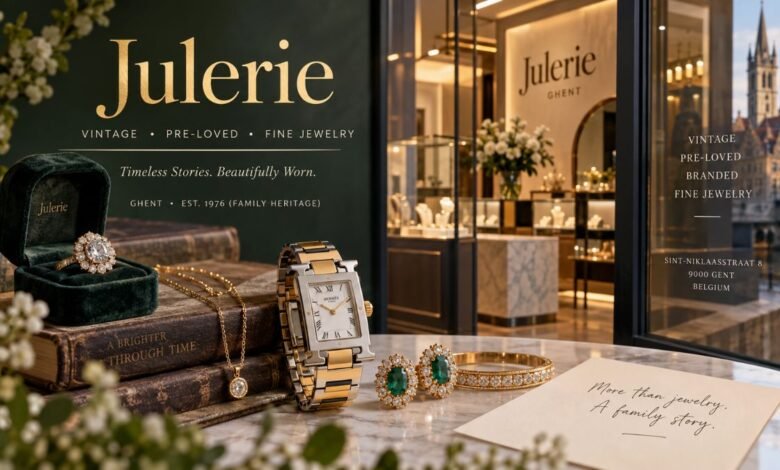
Search for Julerie, and one question appears almost immediately: is it simply an unusual spelling of “jewelry,” or does the name refer to something specific? Current search evidence points clearly to the latter. Julerie is a jewelry retailer in Ghent, Belgium, with an online catalog focused heavily on vintage and pre-owned fine jewelry.
That distinction matters more than it first appears. Vintage jewelry shoppers aren’t buying standardized products that stay the same for years. Individual rings, watches, earrings, pendants, and gemstone pieces can be one-off items, meaning availability, condition, documentation, sizing, and price may change from one listing to another.
Julerie’s own history also adds another layer. The company connects its identity to a family jewelry business that began in Ghent in 1976, while the present Julerie name represents a newer chapter built around vintage, pre-loved, branded, and specially selected jewelry.
Julerie is a Ghent-based jewelry retailer specializing in vintage, pre-loved, branded, and fine jewelry. Its official website says siblings Julie and Christophe represent the family’s third generation in jewelry, and its current catalog includes rings, watches, necklaces, bracelets, earrings, diamonds, gemstones, and pieces from established luxury brands.
The 1976 Story Behind the Julerie Name
Julerie’s official history begins with Suzanne, Julie and Christophe’s grandmother.
According to the company, Suzanne had a strong interest in antique jewelry and colorful gemstones. She eventually opened a jewelry shop with her daughter in Ghent in 1976 and initially used pieces from her own collection to fill the displays. The family later opened additional jewelry shops across Flanders.
Julie describes herself as a third-generation jeweler who works alongside her brother Christophe. The company history says Christophe accumulated years of jewelry-sector experience, while Julie previously worked in luxury hospitality and events before joining him in the family business.
One factual distinction is important for anyone writing about the brand: 1976 is presented as the start of the family’s jewelry story, not explicitly as the founding year of the current Julerie brand.
That difference should not be blurred. Family heritage and the legal or commercial launch date of a modern company are not automatically the same thing.
What Julerie Actually Sells
Julerie is not positioned primarily as a mass-market fashion-accessory shop. Its live website emphasizes fine jewelry, particularly items made from gold and set with diamonds, colored gemstones, or other precious materials.
The site’s main shopping structure currently separates inventory into categories including vintage rings, pre-loved rings, pre-loved diamond rings, pendants, necklaces, watches, and bracelets. A separate section carries the Julerie Collection name.
Vintage and Pre-Loved Pieces
Vintage and pre-loved jewelry form an important part of the retailer’s identity.
A pre-loved item requires more scrutiny than a standardized new product because condition can vary. Age, previous resizing, polishing, repairs, stone replacement, hallmarks, and wear can all influence what a buyer is actually purchasing.
Julerie states on product pages that its Vintagesite pre-loved pieces are professionally checked and that jewelry is cleaned or polished before sale. The retailer also says these pieces come with an authenticity certificate.
Those are seller representations rather than an independent laboratory assessment, so buyers considering a particularly expensive piece may want to ask who conducts the retailer’s examination and what the accompanying certificate verifies.
Diamonds, Gemstones and Gold
A review of live product information shows pieces using materials such as 18-carat gold, diamonds, citrine, aquamarine, and other colored stones.
For example, Julerie describes one citrine-and-diamond ring as an 18-carat white-gold ring featuring an oval-cut citrine surrounded by 12 brilliant-cut diamonds. Its product page also identifies it as part of the retailer’s pre-loved diamond selection.
That level of detail can help buyers compare pieces, but they should still read descriptions carefully. Precious-metal purity, gemstone identity, diamond weight, resizing history, and condition can materially affect value.
What Current Julerie Prices Reveal
Julerie’s inventory spans several price points rather than following a single standard range.
Examples visible on the retailer’s website during research included the following:
Listed Item Displayed Price
Vintage Gold Lion Earrings €580
Vintage Ring with Diamonds €960
Emerald & Diamond Half Eternity Ring €1,620
Citrine & Diamond Ring €1,800
Retailer’s Diamond Earrings identified as Messika €4,200
These prices are snapshots, not fixed market benchmarks. Vintage and pre-owned stock can sell out, new items can be added, and prices may change. Several products visible on Julerie’s site have already been marked sold out, showing how Julerie’s listing can become outdated.
The takeaway is straightforward: anyone researching a specific Julerie retailer should rely on the current product page, not an older article, cached search result, or social-media image.
Branded Jewelry Requires an Extra Layer of Checking
The website has displayed products identified with luxury names including Messika and Hermès. For example, the homepage has shown Lucky Move Diamond Earrings labeled Messika and an Heure H watch labeled Hermès.
That should not automatically be interpreted as evidence that Julerie is an authorized retailer for every brand appearing in its pre-owned inventory.
In the resale market, a store may legitimately sell previously owned pieces from another brand without having a current authorized-retailer relationship with that manufacturer.
For buyers, the more useful questions are practical:
Does the product carry identifiable hallmarks or reference information? What documentation accompanies it? Has it been repaired or altered? Is original packaging included? What exactly does the seller’s authenticity certificate cover?
Those questions matter more than assuming authenticity solely because a luxury brand name appears in a listing title.
The Ghent Store Gives Julerie a Physical Anchor
Julerie’s official contact page lists its address as Sint-Niklaasstraat 8, 9000 Gent, Belgium. The page also provides an email contact and specifically encourages customers to ask about particular products, ring sizing, and resizing.
A physical location can help customers consider jewelry that is difficult to judge from photographs alone.
Ring fit, stone color, surface wear, weight, proportions, and comfort may look or feel different in person. With vintage jewelry especially, seeing the item in person can reveal details that studio photography can’t always capture.
The store’s online presence and physical location serve different purposes: the website expands discovery beyond Ghent, while the shop gives buyers the option of direct inspection and consultation.
Before Buying From Julerie, Check the Piece Rather Than the Brand Story
A compelling family history can make a jewelry store memorable, but it should remain separate from the practical assessment of a purchase.
The most useful way to evaluate vintage jewelry is piece by piece. A retailer’s history provides context; the metal, gemstones, documentation, condition, measurements, price, and purchase terms determine whether an individual item meets a buyer’s needs.
Start by comparing every field in the listing. The title, photographs, description, material specification, stated condition, size, gemstone details, and brand attribution should tell a consistent story.
For rings, confirm whether resizing is possible and how resizing may affect decorative details or hallmarks. Julerie says almost all its rings can be resized, but confirm feasibility for the individual piece.
For branded watches or retailer pieces, what documentation establishes identification?
For gemstone pieces, determine whether weights and measurements are exact, estimated, or seller-reported.
Becausebuyer’s pre-owned products are often unique, verify the piece is still available before relying on an older article or image.
Why “Julerie” Should Not Be Automatically Corrected to “Jewelry”
The spelling itself is part of the search intent.
“Jewelry” is the general American-English term for rings, necklaces, bracelets, earrings, and related decorative objects. “Jewelry” is the usual British-English spelling.
Julerie, however, is a proper business name.
Automatically rewriting Julerie as “jewelry” can therefore send readers toward a broad definition when they may actually be looking for the Belgian retailer, its products, its history, or information about purchasing from it.
For search engines and AI answer systems, this entity distinction matters because similar “sellings” don’t necessarily refer to the same entity.
The Detail That Defines Julerie
Julerie’s clearest identity is the “intersection of family jewelry heritage and the modern resale market.
Its story reaches back to a family shop opened in Ghe” t in 1976. Yet its current offering is shaped by how people buy jewelry now: online discovery, vintage sourcing, pre “owned l “xury pieces, detailed product listings, gemstone specifications, resizing, and limited individual inventory.
That makes precision particularly important when researching the brand. Julerie should not be reduced to a misspelling, but its own promotional history should not be stretched beyond what the available evidence establishes either.
For a prospective buyer, the safest Julerie is simple: understand the family story, then judge the actual piece. Verify its materials, condition, sizing, documentation, availability, price, and current purchase terms before making a high-value decision.
The Detail That Defines Julerie
Julerie’s clearest identity is the intersection of family jewelry heritage and the modern resale market.
Its story reaches back to a family shop opened in Ghent in 1976. Yet, its current offering reflects how people buy jewelry now: online discovery, vintage sourcing, pre-owned luxury pieces, detailed product listings, gemstone specifications, resizing, and limited individual inventory.
That makes precision particularly important when researching the brand. Julerie should not be reduced to a misspelling, but its own promotional history should not be stretched beyond what the available evidence establishes either.
For a prospective buyer, the safest approach is simple: understand the family story, then judge the actual piece. Verify its materials, condition, sizing, documentation, availability, price, and current purchase terms before making a high-value decision.
FAQs
What is Julerie?
Julerie is a jewelry retailer based in Ghent, Belgium, focused on vintage, pre-loved, branded, and fine jewelry. The company’s online catalog covers rings, diamond pieces, necklaces, pendants, watches, bracelets, earrings, gemstones, and a separate collection carrying the Julerie name.
Where is Julerie located?
Julerie is located at Sint-Niklaasstraat 8, 9000 Gent, Belgium, according to its official contact page. The company also offers direct contact through its website for customers with questions about individual pieces, ring sizing, or resizing before making a purchase.
Does Julerie sell vintage jewelry?
Yes. Vintage and pre-loved jewelry are central categories in Julerie’s catalog. The retailer lists vintage rings, pre-loved rings, diamond pieces, pendants, necklaces, watches, and bracelets. Because many pre-owned items can be one-off pieces, buyers should confirm current availability directly on the live listing.
Does Julerie provide authenticity certificates?
Julerie states that its vintage and pre-loved jewelry is professionally checked and supplied with an authenticity certificate. The retailer makes this claim on its own product pages. For expensive purchases, buyers may reasonably ask who issued the certificate and whether it verifies the metal, gemstones, brand attribution, or all of those elements.
Who owns or runs Julerie?
Julerie’s published history identifies Julie and her brother Christophe as third-generation members of the family’s jewelry business. Julie says their grandmother, Suzanne, began the family’s jewelry story with a Ghent shop she opened with her daughter in 1976. The official history does not provide a complete breakdown of corporate ownership.
Is Julerie the same thing as jewelry?
No. Julerie is a business name, while jewelry is the general term for decorative items such as rings, necklaces, bracelets, and earrings. Current search results and Julerie’s official website clearly associate the spelling “Julerie” with the Ghent-based retailer discussed here.
Editorial Disclaimer
This article distinguishes verified website information from seller-provided claims. Product prices, stock, condition, specifications, certificates, and purchase terms can change, particularly for one-off vintage and pre-owned jewelry. References to authenticity checks describe Julerie’s published claims and should not be interpreted as an independent gemological, valuation, legal, or authentication opinion.