Levapioli: The Real Tool Behind a Search Term the Internet Keeps Getting Wrong
Levapioli is increasingly described online as everything from a mysterious food to a digital concept, but documented automotive sources point to a far more practical meaning.

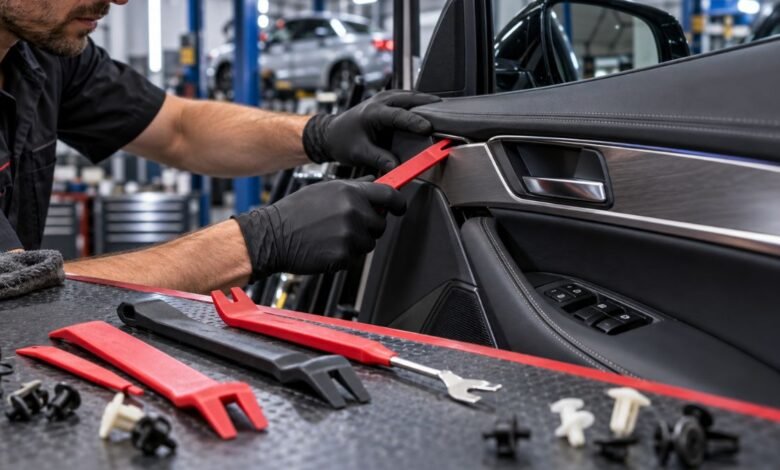
Search for Levapioli, and the results can become confusing almost immediately. One page may describe it as Balkan grilled meat. Another may present it as a modern creative philosophy. Elsewhere, the term is treated as an Italian hand tool. Those explanations cannot all carry the same weight of evidence.
The strongest verifiable evidence comes from the automotive-tool industry. Italian manufacturer Beta Utensili lists multiple products explicitly called levapioli in its professional bodywork-tool range, including stainless-steel, nylon, and metal versions used around vehicle clips, panels, plastics, and trim.
That distinction matters because increasingly repetitive web content can make an unsupported definition appear established simply through repetition. With Levapioli, checking actual manufacturers rather than recycled explainers changes the answer considerably.
BLUF: In documented professional usage, Levapioli is an Italian automotive trim-and-clip removal tool used to lift or release pins, plastic fasteners, panels, and delicate vehicle components. Beta Utensili sells several products under this exact name. Claims that Levapioli is a historic Balkan food are not comparably supported by authoritative evidence.
Levapioli Has a Documented Home in Automotive Bodywork
The clearest way to establish what Levapioli means is to follow the term into a source that actually manufactures products bearing the name.
Beta Utensili categorizes its levapioli products under autoriparazione and carrozzeria—automotive repair and bodywork. Its current range includes the 1479U/13 and 1479U/32 stainless-steel levapioli, a five-piece nylon set, a five-piece metal set, multifunction levers, and related tools for removing vehicle pins and working around plastic trim.
That product family gives the term a concrete technical context rather than a speculative one.
Levapioli snapshot
- Primary documented field: Automotive repair and bodywork
- Core purpose: Releasing or lifting clips, pins, and trim components
- Common materials: Stainless steel, metal and nylon
- Typical work areas: Door panels, dashboards, trim, plastics and vehicle interiors
- Professional context: Body shops, mechanical workshops and automotive servicing
- Comparable English terms: Clip remover, trim removal tool, panel clip remover or pry tool
- Key advantage: More controlled fastener removal than improvised tools such as ordinary screwdrivers
Beta’s bodywork catalog places levapioli alongside dedicated pin extractors, plastic-clip pliers and tools for delicate dashboard work, reinforcing its position as part of a specialized automotive removal-tool system.
What a Levapioli Actually Does When a Vehicle Comes Apart
Modern vehicle interiors are held together by far more than visible screws.
Door cards, dashboard sections, trunk liners, wheel-area plastics, decorative molding, and other panels can use hidden clips or push-style retainers. Pulling a panel without dealing with those fasteners correctly can place excessive load on the clip, the mounting point, or the surrounding trim.
A levapioli gives the technician a shaped working edge that can get behind or around a fastener and apply controlled leverage.
The principle is simple: instead of pulling the entire panel and hoping the clip releases, the tool concentrates force much closer to the fastener.
Comparable automotive tools sold internationally describe the same function. Craftsman says its push-pin clip removal tool removes plastic push pins while minimizing damage and allowing clips to be reused where possible. Dorman’s door-trim removal tool is similarly designed to help prevent damage to clips and surrounding trim.
Typical Levapioli workflow
- Identify the position and type of retaining clip.
- Create enough access to place the tool near the fastener.
- Slide the forked, notched, or shaped end around the clip where appropriate.
- Apply gradual leverage rather than pulling suddenly.
- Release the fastener before moving aggressively on the surrounding panel.
- Inspect the clip before deciding whether it can safely be reused.
Vehicle fasteners differ considerably, so no single removal technique is correct for every panel or clip.
The Search-Result Mystery: How Levapioli Became a Supposed Food
This is where the story becomes more unusual.
During 2026, numerous websites began publishing articles describing Levapioli as a Balkan or Mediterranean grilled-meat preparation. Typical descriptions portray seasoned minced meat formed into short cylinders and grilled at high temperature.
Yet some of those same food-focused pages acknowledge that Levapioli has no established historical culinary definition and that the food described closely resembles ćevapi, a real Balkan grilled-meat dish.
Other pages offer completely different narratives. One describes Levapioli as Italian-Levantine filled pasta, while still others call it a flexible digital or creative concept.
That inconsistency is a warning sign.
By contrast, the automotive meaning is attached to identifiable products, model numbers, and a professional tool manufacturer.
Why a Screwdriver Is Not Automatically a Substitute
An ordinary flat-head screwdriver can pry things apart, but that does not make it an ideal trim-removal tool.
A screwdriver concentrates force through a relatively narrow metal edge. On automotive plastics or painted components, that can increase the risk of visible marks or damage if you insert or twist it carelessly.
Purpose-built trim tools use profiles designed around access, leverage, and fastener geometry. Dorman describes its removal tool as having a wide blade that fits between door trim and the door frame, while specialized nylon tools from Bojo are designed to reduce scratching on delicate surfaces.
Another practical benefit is clip preservation.
Some automotive retainers are meant to be reused if they aren’t damaged. Craftsman specifically states that its clip-removal design helps remove push pins without damage so they can potentially be used again.
That can be the difference between removing a panel cleanly and later discovering that several retainers need replacement.
Where Levapioli Fits in a Modern Garage
A levapioli is particularly relevant when servicing areas where hidden retainers are common.
Door-panel work
Door trims may need removal for window mechanisms, speakers, wiring, handles, locks or upholstery work. A correctly selected clip tool lets you apply force closer to the panel retainer instead of pulling on the door card.
Dashboard and interior trim
Dashboard plastics and decorative panels can mark easily. Beta specifically lists tools within this family for working on dashboards and delicate components, while nylon levapioli provide an alternative when surface protection is especially important.
Audio and infotainment installation
Accessing factory radios, vents and surrounding trim often requires releasing clipped plastic panels before electrical components become reachable.
Body and exterior trim
Depending on the fastener and vehicle design, removal tools can also assist with moldings, retainers, and other clipped components.
Professional tool manufacturers therefore sell numerous profiles rather than pretending one lever can handle every vehicle fastener.
How to Choose a Levapioli Without Damaging the Part You Want to Save
Buying the strongest tool isn’t always the right approach.
Start with the fastener.
If the clip head is accessible, a forked remover that reaches around the retainer may provide controlled extraction. If the task involves a broad decorative panel, a wider non-marring lever can distribute force more gently.
Material matters next.
Choose nylon or another suitable composite when minimizing cosmetic damage is the priority. Choose metal when the job requires greater rigidity and the working area can safely tolerate it.
Then consider access angle. Automotive interiors often contain clips behind curved panels, narrow openings, or recessed trim. Different tool profiles exist because straight access is not always possible.
Most importantly, don’t keep increasing leverage when a component refuses to move. A hidden screw, secondary clip, electrical connector, or different retaining system may still be holding it in place.
Why the Real Levapioli Is More Interesting Than the Internet Myth
Levapioli provides a useful example of why search results should not be treated as evidence simply because multiple pages repeat the same claim.
The web now contains elaborate descriptions of Levapioli as food, philosophy, and cultural tradition. Yet a much simpler explanation is backed by identifiable physical products: Levapioli is used in Italian automotive-tool terminology for tools used to remove pins, clips, and trim.
Beta Utensili’s product range gives that interpretation what competing stories often lack—manufacturer documentation, product codes, and a defined professional application.
That does not prevent the word from taking on other meanings in future menus, brands, or online communities. Language changes.
But when the question is “What does Levapioli actually mean based on verifiable evidence?”, the automotive workshop currently provides the strongest answer.
FAQs.
What is Levapioli?
Levapioli is a documented Italian term used for automotive clip, pin, and trim-removal tools. Beta Utensili sells stainless-steel, nylon, and metal tools under the Levapioli name within its automotive bodywork range. These tools help technicians release retainers and remove vehicle trim with greater control.
Is Levapioli a food?
Levapioli is not well established as the historical name of a traditional food. Several recent websites describe a grilled-meat dish using the term, but their accounts conflict, and some acknowledge that it lacks the documented culinary history of Balkan ćevapi. The automotive-tool meaning has substantially stronger primary-source support.
What is Levapioli called in English?
In English, a Levapioli is usually described by its function, with terms such as trim clip removal tool, panel clip remover, push-pin remover, trim removal tool, or pry tool. Exact terminology varies with thetool’ss design and the fastener it is intended to remove.
Is a nylon Levapioli better than a metal one?
Neither material is universally better. Nylon or reinforced composite tools work well on surfaces where scratching is a concern, while metal tools provide greater rigidity for applications that need stronger or more precise leverage. Beta offers both metal and nylon versions, reflecting these different workshop requirements.
Can Levapioli tools remove door-panel clips?
Yes, clip and trim removal is one of the main applications of this tool class. Comparable professional tools are designed specifically for automotive door panels, plastic retainers, and interior trim. The exact tool profile should match the vehicle’s fastener rather than being forced onto an incompatible clip.
Can you use a Levapioli on every vehicle?
A Levapioli is not automatically suitable for every fastener on every vehicle. Cars use different push pins, retainers, screws, and locking clips. Before applying leverage, identify the attachment method and select a tool whose width, angle, and material suit the component being removed.
Editorial Disclaimer
This feature is based on publicly accessible manufacturer documentation and other sources available as of September 2026. Product designs, specifications, and availability can change. Claims surrounding Levapioli as a traditional food or cultural concept remain inconsistently documented and should not be presented as established historical fact without stronger primary evidence.