Pravi Celer Explained: The True Meaning, Uses, Nutrition, and Everyday Value of Celery

Pravi Celer may sound like the name of a rare or unusual vegetable, but the term is more closely connected with traditional celery and the different ways this familiar plant is understood and used across regions. Known for its fresh aroma, crisp texture, and versatile role in everyday cooking, celery has long been valued in soups, salads, stocks, sauces, and vegetable-based dishes. What makes Pravi Celer especially interesting is the confusion surrounding its meaning, as some people assume it refers to a completely separate plant or a newly discovered superfood. In reality, it is best understood through the wider world of celery, celeriac, celery leaves, and Apium graveolens, all of which have distinct culinary uses and characteristics. This article explores what Pravi Celer really means, its nutritional value, common varieties, kitchen uses, storage tips, growing basics, and the important facts that separate genuine information from exaggerated health claims.
What Is Pravi Celer?
Pravi Celer is a term that can sound mysterious when someone encounters it for the first time. It may appear to describe an unusual plant, a rare vegetable, or even a special new food variety. In reality, the meaning is considerably simpler. In South Slavic languages, “pravi” can mean real, true, genuine, or authentic, while “celer” refers to celery. In that sense, Pravi Celer can be understood as “true celery” or “real celery.” Rather than identifying an entirely separate vegetable species, the expression is closely connected with the familiar celery plant, botanically known as Apium graveolens. What makes the subject interesting is that celery is more diverse than the pale green stalks commonly found in supermarkets. Different cultivated forms may be valued for their stalks, leaves, aromatic seeds, or enlarged underground portions, creating noticeable differences in appearance, taste, texture, and kitchen use.
Understanding Pravi Celer therefore requires looking beyond the name itself. Celery has been part of food traditions for generations, particularly in soups, stocks, salads, vegetable dishes, sauces, stews, and aromatic cooking bases. Its recognizable fragrance means even a small amount can influence a dish’s character. While modern food trends occasionally turn ordinary vegetables into supposed miracle ingredients, Pravi Celer is better understood as a traditional, versatile food rather than a magical superfood. Its real value lies in its culinary flexibility, fresh flavor, nutritional value, and ability to pair with many ingredients.
The Meaning Behind the Name Pravi Celer
The popularity of the keyword Pravi Celer can partly be explained by language. A familiar ingredient can suddenly sound exotic when its name crosses linguistic boundaries. Someone who speaks English may recognize “celery” immediately but may not understand “celer.” When “pravi” is added, the phrase can appear to refer to a different product. This has led to considerable confusion in online discussions, where Pravi Celer is sometimes described as a unique form of celery with extraordinary characteristics.
A more practical interpretation is that the expression emphasizes genuine or traditional celery. Depending on regional usage and the recipe, the ingredient could be stalk celery, leafy celery, or a root-focused form such as celeriac. That distinction matters because these forms can look dramatically different while belonging to the same broader celery species. A recipe calling for aromatic celery root, for example, should not automatically be made with several crisp supermarket stalks and expected to produce the same result.
Understanding the Celery Plant
Celery belongs to the Apiaceae family, the same botanical family associated with several familiar aromatic vegetables and herbs. Its scientific name, Apium graveolens, provides a clearer botanical identity than informal names because regional food terminology can vary by country.
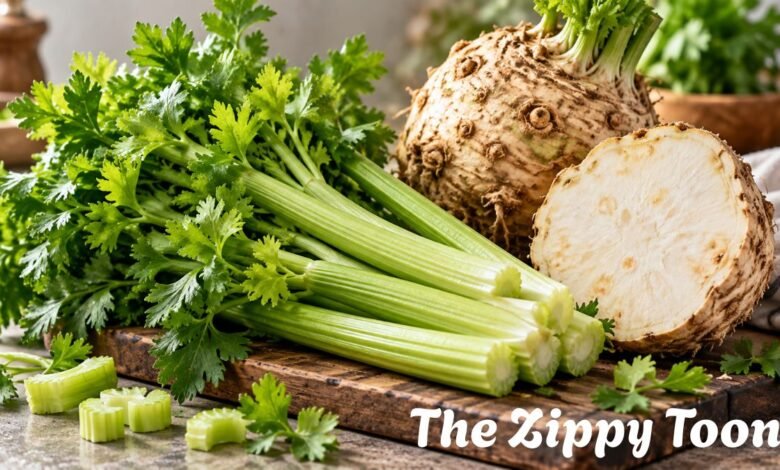
The plant can be cultivated for different features. Stalk celery is the form most familiar to shoppers in countries such as the United Kingdom and the United States. It develops long, crisp, fleshy leaf stalks that are eaten raw or cooked. Leaf celery is generally valued more for its strongly flavored leaves and thinner stalks, which can work well as an aromatic ingredient. Another important form is celeriac, commonly called celery root. It develops a large, rough, rounded edible base and has a stronger, earthier celery character. These differences explain why discussions of Pravi Celer don’t always describe the same appearance.
Pravi Celer and Celeriac Are Not Always the Same Thing
One of the most important distinctions to make is between celery and celeriac. The two are closely related, but they are cultivated for different characteristics. Standard stalk celery is grown primarily for its crisp petioles, while celeriac is selected for its enlarged lower portion, which is prepared much like a root vegetable.
This distinction also explains why photographs associated with Pravi Celer online can look inconsistent. One image may show long green celery stalks, while another may display a round, knobbly vegetable with leafy growth above it. Both can belong to the broader world of Apium graveolens, but they are not interchangeable in every recipe. Celeriac tends to have a concentrated, earthy, and slightly nutty celery flavor, whereas stalk celery is generally fresher, lighter, and noticeably crunchy.
For someone following a Balkan or Central European recipe, understanding the expected form of celery can make a significant difference. Soups and traditional broths may use the root or leaves primarily for aroma, while fresh salads may depend on crisp stalks or finely shredded celeriac.
Nutritional Character of Pravi Celer
Nutritionally, celery is a vegetable, not a miracle treatment. It has a high water content and can provide dietary fiber, along with small amounts of several vitamins and minerals. Its exact nutritional profile varies by variety, plant part, serving size, freshness, soil, and preparation method.
Fresh celery is often appreciated because it provides volume and crunch without being especially energy-dense. This can make it useful in balanced meals alongside more substantial sources of protein, healthy fats, whole grains, legumes, fruits, and other vegetables. Celery also contains naturally occurring plant compounds, but their presence should not be interpreted as proof that consuming large quantities can cure diseases or replace medical treatment.
The strongest nutritional approach is therefore simple: enjoy Pravi Celer as part of a varied diet rather than building an entire wellness routine around it. Eating a broad selection of vegetables generally offers more nutritional diversity than relying excessively on a single ingredient.
Why Celery Works So Well in Cooking
The appeal of Pravi Celery extends well beyond nutrition. Its most distinctive quality is its aroma. Celery can add freshness and complexity to dishes without dominating other ingredients. This is why it frequently appears alongside carrots, onions, herbs, potatoes, meat, beans, tomatoes, and other vegetables.
Raw stalk celery has a crisp texture that works particularly well in salads and cold dishes. Thin slices can add a refreshing bite, while larger pieces can be eaten with dips or spreads. When celery is cooked, its character changes. The texture softens, and the sharper fresh flavor becomes a gentler aromatic background.
Don’t automatically discard the leaves. Celery leaves can have an intense fragrance and may be chopped into soups, stocks, sauces, salads or savory dishes. Using the leaves also reduces kitchen waste and makes better use of the plant.
Celeriac offers another set of possibilities. After you remove its rough outer skin, you can roast, boil, mash, grate, bake, or add the pale interior to soups. Its stronger flavor makes it especially suitable for comforting autumn and winter dishes.
Using Pravi Celer in Soups and Stocks
One of the most traditional ways to appreciate Pravi Celer is in soup. Celery releases aroma gradually during cooking, creating a savory base without requiring complicated techniques. Add it with onion and carrot at the start of a recipe, letting the vegetables soften together before you add liquid and other ingredients.
Celery root or strongly flavored leaves can be particularly useful in homemade stock. Their fragrance adds depth, but use moderation, as very aromatic celery can become dominant. The aim is usually to create balance rather than make every spoonful taste exclusively of celery.
This ability to function as a supporting ingredient explains why celery appears in many different culinary traditions. It may not always be the first ingredient people notice, but removing it from a familiar recipe can make the final dish taste noticeably flatter.
Fresh Salads and Everyday Meals
Pravi Celer can also play a much brighter role in fresh food. Crisp stalks can be sliced across the grain and combined with apples, carrots, cabbage, leafy greens or other vegetables. The natural crunch creates texture without requiring frying or heavy preparation.
Celeriac can also be eaten raw when appropriately prepared. Finely shredded celeriac is used in various salad preparations, where its firm texture and distinctive flavor pair well with creamy, acidic or mustard-based dressings. Because its flavor is stronger than ordinary stalk celery, you may need less.
For everyday meals, add celery to sandwiches, grain bowls, vegetable plates, stews, casseroles, and sauces. Its versatility is arguably a more meaningful advantage than exaggerated claims about health transformations.
Choosing Fresh Pravi Celery
Freshness affects both texture and flavor. When buying stalk celery, look for stalks that feel relatively firm rather than limp or rubbery. Leaves should generally appear fresh rather than badly wilted, yellowed, or decaying. Celery naturally varies in shade, so darker or lighter green coloration alone does not automatically determine quality.
For celeriac, appearance can be deceptive because the exterior is naturally rough, irregular and knobbly. A good specimen should generally feel firm and heavy for its size without extensive soft or rotten areas. The unattractive exterior is normal and does not mean the inside is poor quality.
Because celery can lose moisture after harvest, correct storage helps preserve its texture. Refrigeration is generally suitable for fresh celery. Protecting it from excessive dehydration helps maintain crispness, and cut portions should be handled hygienically and used within a reasonable time.
Growing Pravi Celer at Home
Gardeners interested in Pravi Celer should understand that celery is not always the easiest vegetable for beginners. It generally prefers consistent moisture, fertile soil, and conditions that prevent prolonged stress. Irregular watering can affect growth and texture, while extreme environmental conditions may influence the final crop.
Choose different celery forms based on your desired harvest. Someone wanting crisp stalks should choose varieties developed for that purpose, while a gardener hoping to harvest a large celeriac base needs a root-focused cultivar.
Patience is important because celery can require a comparatively long growing period. Seeds are small, young plants can develop slowly, and maintaining moisture is often important. Home-grown celery, however, can reward careful gardeners with particularly aromatic leaves and stalks that can be used throughout the kitchen.
Is Pravi Celer a Superfood?
Calling Pravi Celer a superfood can create unrealistic expectations. Celery is certainly a useful vegetable, but no single vegetable provides everything the human body needs. Terms such as “detox food,” “fat-burning food,” or “miracle vegetable” often work better for marketing than for accurate nutrition education.
Celery juice has also attracted attention in wellness culture. Drinking celery in juice form may be an enjoyable way for some people to consume it, but juicing should not automatically be considered superior to eating whole vegetables. Whole celery retains its natural structure and fiber, whereas juicing can change how much fiber remains.
A sensible view is to value Pravi Celer for what it genuinely offers: freshness, flavor, hydration, culinary versatility, and useful nutrients within an overall balanced diet.
An Important Allergy Consideration
Although celery may seem like an ordinary vegetable, it can cause allergic reactions in susceptible people. Celery is recognized as a significant food allergen in parts of Europe, and reactions can involve different forms of the plant, including stalks, leaves, seeds, seasoning products and celeriac.
People with a diagnosed celery allergy should therefore not assume that celery salt, celery seed or celery root is automatically safe simply because it looks different from a fresh stalk. Restaurant dishes, soups, stock cubes, sauces and seasoning mixtures can sometimes contain celery in less obvious forms.
This safety point is another reason why factual information about Pravi Celer matters. A vegetable can be nutritious and useful for most people while still being unsuitable for individuals with a specific allergy.
Why Pravi Celer Continues to Attract Interest
The growing curiosity around Pravi Celer reflects something broader about modern food culture. People increasingly search for traditional ingredients, regional terminology, and less processed ways of cooking. When a familiar vegetable appears under an unfamiliar name, it can suddenly seem new again.
Yet the most interesting part of Pravi Celer is not the possibility of discovering an exotic superfood. It is realizing how much variety already exists within a vegetable that many people take for granted. Stalks, leaves, seeds, and celeriac-style forms can each contribute differently to food, turning celery from a simple salad ingredient into an important part of soups, stocks, fresh dishes, and slow-cooked meals.
Conclusion
Pravi Celer is best understood as a term connected with true, real, or traditional celery, rather than a mysterious vegetable completely separate from ordinary celery. The plant behind the term is associated with Apium graveolens, a versatile species cultivated in forms that emphasize stalks, leaves, or the enlarged portion commonly known as celeriac.
Its appeal comes from practical qualities rather than exaggerated promises. Pravi Celer can bring crunch, fragrance, freshness, and savory depth to many kinds of food. You can eat it raw, cook it into soups, use it in stocks, roast it, mash it, add it to salads, or grow it at home. Nutritionally, celery can support a varied, vegetable-rich diet, but it should not replace balanced eating or medical care.
Ultimately, understanding Pravi Celer removes much of the confusion surrounding the name. It shows how language, regional cooking traditions, and different cultivated forms of the same plant can make an everyday ingredient seem unfamiliar. Once that distinction is clear, Pravi Celer becomes much easier to appreciate for what it really is: a traditional, aromatic, and highly adaptable form of celery with a useful place in everyday cooking.