Tibialis Raises: The Ultimate Guide to Stronger Shins, Better Ankle Stability, and Injury Prevention

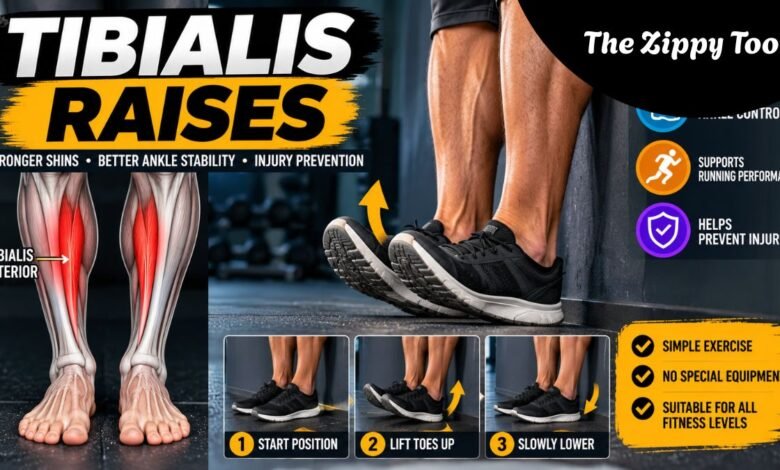
Tibialis raises are a simple yet effective lower-leg exercise that targets muscles many people overlook during their regular workouts. While calf raises, squats, and lunges get plenty of attention, the muscles along the front of the shin matter just as much for everyday movement, balance, and ankle control. Strengthening these muscles can help balance your lower body and improve your ability to control your feet during walking, running, and other physical activities.
Whether you are a runner looking to improve lower-leg conditioning, an athlete seeking better ankle strength, or a beginner building a practical home workout routine, this exercise is worth considering. One of its biggest advantages is accessibility. Basic variations require little equipment, making them suitable for home training, gym sessions, and carefully planned rehabilitation programs.
This article explains how the exercise works, its potential benefits, correct technique, common mistakes, useful variations, and practical ways to include it in your fitness routine.
What Are Tibialis Raises?
Tibialis raises are strengthening exercises that primarily target the tibialis anterior, a muscle running along the front and outer portion of the shinbone. This muscle plays an essential role in lifting the front of the foot toward the shin, a movement called ankle dorsiflexion. Dorsiflexion happens naturally when you walk, climb stairs, or clear the ground with your toes during a stride.
The exercise typically involves keeping your heels planted while lifting your toes and forefoot. Unlike calf raises, which lift the heels and primarily strengthen the muscles on the back of the lower leg, this movement trains the muscles that pull the foot upward.
Because the movement is relatively straightforward, it can be adjusted for different strength levels. Beginners may start seated in a chair, while experienced exercisers can use wall-supported variations, resistance bands, or specialized equipment to increase the challenge.
Understanding the Tibialis Anterior Muscle
The tibialis anterior muscle is one of the main muscles that control foot position. It begins near the upper tibia and runs down the leg through a tendon that connects to structures in the foot. Its primary function is dorsiflexion, but it also helps turn the sole inward.
During walking, this muscle helps lift the foot so that the toes do not drag against the ground. It also helps control the foot as the heel contacts the floor. During running, the muscle works repeatedly as the foot moves through each stride.
Although most people use the tibialis anterior regularly without thinking about it, targeted strengthening can improve its ability to handle exercise demands. However, strong shin muscles are only one part of healthy movement. The calves, ankles, hips, and feet must also work together effectively.
Major Benefits of Tibialis Raises
One of the most noticeable benefits is stronger shin muscles and greater endurance. Repeatedly lifting the forefoot against gravity or resistance challenges the tibialis anterior and helps it adapt over time. For people who usually focus on calf exercises, this provides useful training for the opposite side of the lower leg.
Another potential advantage is improved ankle control. Strong dorsiflexor muscles help manage foot movement, especially when transitioning between steps. This may be particularly useful for people participating in activities involving frequent walking, running, or changes in direction.
The exercise can also support a more balanced lower-leg strengthening program. Training both the front and back of the lower leg develops different movement functions instead of repeatedly focusing on a single muscle group.
Some runners include the exercise in their approach to managing lower-leg training demands. However, tibialis strengthening alone has not been proven to prevent every case of shin splints or ankle injury. Training volume, footwear, recovery, running mechanics, and overall physical conditioning also influence injury risk.
How to Perform Tibialis Raises Correctly
The wall-supported variation is popular because it requires no specialized equipment and lets you adjust the difficulty by changing your foot position.
Stand with your back against a stable wall. Stand with your feet about hip-width apart, with both heels firmly on the floor. Step your feet slightly forward so that your body is supported by the wall.
Keeping your heels planted, slowly lift your toes and the front portions of your feet toward your shins. Aim for a comfortable range of movement without forcing the ankles. Pause briefly at the highest controlled position before lowering the feet gradually toward the floor.
Repeat the motion while maintaining a steady rhythm. The movement should originate primarily from the ankle, not from swinging the legs or rocking the entire body.
For beginners, two sets of 10 to 15 repetitions can provide a manageable starting point. The correct volume depends on fitness level, comfort, and recovery. Move your feet closer to the wall if the exercise feels too difficult, and don’t increase the challenge until you can complete repetitions with consistent technique.
Beginner-Friendly Tibialis Raise Variations
Seated toe raises provide one of the easiest introductions to this movement. Sit upright in a stable chair with both feet flat on the floor. Keep your heels planted and lift your forefoot, then slowly return it to the starting position. This variation requires minimal balance and lets beginners focus on ankle movement.
Standing toe raises are another accessible option. Stand near a wall or sturdy support and gently shift your weight toward your heels as you lift your toes. Keep the movement controlled, and avoid leaning back too far.
Resistance-band dorsiflexion offers a different method. Sit with your leg supported, secure a resistance band to a stable anchor in front of your foot, and position the band over the forefoot. Pull your toes toward your shin against the band’s resistance, then return slowly.
These variations can help when a standard wall-supported exercise feels uncomfortable or too demanding.
Advanced Tibialis Raises for Progressive Strength
Once basic repetitions become easy, add resistance to keep progressing. One method is to adjust the distance between your feet and the wall. Moving the feet farther forward generally increases the challenge, although the position must remain stable and comfortable.
A tibialis raise machine or dedicated training attachment can provide resistance beyond body weight. These devices let you lift a load through ankle dorsiflexion, making them particularly appealing for people following structured strength programs.
You can also progress resistance bands by choosing a stronger band or adjusting the tension. Regardless of the method, gradual progression is more valuable than suddenly adding heavy resistance.
Advanced training should still emphasize a full, comfortable range of motion, controlled repetitions, and adequate recovery. Excessive loading can irritate tissues instead of producing better results.
How Many Sets and Repetitions Should You Do?
The appropriate training volume depends on your goals and current strength. Beginners can start with two sets of 10 to 15 repetitions, performed two or three times per week. Starting conservatively gives the muscles and surrounding tissues time to adjust.
For more experienced trainees, two to four sets of about 12 to 20 controlled repetitions may be appropriate, as long as the exercise remains comfortable. These are practical starting ranges rather than universal requirements.
Allow recovery between challenging sessions, particularly when the exercise is unfamiliar. Mild muscular fatigue is normal, but persistent pain or significant soreness suggests you may need to adjust training intensity.
Measure progress through better movement control, more comfortable repetitions, and gradually increased resistance rather than simply completing the highest possible number of raises.
Tibialis Raises for Runners and Athletes
Runners place repeated demands on their lower legs, making ankle and foot strength relevant to overall conditioning. During each stride, the tibialis anterior helps position the foot and control its movement after ground contact.
Strengthening this muscle may improve local muscular capacity, especially for runners who previously performed little direct dorsiflexion training. Athletes involved in basketball, football, hiking, and other activities that require repeated foot movement may also find the exercise useful.
Nevertheless, stronger shins do not automatically produce faster running times, higher jumps, or fewer injuries. Athletic performance depends on several factors, including technique, strength across multiple muscle groups, coordination, and appropriate training.
For this reason, shin exercises work best when included in a balanced program rather than treated as a complete performance solution.
Can Tibialis Raises Help With Shin Splints?
Shin splints are exercise-related pain around the shin, commonly linked to repetitive loading from running and jumping. They can involve several tissues, and the pain source isn’t always the tibialis anterior itself.
Strengthening exercises may form part of a rehabilitation or conditioning program, but their suitability depends on the cause and stage of symptoms. Some people benefit from carefully progressed ankle strengthening, while others need to reduce impact activity initially.
Do not attempt to train through significant shin pain. Increasing exercise resistance while symptoms are active may aggravate the problem. Persistent or localized shin pain can indicate a bone stress injury or another condition that requires assessment.
If pain worsens, swelling occurs, you have difficulty bearing weight, or the pain persists at rest, seek medical advice before resuming demanding exercise.
Common Mistakes to Avoid
A common mistake is lifting the toes too quickly and letting them drop without control. This reduces the emphasis on deliberate muscular work. Slower movement helps maintain consistent tension and makes it easier to recognize when fatigue begins affecting technique.
Another problem is lifting the heels instead of keeping them planted. This changes the intended movement and can reduce the exercise’s effectiveness for the tibialis anterior.
Some people also place their feet too far from the wall, making the exercise difficult before they develop sufficient strength. Starting with an easier position and progressing gradually is generally more productive.
Finally, doing the exercise every day at high intensity without recovery can cause unnecessary discomfort. Consistent training and proper technique matter more than excessive repetitions.
How to Include Tibialis Raises in Your Workout Routine
This exercise fits naturally into a lower-body workout, a running strength session, or a short home exercise routine. You can do it after a general warm-up, alongside calf strengthening, or near the end of a workout as accessory training.
For example, a balanced lower-leg session could include calf raises, controlled ankle dorsiflexion, single-leg balance exercises, and gentle mobility work. Each movement develops a different aspect of strength or control.
A short warm-up, such as walking or light cycling, can prepare the legs for more demanding exercises. Beginners should prioritize correct form and consistency over adding multiple advanced variations.
Over several weeks, you may notice gradual improvements in repetition quality, resistance tolerance, and muscular endurance. Results vary depending on training history and overall program consistency.
Conclusion
Tibialis raises offer a practical way to strengthen the front of the lower leg and develop better control of ankle dorsiflexion. Their simplicity, minimal equipment requirements, and adjustable difficulty make them accessible to beginners, runners, athletes, and people seeking a more complete lower-body strengthening routine.
Although the exercise can improve lower-leg conditioning, it shouldn’t be considered a guaranteed solution for shin splints, ankle injuries, or athletic performance limitations. The most effective approach combines controlled technique, progressive resistance, adequate recovery, and balanced training.
When performed consistently and comfortably, this often-overlooked exercise can become a valuable addition to a long-term fitness program.
(FAQs)
1. What muscles do tibialis raises work?
They primarily strengthen the tibialis anterior muscle along the front of the shin. Other muscles involved in lifting the foot may assist with the movement, but the tibialis anterior is the main target.
How Often Should You Do Tibialis Raises?
2. Can tibialis raises be performed every day?
Some people can tolerate light, comfortable repetitions, but daily challenging workouts aren’t necessary. Beginners can start two or three times weekly and adjust according to recovery, soreness, and training goals.
Are Tibialis Raises Good for Shin Splints?
3. Do tibialis raises prevent shin splints?
They can help strengthen the lower leg, but there is insufficient evidence that this exercise alone reliably prevents shin splints. Appropriate training progression, recovery, and individual risk factors remain important.
Do Tibialis Raises Improve Ankle Mobility?
4. Can tibialis raises improve ankle mobility?
They strengthen the muscles that actively lift the foot and may improve control within an available range of motion. However, restricted ankle mobility can also involve joint or soft-tissue limitations that require additional exercises or professional assessment.
Do You Need Equipment for Tibialis Raises?
5. Can you perform tibialis raises at home without equipment?
Yes. Seated and wall-supported variations require no specialized equipment. A stable chair, a suitable floor surface, or a wall is usually enough to start practicing the movement safely.