Valeria Wasserman: The Untold Story of Noam Chomsky’s Wife, Her Career, and the Controversy That Changed Everything
From a private career in translation to defending one of the world's most influential intellectuals, Valeria Wasserman has found herself at the center of an increasingly complicated public story.

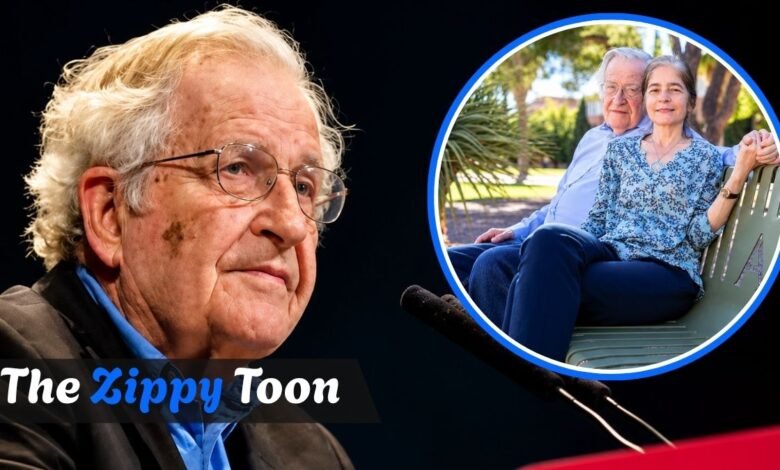
For years, Valeria Wasserman lived largely outside the international spotlight. Although married to renowned American linguist, philosopher, and political commentator Noam Chomsky, she remained a relatively private Brazilian translator. Her name appeared occasionally in academic circles and at public events, but she rarely made major international headlines.
That changed after Chomsky suffered a serious stroke in June 2023. Wasserman became his principal caregiver and public representative, taking responsibility for communicating important information about his condition. In June 2024, she publicly corrected false reports of his death, establishing herself as a crucial source of reliable information about the scholar.
Then came another challenge. In February 2026, newly released documents concerning convicted sex offender Jeffrey Epstein prompted renewed questions about the Chomskys’ past association with him. Wasserman responded with a detailed public statement acknowledging serious judgment errors while explaining the couple’s interactions. Her response brought fresh attention to a woman whose public identity had previously been defined largely by her marriage.
Valeria Wasserman is a Brazilian professional translator and the second wife of American linguist Noam Chomsky, whom she married in 2014. She is also his principal public representative and caregiver following his 2023 stroke. In February 2026, she addressed their past connections with Jeffrey Epstein through a public apology and explanation.
Quick Bio
| Detail | Information |
|---|---|
| Full Name | Valeria Wasserman Chomsky |
| Also Known As | Valéria Chomsky |
| Nationality | Brazilian |
| Profession | Translator |
| Husband | Noam Chomsky |
| Marriage Year | 2014 |
| Known For | Translation work and marriage to Noam Chomsky |
| Public Responsibilities | Caregiver, spokesperson, and academic communication support |
| Connection to Brazil | The couple has maintained a home in Brazil since 2015 |
| Personal Net Worth | Not publicly verified |
The Brazilian Translator Who Built a Professional Identity Outside Celebrity Culture
Valeria Wasserman, also known as Valéria Wasserman Chomsky or Valeria Chomsky, is a Brazilian translator whose professional work predates her international recognition as Noam Chomsky’s wife. Unlike many people associated with prominent public figures, Wasserman did not establish her career through television appearances, entertainment, or social media influence.
Her professional background is supported by institutional documentation. In a 2022 University of Brasília publication, the university identified her as a translator and acknowledged her important role in coordinating an academic event honoring Noam Chomsky. That acknowledgment provides direct evidence of her involvement in academic communication and international collaboration.
Translation requires deep linguistic and cultural understanding, especially with complex academic material. The profession requires communicating meaning accurately while preserving the original language’s intent and context. Wasserman’s Brazilian background and work in academic circles placed her in an environment where cross-language and cross-cultural communication was especially relevant.
Although numerous online biographies provide elaborate accounts of her educational qualifications, professional appointments, and early employment, not every detail is supported by independent institutional documentation. Her exact birth date, full educational history, and complete employment timeline remain insufficiently verified.
What is clear is that Wasserman had a professional identity before her marriage made her widely recognized. Her later responsibilities in academic coordination and public communication show her role cannot be reduced to being the spouse of a famous intellectual.
A Second Marriage That Brought Noam Chomsky a New Chapter of Personal Happiness
Noam Chomsky was previously married to Carol Doris Schatz Chomsky, an American linguist and education specialist. They married in 1949 and were together until Carol died in 2008. They raised three children together, and their relationship remained an important part of Chomsky’s personal life for nearly six decades.
In 2014, Chomsky married Valeria Wasserman. The relationship marked a new personal beginning for the scholar, already internationally recognized for his contributions to modern linguistics, philosophy, media criticism, and political thought.
During a March 3, 2015, interview with Democracy Now!, Chomsky spoke unusually openly about his new marriage. He described Wasserman’s arrival in his life as an unexpected source of happiness and discussed an upcoming visit to Brazil to meet her family.
His comments were especially significant because Chomsky had generally avoided extensive public discussion of his private relationships.
The relationship also developed across national and cultural boundaries. Chomsky’s professional commitments were strongly tied to American universities, while Wasserman maintained close ties to Brazil. Their marriage helped create a shared life involving both countries.
In 2017, Chomsky joined the University of Arizona as a laureate professor. The university subsequently reported that earlier visits to Arizona with Wasserman had influenced his decision to join its faculty.
A university feature published in April 2018 also credited Wasserman with suggesting and helping organize a public discussion between Chomsky and Daniel Ellsberg, the American whistleblower associated with the Pentagon Papers.
This was a particularly revealing example of her involvement. She was not simply accompanying Chomsky to public appearances; she helped arrange meaningful intellectual exchanges.
The couple’s connection with Brazil was equally visible. In September 2018, they visited Luiz Inácio Lula da Silva while he was imprisoned. Their engagement with Brazilian public affairs reflected the political and intellectual interests surrounding Chomsky’s wider work.
The 2023 Stroke That Made Wasserman His Most Important Public Voice
The most significant change in Wasserman’s responsibilities followed Noam Chomsky’s stroke in June 2023.
The medical emergency caused serious neurological problems and substantially reduced his ability to communicate publicly. His prolonged absence from interviews, lectures, and political commentary generated widespread concern because he had remained active in public debate well into his nineties.
By June 2024, reports confirmed that Chomsky was receiving treatment in São Paulo, Brazil. The Associated Press reported that Wasserman arranged his transfer from the United States by medical aircraft once he was stable enough to travel.
She also provided information about his rehabilitation and medical supervision.
The situation became especially sensitive on June 18, 2024, when false reports claiming that Chomsky had died spread across social media and appeared in some publications.
Wasserman directly rejected those reports in a response to the Associated Press. Her correction established that the widely circulated death claims were inaccurate.
On the same date, São Paulo’s Beneficência Portuguesa hospital confirmed that Chomsky had been discharged to continue his medical care at home.
Several days later, Brazilian President Lula visited Chomsky at his São Paulo residence, drawing additional international attention to his recovery.
Wasserman’s responsibilities were no longer limited to private family arrangements. She became the person journalists and readers relied on to distinguish verified medical information from speculation.
In her February 2026 statement, she said Chomsky was receiving ongoing medical care and could no longer speak or participate in public discourse.
Those comments described his condition at the time of the statement rather than providing a continuously updated medical assessment.
Her work during this period illustrates an important distinction: being a public spokesperson for a family member does not necessarily mean seeking personal publicity. Wasserman’s communications largely responded to substantial public questions about her husband’s condition and activities.
The Jeffrey Epstein Connection That Brought Difficult Questions Back Into Public View
The most controversial chapter of Wasserman’s public story concerns her and Noam Chomsky‘s past relationship with Jeffrey Epstein, the American financier convicted in 2008 of offences involving a minor.
According to Wasserman’s February 2026 statement, she and Chomsky first met Epstein in 2015, during a professional event involving her husband.
She explained that Epstein presented himself as a supporter of scientific research and an individual with financial expertise. According to her account, the couple did not initially know about his earlier criminal conviction.
However, Epstein’s 2008 conviction was already public record. The claim that the Chomskys were unaware of it is their explanation, not independent proof that the information was inaccessible.
The relationship subsequently involved meetings and communications. In her statement, Wasserman acknowledged that they attended meals at Epstein’s properties, visited his New York accommodation, and spent time at his Paris apartment.
She also said they did not visit Epstein’s private island and had not witnessed criminal or inappropriate conduct during their encounters.
Those statements describe her account of events; they do not independently establish everything that occurred throughout Epstein’s broader social network.
The controversy intensified when communications involving Chomsky became public, including a February 2019 email exchange in which he appeared to advise Epstein about how to handle adverse media coverage of allegations against him.
The response was troubling because Chomsky had spent decades examining political power, media narratives, and institutional accountability.
Wasserman subsequently argued that Epstein had presented himself as a victim of unjustified criticism and that Chomsky had accepted this narrative without understanding the full circumstances.
Nevertheless, the correspondence remains an important part of the documented relationship. Explaining the context of an exchange is different from erasing responsibility for its content.
The U.S. Department of Justice’s January 30, 2026 release of more than three million additional pages concerning Epstein and related investigations prompted further examination of these associations.
The documents renewed public scrutiny of numerous individuals connected to Epstein, although appearing in released correspondence does not by itself establish participation in criminal activity.
What Wasserman’s February 2026 Apology Actually Acknowledged
On February 7, 2026, Wasserman dated a detailed statement addressing the couple’s relationship with Epstein. The statement was publicly circulated the following day.
Rather than denying the relationship, she acknowledged their personal and professional contacts and expressed regret over their decisions.
She described their failure to adequately investigate Epstein’s history as a grave mistake and apologizedapologized on behalf of herself and Chomsky.
Wasserman argued that Epstein cultivated the friendship through intellectual discussions, gifts, introductions, and offers of assistance. She believed these interactions helped him gain access to a highly respected public figure whose association might improve Epstein’s reputation.
An especially important aspect of the statement was her acknowledgment that Chomsky’s initial public response to questions about Epstein in 2023 had failed to recognize the seriousness of the financier’s crimes and the suffering of survivors adequately.
She also expressed solidarity with Epstein’s victims.
The statement explained financial interactions, including a payment tied to a proposed linguistics challenge and assistance with Chomsky’s finances.
However, it is important to distinguish documented communications, Wasserman’s retrospective explanations, and unresolved questions. Her account offers her perspective, while the released records and independent reporting provide additional evidence that requires separate evaluation.
Why the Reported Financial Transactions Do Not Establish Wasserman’s Personal Wealth
Financial information has entered public discussion about Wasserman because of transactions mentioned in the Epstein-related records.
Two figures are particularly important.
The first is $20,000, which Wasserman described as payment for a linguistics challenge that Epstein had asked Chomsky to develop. According to her explanation, Epstein’s office contacted her to arrange delivery of the payment.
The second is approximately $270,000, involving funds that Epstein reportedly helped Chomsky recover or transfer. Wasserman said this amount represented Chomsky’s own money, not a payment or investment from Epstein.
She also said neither she nor Chomsky had investments with Epstein or his office.
These explanations should not be confused with independent financial audits or complete documentation of the couple’s assets.
Most importantly, neither figure provides reliable evidence of Valeria Wasserman’s individual net worth.
No authoritative public financial disclosure establishing her personal assets, income, or total wealth was identified. Online claims assigning her a precise fortune should therefore be treated as unverified.
Her professional translation career also does not provide sufficient information to calculate personal wealth. Reliable documentation of income, savings, property ownership, liabilities, and investments would be needed before any meaningful valuation could be made.
(FAQs)
Who is Valeria Wasserman?
Valeria Wasserman is a Brazilian translator and Noam Chomsky’s second wife. She married the American linguist in 2014 and has participated in academic and public communication associated with his work. Following his June 2023 stroke, she became his primary caregiver and an important public representative, communicating information about his health and responding to questions concerning his past associations.
When did Valeria Wasserman marry Noam Chomsky?
Valeria Wasserman married Noam Chomsky in 2014, about six years after his first wife, Carol Chomsky, died. During a March 2015 interview with Democracy Now!, Chomsky discussed their approaching first wedding anniversary and his plans to visit Wasserman’s family in Brazil. The interview directly confirms the marriage’s approximate timing.
What does Valeria Wasserman do professionally?
Valeria Wasserman is professionally identified as a translator. The University of Brasília described her as such in an institutional publication and acknowledged her assistance in organizing an academic event honoring Chomsky. Although online biographies list additional educational and employment details, her complete professional history is not independently documented through the authoritative sources examined for this article.
Does Valeria Wasserman have children with Noam Chomsky?
No verified public record shows that Valeria Wasserman and Noam Chomsky have children together. Chomsky has three children from his first marriage to Carol Chomsky. Details about Wasserman’s private family relationships should not be inferred from her marriage or from unverified celebrity biography websites.
What did Valeria Wasserman say about Jeffrey Epstein?
Valeria Wasserman acknowledged that she and Chomsky made serious errors in judgment in their association with Jeffrey Epstein. In February 2026, she apologized for failing to investigate his history adequately and explained their meetings and financial interactions. She argued that Epstein had manipulated the relationship while also expressing solidarity with the victims of his crimes.
Beyond the Headlines, Her Public Record Presents a More Complicated Picture
Valeria Wasserman’s life cannot be understood through a single description.
She is a Brazilian professional translator, a spouse who became closely involved in an internationally recognized academic career, and a caregiver who assumed major responsibilities after her husband’s serious illness.
She is also a public representative whose explanations concerning Jeffrey Epstein have attracted legitimate scrutiny.
Those roles deserve to be examined together, not selectively.
Her participation in academic coordination is supported by university records. Her marriage is established through Chomsky’s own public statements. Her responses to his medical situation were documented through direct reporting. Her account of the Epstein relationship is available in a detailed statement that can be compared with released records.
The central lesson of Wasserman’s public story is that personal loyalty, professional responsibilities, and public accountability can become difficult to separate. Her actions during Chomsky’s illness demonstrate the practical significance of her caregiving role. At the same time, the Epstein controversy illustrates why even respected intellectual figures and their associates remain subject to legitimate questions about judgment and responsibility.
The most reliable account of her life is therefore neither unquestioning praise nor guilt by association. It distinguishes facts from personal explanations and lets the available evidence speak for itself.
You might also like:Laura Dimon: The Remarkable Journalism Career of Jamie Dimon’s Daughter
Editorial Verification Note
This profile distinguishes independently documented events from statements made by the individuals involved. Wasserman’s exact age, complete education history, personal assets, and net worth have not been independently verified. Her descriptions of the Epstein relationship are attributed to her rather than treated as conclusive findings. Health details refer to the dates on which they were publicly reported, and this article does not imply access to private medical or financial records.