Babybelletje Explained: The Cute Dutch-Style Word Behind a Surprisingly Confusing Search
It looks like a product name, sounds unmistakably Dutch, and is often linked to a famous red-wax cheese—but the evidence tells a more precise story.

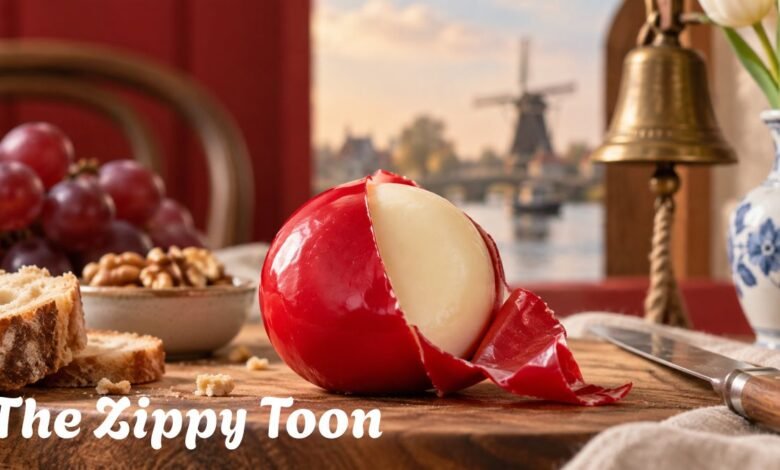
Search for Babybelletje, and the results quickly become confusing. Some pages describe a cheese snack. Others translate it as a “baby bell,” while still others connect the term with baby accessories or pregnancy jewelry. Those explanations cannot all be treated as equally established meanings.
The clearest way to understand the word is to separate Dutch language evidence from Babybel’s official branding. Dutch really does have the word belletje, and Mini Babybel really is a long-established cheese product. Babybelletje, however, is far less established as a formal dictionary term or official Babybel product name.
That distinction matters because unusual search terms can attract elaborate online explanations even when the underlying evidence is much simpler.
Babybelletje is not an official Babybel product name. The safest interpretation is an informal Dutch-style diminutive of Babybel—roughly “little Babybel”—built on the same diminutive pattern seen in Bel → belletje. In food contexts, it commonly refers to a Mini Babybel cheese portion.
The Language Clue Hidden Inside “Belletje”
The strongest linguistic evidence comes from the second half of the term.
The Algemeen Nederlands Woordenboek, produced by the Dutch Institute for the Dutch Language, identifies belletje as a noun derived from Bel. Its word-formation information shows the diminutive construction, while the dictionary records forms including belletje and plural belletjes.
English-language Dutch grammar resources also use the construction:
bel → belletje → little bell
Dutch diminutives can express more than physical size. They may also convey familiarity or affection, which helps explain why diminutive forms can sound warm, casual, or playful rather than simply meaning “smaller.”
That makes Babybelletje linguistically plausible.
If someone takes the brand name Babybel and gives it a Dutch-style diminutive treatment, Babybelletje feels natural: essentially a small or affectionately named Babybel.
The linguistic evidence does not establish that Babybelletje is a standard Dutch dictionary word with one fixed definition.
That distinction is important.
Babybelletje vs. Mini Babybel: What Is Actually Official?
The clearest evidence comes from the manufacturer.
Babybel’s official product range includes names such as Mini Babybel Original, Mini Babybel Protein, Mini Babybel Light, Mini Babybel Mixed Pack, Mini Babybel Organic, and Babybel Plant-Based. “Babybelletje” does not appear as the official name of a product in that range.
Bel Group likewise identifies the familiar small cheese as Mini Babybel. Its corporate history says Babybel originated in 1931, made its official mark in 1934, and was joined by Mini Babybel in 1976. The company says Mini Babybel subsequently reached the United States in 1979.
So two different layers need to be kept separate:
TermWhat the evidence supportsStatus
Babybel Established cheese brand Official
Mini Babybel Individually portioned Babybel cheese Official
belletje Dutch diminutive derived from Bel Established Dutch word
Babybelletje Plausible informal diminutive or online nickname Not shown as an official Babybel product name
“Baby bell” Possible literal-style interpretation of the components Context-dependent
This is why simply defining Babybelletje as a completely separate cheese variety would be misleading.
The most defensible reading is simple: Babybelletje behaves like a playful Dutch-style nickname, while Mini Babybel remains the verifiable commercial product.
Why Search Results Give Babybelletje So Many Meanings
The ambiguity around Babybelletje likely comes largely from online interpretation rather than a clearly documented historical definition.
A reader sees baby + belletje and can naturally parse belletje as “little bell.” Another reader notices the strong resemblance to Babybel and interprets the entire term as “little Babybel.” Food articles then repeat the cheese interpretation, while lifestyle content may build entirely different meanings around the literal “bell” idea.
This is a good example of why search popularity and linguistic authority should not be treated as the same thing.
A phrase can appear repeatedly online without becoming an official product name or a formally established dictionary expression.
There is also little reason to assume every article using the word is describing an independently documented cultural tradition. Claims that Babybelletje universally refers to pregnancy jewelry, calming bells for infants, or a specific Dutch parenting practice require separate evidence. Do not present them as facts merely because similar explanations appear across multiple websites.
The Practical Context Test
If you encounter Babybelletje, look at the surrounding subject.
If the page discusses cheese, snacks, lunchboxes, red wax, or Babybel, the intended meaning is probably a Mini Babybel.
If the context is strictly linguistic, the writer may be playing on belletje, the Dutch diminutive associated with Bel.
If the page connects it with jewelry, pregnancy, or baby products, verify that particular usage independently rather than assuming it is the universal definition.
What the Real Cheese Behind the Keyword Contains
For readers who encountered Babybelletje while looking for the cheese, the useful information comes from Mini Babybel Original.
Babybel’s product information describes Mini Babybel Original as cheese made from pasteurized milk, salt, lactic ferments, and vegetarian rennet. A standard UK portion is listed as 20 grams.
Mini Babybel Original Nutrition Snapshot
Nutrition Per 20g portion
Energy 59 kcal
Fat 4.6g
Saturates 3.1g
Carbohydrate <0.01g
Sugars <0.01g
Protein 4.4g
Salt 0.34g
Calcium 136mg
These figures relate to Mini Babybel Original in the UK and may differ between product variants or markets.
The company also describes Mini Babybel Original in the UK as vegetarian, lactose-free and made from pasteurized milk. Parents should note the company’s safety guidance that, for children under four, the cheese should be cut into bite-sized pieces and children should be supervised while eating.
That guidance is considerably more useful than treating Babybelletje as a mysterious new food.
The Red Wax Is Part of a Much Older Brand Story
The association between Babybelletje and a small round cheese makes sense visually because Babybel has built much of its identity around its distinctive format.
Bel Group traces Babybel’s history to the early 1930s and says its round format and bright red wax coating were inspired by Edam-style cheese presentation. Mini Babybel arrived in 1976, turning the format into the portable individual portion recognized today.
The packaging continues to evolve.
In May 2026, Bel announced a rollout of a recyclable paper wrapper for Mini Babybel sold in Belgium. According to the company, the change was designed to reduce non-recyclable packaging per six-pack by approximately 60%, with broader paper-based packaging goals extending across Babybel products.
That recent packaging development is connected to the genuine Babybel product. It does not establish Babybelletje as a separate brand or product line.
A Short Timeline Behind the Name People Recognize
1931: Bel Group dates the birth of Babybel to this year.
1934: Babybel made what Bel describes as its official mark.
1952: Babybel became available across France.
1976: Mini Babybel was introduced as the smaller, portable member of the range.
1979: Mini Babybel expanded to the United States.
2026: Bel continued introducing paper-based outer packaging, including a recyclable wrapper rollout in Belgium.
The timeline reinforces an important point: Mini Babybel has a documented commercial history; Babybelletje does not currently have the same documented status as a formal product name.
The Safest Meaning to Use When Writing About Babybelletje
For publishers, students, and readers trying to define the keyword accurately, wording matters.
Calling Babybelletje “the official Dutch name for Mini Babybel” would go beyond the available evidence.
Calling it definitively “a traditional Dutch baby bell” creates the same problem.
A more careful definition is:
Babybelletje is an informal Dutch-style expression that can be understood as a diminutive of Babybel and is frequently interpreted online as a small Mini Babybel cheese. The established Dutch word belletje means a diminutive form of Bel, while the official cheese product is called Mini Babybel.
That explanation preserves the useful language connection without turning an internet interpretation into a documented fact.
One Small Word, Two Very Different Kinds of Evidence
Babybelletje is interesting precisely because it shows how quickly language, brands and web content can overlap.
Solid evidence supports belletje in Dutch. There is equally solid evidence for Mini Babybel as a genuine Bel Group product with a documented history, ingredient list, and nutritional profile.
The connection between those two produces a believable and useful interpretation of Babybelletje: a playful way of saying a little Babybel.
Avoid adding unsupported mythology around the keyword. Until stronger linguistic, historical, or commercial evidence appears, treat Babybelletje as an informal expression rather than a formally defined product, cultural object, or universal Dutch term.
FAQs.
What does Babybelletje mean?
Babybelletje is best understood as an informal Dutch-style diminutive associated with Babybel. The Dutch element belletje is derived from Bel and carries a diminutive meaning. In food-related usage, Babybelletje commonly refers informally to a small Mini Babybel cheese, but Babybel does not list it as a formal product name.
Is Babybelletje a real Dutch word?
Belletje is an established Dutch word; Babybelletje is less clearly established. Authoritative Dutch lexical material documents belletje, including its derivation from Bel. The longer form Babybelletje is linguistically plausible, particularly as a playful diminutive of the Babybel brand name, but should not automatically be treated as a standard dictionary term.
Is Babybelletje an official type of Babybel cheese?
No official Babybel product called Babybelletje appears in the current product range. The company uses names such as Mini Babybel Original, Light, Protein, and other specific variants. Therefore, articles discussing “Babybelletje cheese” generally refer to Mini Babybel rather than a separate, officially named variety.
What is inside a Mini Babybel Original?
Mini Babybel Original is a pasteurized-milk cheese product. Its ingredients include pasteurized milk, salt, lactic ferments, and vegetarian rennet. A 20g UK portion provides 59 calories and 4.4g of protein, but always check nutrition and formulations locally, as products can differ between markets.
Does Babybelletje literally mean “baby bell”?
That translation needs qualification. Dutch belletje can denote a diminutive of Bel, or “little bell,” but Babybelletje can also be analyzed as the brand name Babybel plus a Dutch diminutive construction. Context therefore matters, and “little Babybel” is often more useful when the term appears in a cheese discussion.
Why is Babybelletje associated with red wax?
The association comes from Mini Babybel. Bel Group identifies Mini Babybel as the small version of its established Babybel cheese family, whose distinctive round format and wax covering form a major part of the brand’s identity. Babybelletje inherits that association when people use the term informally for a Mini Babybel.
Editorial Disclaimer
“Babybelletje” does not currently have one universally verified definition across authoritative linguistic and commercial sources. This article separates documented facts about the Dutch word belletje and the official Mini Babybel product from interpretations circulating online. Product ingredients, nutrition, availability, and packaging can also vary by country and may change over time.