TriDeltathon: The Inspiring Story Behind Knoxville’s Historic Charity Triathlon

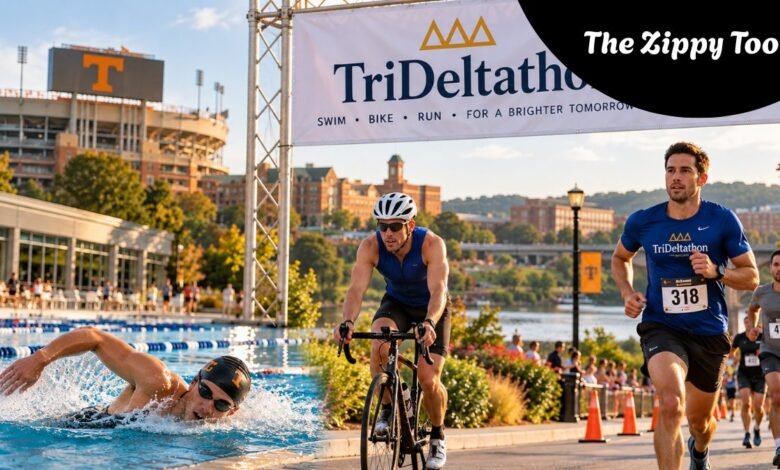
Some sporting events are remembered for extraordinary performances, while others matter because they bring communities together. TriDeltathon belongs to the second category. For decades, this distinctive charity triathlon in Knoxville, Tennessee, connected athletic competition with student involvement and fundraising. Its combination of swimming, cycling, and running offered participants an exciting physical challenge while supporting a cause far more important than winning a medal.
Closely associated with the University of Tennessee and the Delta Delta Delta sorority, the event became a recognizable part of Knoxville’s sporting culture. What made it particularly interesting was its accessible race format, dedicated volunteers, and commitment to helping children facing serious illnesses. Although the original competition is no longer listed in current event listings, its charitable legacy continues through a newer community running event.
This article explores TriDeltathon’s history, its original race structure, charitable purpose, university connections, and the changes that shaped its continuing legacy.
What Is TriDeltathon?
TriDeltathon was a long-running charity triathlon held in Knoxville, Tennessee, primarily around the University of Tennessee campus. The event combined three athletic disciplines: swimming, cycling, and running. Unlike larger endurance competitions involving lengthy distances, this race featured shorter sections designed to make the challenge more approachable for recreational athletes, students, and experienced competitors.
The name reflected its association with Delta Delta Delta, popularly known as Tri Delta, a women’s sorority with a longstanding presence at the university. Members helped support the competition through volunteering and charitable activities. Historic race descriptions identified the event as the country’s oldest continuously running pool triathlon, although promotional materials made that claim rather than an independently established national record.
At its heart, the event demonstrated how organized sport could bring a university community together around a shared charitable mission. Participants competed individually or as relay teams, making the occasion appealing to people with different athletic abilities and interests.
The History and Origins of TriDeltathon
The story began in 1984, when the University of Tennessee’s Tri Delta chapter established the annual competition to raise funds for Camp Eagles’ Nest. According to the university’s historical records, the camp served children with cancer and blood disorders and was supported by East Tennessee Children’s Hospital. This connection gave the competition a meaningful philanthropic purpose from the start.
Over the following decades, the competition became an established local sporting tradition. Its connection to the university gave it a recognizable setting, while student and community volunteers helped maintain its identity. The event also reflected a broader movement in recreational athletics, where smaller, locally organized races offered opportunities for people who might not enter major endurance competitions.
By its planned 2020 edition, organizers described the race as being in its 36th year. That longevity was particularly noteworthy for a community-based sporting event. Sustaining a competition over decades requires ongoing organization, volunteer involvement, participant interest, and a charitable cause people believe deserves their support.
What Made the Original Race Format Unique?
One of TriDeltathon’s most memorable features was its swimming section. Many traditional triathlons start in lakes, rivers, or coastal waters, where changing temperatures and environmental conditions can make it harder. Instead, this competition began with a 400-meter indoor pool swim at the University of Tennessee Student Aquatic Center.
Historical race instructions described swimmers entering the water individually at approximately seven-second intervals. Organizers seeded competitors by estimated swimming times, allowing them to manage movement through the pool more efficiently. Participants then moved through designated lanes before completing the swim.
The course continued with a six-mile bicycle ride around the university area and Neyland Drive. After cycling, athletes completed a three-mile run through campus, passing recognizable landmarks such as Neyland Stadium and Thompson-Boling Arena.
Although these distances were comparatively short, completing them consecutively required physical endurance, pacing, and the ability to transition smoothly between different sports.
The Importance of Individual and Relay Participation
A major strength of the historic event was its ability to welcome different types of athletes. Individual competitors attempted all three disciplines, testing their swimming ability, cycling endurance, and running fitness within a single race. For people interested in triathlon but uncertain about entering a longer competition, this shorter format offered a practical introduction.
The relay category provided another way to participate. Teams could divide the disciplines among members, letting participants focus on their preferred activity rather than completing the entire competition alone. This approach made the event more socially engaging and encouraged teamwork.
Historic listings also included age-group awards and student pricing, showing that the organizers recognized a varied participant base. Competitive athletes could pursue strong finishing times, while recreational entrants could experience a multisport event in a supportive setting.
The mix of individual achievement and group participation helped the competition serve multiple purposes. It was both an athletic challenge and a shared community experience.
The Charitable Mission Behind the Event
The most meaningful aspect of TriDeltathon was its connection to children’s healthcare and recreational support. The original competition raised funds for East Tennessee Children’s Hospital and Camp Eagles’ Nest, which provides camp experiences for children affected by cancer and certain blood disorders.
For these children, specialized camps can offer opportunities for recreation, friendship, and experiences outside their ordinary medical routines. Supporting such programs gave the race a purpose beyond finish times and competitive rankings.
The charitable mission also helped connect different groups. University students donated their time, athletes competed, and local supporters helped run the broader event. Each group played a different role in supporting a shared objective.
This local fundraising tradition differs from Tri Delta’s broader national philanthropic work. The sorority also has a longstanding relationship with St. Jude Children’s Research Hospital. However, the historical Knoxville race specifically identified East Tennessee Children’s Hospital and Camp Eagles’ Nest as beneficiaries. These charitable relationships are connected through the broader organization but should not be treated as identical fundraising programs.
The Role of the University of Tennessee and Tri Delta
The University of Tennessee played an important part in the event’s identity. Its athletic facilities, campus roads, and recognizable landmarks set the scene for the competition. The university connection also brought students and the surrounding Knoxville community into closer contact through a shared activity.
The Delta Sigma chapter of Tri Delta has a much longer history at the institution. University records trace its establishment to 1923, decades before the charity triathlon began. This longstanding presence helped establish the sorority as part of campus life.
Delta Delta Delta members provided volunteer support, an important responsibility at events involving multiple sporting disciplines. Organizing a triathlon requires coordination at swimming facilities, cycling routes, transition areas, and the finish line.
Beyond the practical work, the event offered students opportunities to develop leadership, teamwork, communication, and community-service skills. These experiences show how university organizations can contribute beyond academic and social activities.
Why the 2020 Competition Was Canceled
An important turning point came in 2020, when organizers announced that the scheduled April 19 competition would not take place. The cancellation followed the University of Tennessee’s decision to move academic activities online during the COVID-19 disruption.
Organizers said they tried to set a new date but couldn’t secure one. Registered participants were offered several options, including transferring their entry, applying it toward another event, requesting a refund, or allowing their registration fee to remain as a charitable contribution.
The decision reflected the challenges sporting organizations faced when gathering large numbers of people became difficult. It also demonstrated how the event’s philanthropic purpose remained relevant even without the competition itself.
Importantly, the cancellation notice should not be interpreted as proof that every future edition was permanently discontinued. Available historical and current race records show that the original triathlon format differs from the newer event now associated with the same community tradition.
How TriDeltathon Evolved Into TriDeltaRUN
The more recent chapter centers on TriDeltaRUN, a five-kilometer running event associated with Delta Delta Delta and Race Day Events. Rather than combining three sporting disciplines, this format focuses entirely on running.
The officially listed 2026 event took place on April 19, beginning at UT Gardens on the University of Tennessee agricultural campus. The course ran largely along the Third Creek Greenway, offering a different experience from the original campus-based triathlon.
The 2026 organizers described the event as the fifth year of the 5K format. This distinction matters for anyone researching registration details or historical results. The old pool swim, bicycle course, and three-mile run should not be confused with the newer five-kilometer race.
Despite the format change, the charitable connection remained. The newer event continued to identify East Tennessee Children’s Hospital and Camp Eagles’ Nest as beneficiaries, preserving an essential part of the original competition’s purpose.
What Participants Can Learn From Its Sporting Legacy
Although the original race structure is historic, its design still offers useful lessons for people interested in participating in a beginner-friendly triathlon. Combining swimming, cycling, and running requires balanced preparation rather than concentrating exclusively on one discipline.
Swimming builds technique and breathing control, cycling tests sustained leg endurance, and running challenges the ability to keep moving after two previous activities. Learning to move efficiently between disciplines is also key to multisport training.
For recreational athletes, the former event’s shorter distances show that a triathlon doesn’t need to be an extreme endurance challenge. With sensible preparation, gradual fitness development, suitable equipment, and realistic expectations, shorter multisport competitions can be more approachable.
Prospective participants should still train based on their fitness and swimming abilities rather than assuming a short race is automatically easy. Anyone considering a modern event should consult its current official instructions because routes, distances, safety requirements, and registration arrangements can change.
Why TriDeltathon Still Matters Today
TriDeltathon’s lasting significance extends beyond its sporting history. It represents a successful example of how community athletics and charitable fundraising can operate together over many years.
The competition gave university students opportunities to serve their community, encouraged people to engage in physical activity, and drew attention to children who need specialized medical and recreational support.
Its evolution also demonstrates that longstanding traditions can change without completely losing their original identity. The move from a multisport competition to a 5K running event altered the athletic experience, but the connection to student volunteering and local charitable work remained recognizable.
For former participants, the original event forms part of Knoxville’s recreational sporting heritage. For newer runners, the ongoing fundraising tradition offers a way to support a cause with roots stretching back decades.
Conclusion
TriDeltathon holds an important place in Knoxville’s history of community sport and charitable participation. Beginning in 1984, the competition brought together swimming, cycling, and running while supporting children and families through its connection to East Tennessee Children’s Hospital and Camp Eagles’ Nest.
Its distinctive indoor swimming course, university setting, student volunteers, and accessible distances helped establish a tradition remembered for more than athletic results. Although the original triathlon differs from the newer TriDeltaRUN 5K, the underlying charitable purpose remains an important connection between past and present.
Ultimately, its story shows that a sporting event’s value isn’t measured only by the number of competitors or the speed of its winners. Sometimes the most enduring achievement is the community support it inspires.
(FAQs)
What was TriDeltathon?
TriDeltathon was a charity triathlon in Knoxville, Tennessee, associated with the University of Tennessee and Delta Delta Delta sorority. The historic format combined swimming, cycling, and running.
When did TriDeltathon begin?
The competition began in 1984, according to the University of Tennessee’s historical records. It was originally established to raise funds for Camp Eagles’ Nest.
How long was the original race?
The established historical course featured a 400-meter indoor swim, a six-mile bicycle ride, and a three-mile campus run.
Is TriDeltathon still held today?
The current related event is known as TriDeltaRUN, a 5K running race. Its 2026 edition was listed for April 19 at UT Gardens rather than as the original three-sport triathlon.
Which charity benefited from the competition?
The historical event supported East Tennessee Children’s Hospital and Camp Eagles’ Nest, a camp serving children with cancer and blood disorders. The newer running event has continued this charitable connection.