Artirix Explained: The Powerful Technology Behind Smarter Search and Data Solutions

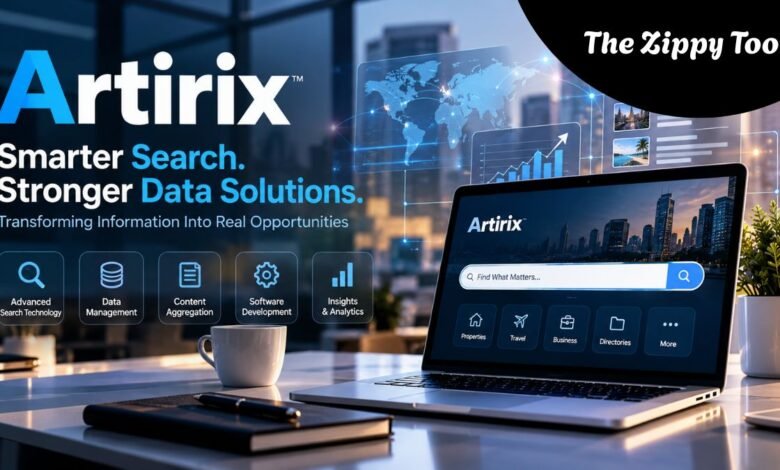
Every successful digital platform depends on more than an attractive website. Behind the scenes, technology must organize information, connect different systems, and help users find what they need. Artirix is a UK technology company associated with these essential parts of the digital world. Its history centers on search technology, data processing, content organization, and building information-driven online services. Although it is less widely recognized than major consumer technology brands, its work illustrates an important challenge facing businesses: turning large quantities of scattered information into useful, accessible digital experiences.
Modern organizations handle enormous amounts of information, from product listings and property records to travel information and business databases. Without effective systems, managing this information becomes increasingly complicated. Artirix’s historical approach addressed that problem by combining data management, search functionality, and software development. Understanding the company’s background offers insight into how specialized technology businesses support the digital services people use every day.
What Is Artirix?
Artirix is a London-based technology business historically associated with search technology, information processing, content aggregation, and IT consultancy. Rather than concentrating primarily on consumer applications, the company developed expertise in the systems that support information-heavy digital platforms.
Its technology approach focused on gathering information from different sources, organizing it, improving its usefulness, and making it searchable. These capabilities are particularly relevant to websites containing extensive collections of listings, records, or other regularly updated material.
For example, a property website may hold thousands of listings with different locations, prices, sizes, and descriptions. Visitors expect to search through that information quickly and receive relevant results. Delivering that experience requires structured data, efficient indexing, and reliable software. This is the type of challenge Artirix has historically specialized in.
The History and Background of Artirix
Artirix Ltd was incorporated in the United Kingdom on December 22, 2009. It originally operated under the registered name Globane Limited before adopting the Artirix name in May 2010. The company’s business activity is classified under information technology consultancy.
Its early development coincided with a major growth period for online marketplaces, digital publishing, and specialist search platforms. Companies increasingly moved traditional information services online, creating demand for technology that could process large volumes of records and support more sophisticated searches.
Dr Daniel Lee has been publicly associated with Artirix as a co-founder and chief executive. His background in search technology also attracted attention beyond the company. In 2012, travel industry reporting documented his appointment to the board of Teletext Holidays, noting his previous involvement with the property search business Globrix.
This background helps explain the company’s connection with information-driven websites. Search wasn’t simply an additional feature in these businesses; it was often central to the entire customer experience.
How Artirix Technology Works
The technology model historically associated with Artirix can be understood through five connected activities: feeding, enriching, searching, monetizing, and analyzing data. Together, these describe the journey from collecting raw information to creating a useful digital service.
The first stage involves gathering information from relevant sources. A business may receive product records, property listings, or other content in different formats. Before these records can support a reliable website, they need to be brought into a consistent environment.
The next stage involves improving the information. Duplicate records may need to be identified, categories standardized, and missing details addressed where reliable information is available. Once processed, the material can be indexed so users can search it efficiently.
Search functionality then connects the organized information with people who need it. Depending on the business model, the information may support subscriptions, commercial listings, or other services. Analytics can subsequently help organizations understand how their information is being used.
This connected approach demonstrates why effective digital infrastructure involves more than storing records in a database.
Search Technology and Information Discovery
One of Artirix’s most important areas is advanced search technology. Search systems play a crucial role when users need to find specific information in a large digital collection.
A basic search tool might identify records containing a particular word. More sophisticated search systems can account for categories, locations, filters, and other attributes to improve the usefulness of results.
Consider a travel website where someone searches for accommodation within a certain budget. The system may need to consider destinations, dates, property types, and available offers. To present relevant results, information must be properly organized before the search even begins.
Artirix’s historical focus on search-based businesses reflects the importance of this underlying structure. For companies operating directories, classifieds, or specialist platforms, effective information retrieval can make the difference between a frustrating website and a genuinely useful service.
Data Management and Content Aggregation
Businesses frequently receive information from multiple providers. Unfortunately, that information does not always arrive in a consistent format. Names may differ, descriptions may be incomplete, and the same record can appear more than once.
Content aggregation helps bring information together, while data processing prepares it for use. The objective is not simply to collect more information but to make existing information more reliable and manageable.
Imagine an online directory that combines records from several databases. Without suitable processing, visitors could encounter duplicated businesses, outdated descriptions, or inconsistent categories. A well-designed information system can reduce these problems through validation, standardization, and structured organization.
Artirix’s historical technology focus is closely connected with these challenges. Its approach highlights an important lesson for digital businesses: search results depend heavily on the quality of the underlying data.
Artirix and Real-World Digital Projects
Publicly available historical material links Artirix to projects in publishing, property information, and travel services. These industries require managing large information collections.
Professional project records identify work on the Wall Street Journal’s property-related digital services, while historical reporting and professional information connect Artirix to the broader technology environment around Teletext Holidays.
These examples illustrate how software development, information management, and search technology can support commercial digital products. A property platform needs searchable listings, while a travel service may depend on records gathered from numerous providers.
However, historical project associations should not automatically be interpreted as evidence of ongoing commercial relationships. Technology partnerships, products, and business arrangements can change over time.
Software Development and Technical Expertise
Artirix’s publicly available GitHub organization offers another view of its technical background. Its repositories include software related to event processing, data models, caching, deployment, and Elasticsearch infrastructure.
One project, Logcabin, is described as a program that aggregates and processes events from different sources and formats. Other repositories show work in Ruby and Python, along with software components associated with data-driven applications.
These public projects provide evidence of the company’s historical engineering interests, particularly in information handling and software infrastructure support.
However, they do not establish the complete technology stack Artirix uses today. Public repositories represent only visible development activity, and not necessarily every product or service delivered commercially.
Which Industries Can Benefit From Similar Technology?
Artirix’s technical challenges apply to several industries. Real estate platforms depend on searchable property details, accurate locations, and structured listings. Travel services must manage changing accommodation and destination information, while digital publishers need effective systems to manage large content archives.
Business directories face similar difficulties when maintaining extensive collections of company records. Online marketplaces also depend on accurate categories, searchable attributes, and regularly updated information.
Although these businesses serve different audiences, they share a fundamental requirement: information must be easy to locate, understand, and maintain.
Technology built around data organization and search can therefore add value across several sectors. The actual benefits depend on implementation quality, information volume, and each organization’s specific needs.
Why Search and Data Quality Matter for Business Growth
A large database does not automatically create a valuable online service. Information becomes useful when customers can access it accurately and efficiently.
Imagine two competing business directories. Both contain thousands of records, but one displays duplicate listings and irrelevant results. The other provides clear categories, dependable filters, and organized information. Visitors are likely to find the second experience more useful.
This illustrates the commercial importance of data quality and search relevance. Better information management can improve navigation, support internal operations, and reduce unnecessary manual work.
It can also make a business more adaptable. When information is stored consistently, teams can more easily introduce new categories, reporting functions, or digital features.
Nevertheless, technology alone cannot guarantee business growth. Results also depend on content accuracy, user demand, customer service, and the wider business model.
What Makes Artirix Different From a Basic Website Developer?
A conventional website project may focus primarily on visual design, content pages, and straightforward functionality. Artirix’s history has focused on the complex systems behind information-intensive digital services.
This distinction matters because large digital platforms require more than an attractive interface. They may need to import data, process records, maintain indexes, connect applications, and deliver relevant results to users.
Information architecture, software integration, and search infrastructure therefore become essential considerations.
Artirix’s technology history reflects this broader engineering perspective. Rather than treating search as a small addition to a website, the company’s historical work placed information processing and discovery closer to the center of the digital product.
Artirix in the Age of Artificial Intelligence
Artificial intelligence is influencing how businesses search, analyze, and manage digital information. Modern systems may use machine learning to identify patterns, classify records, or improve search-result relevance.
These developments relate closely to challenges information technology companies have addressed for years. Reliable data remains essential even when sophisticated AI systems are introduced.
For example, an AI-powered search tool can still produce disappointing results if the underlying records are inaccurate or outdated. Data preparation, indexing, and information quality still matter, no matter how advanced the interface becomes.
Artirix’s historical specialization fits within this broader technological direction. However, that connection should not be mistaken for confirmation that the company currently offers a particular artificial intelligence product.
Is Artirix Still Active in 2026?
As of October 2026, the United Kingdom’s Companies House register lists Artirix Ltd as an active private limited company, with company number 07111468.
Its registered business classification remains information technology consultancy, and its official registered office is in London.
An active company registration confirms its legal status, but it does not establish the availability of specific software products, current customer numbers, employee totals, or the scale of commercial operations.
Anyone considering the company as a technology provider should therefore verify its current services, support arrangements, technical capabilities, and commercial terms directly rather than relying entirely on older online descriptions.
Conclusion
Artirix represents an interesting chapter in the development of search-focused digital technology. Its history demonstrates how data processing, content organization, search systems, and software engineering can work together to support information-heavy online businesses.
From property and travel platforms to specialized directories and digital publishing, the challenges it addresses remain relevant. Businesses still need dependable ways to gather information, improve its accuracy, and make it accessible to their audiences.
While its current product portfolio requires separate verification, the company’s documented history offers a useful perspective on the technology behind complex online services. Ultimately, the Artirix story reinforces a simple principle: the real value of digital information lies not merely in collecting it, but in making it accurate, searchable, and useful.
(FAQs)
1. What is Artirix?
Artirix is a UK technology company historically associated with search technology, data management, content processing, and information technology consultancy.
2. When was Artirix established?
Artirix Ltd was incorporated on December 22, 2009, as Globane Limited. The company adopted the name Artirix in May 2010.
3. What is Artirix mainly known for?
The company is primarily known for information retrieval, search-based digital platforms, content aggregation, and software development for businesses that manage large collections of digital information.
4. Is Artirix a software company?
Yes. Artirix has a documented background in software development and search-related technology. Its official UK business classification is information technology consultancy.
5. Is Artirix still operating?
Artirix Ltd is listed as active in UK company records as of October 2026. However, its exact current services and level of commercial activity should be confirmed separately.