Ausbrella: The Remarkable Australian Umbrella Built for Extreme Winds and Lasting Outdoor Protection

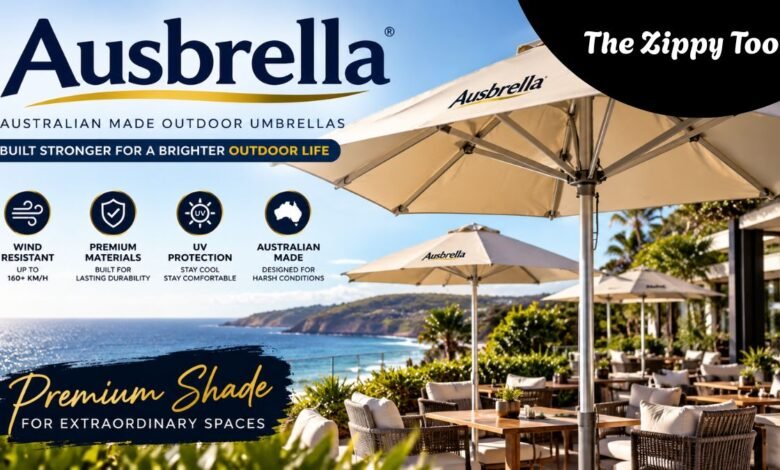
Outdoor spaces have become an important part of modern living, whether they belong to restaurants, hotels, resorts, commercial establishments, or private homes. However, creating a comfortable outdoor environment requires more than attractive furniture and beautiful landscaping. Reliable protection from the sun, changing weather, and strong winds is just as important. This is where Ausbrella offers a distinctive approach to outdoor shade. Developed in Australia, this premium umbrella range combines structural engineering with practical design to address some of the biggest challenges associated with conventional outdoor umbrellas. Unlike lightweight garden umbrellas that may struggle in exposed environments, Ausbrella products are designed with reinforced components, secure installation systems, and a focus on long-term performance. Their development reflects growing demand for outdoor products that combine visual appeal with dependable construction.
Ausbrella represents a different philosophy of umbrella manufacturing. Rather than focusing solely on appearance or convenience, its design prioritizes structural strength, wind resistance, safety, and durability. From hospitality venues to residential outdoor areas, these qualities make the range suitable for people seeking more substantial shade solutions.
What Is Ausbrella?
Ausbrella is an Australian-made range of premium outdoor market umbrellas developed and manufactured by Awnet, a Melbourne-based company specializing in commercial umbrellas and café barriers. The products are intended for outdoor locations where ordinary umbrellas may not provide the required level of strength, stability, or durability.
The name refers to large, engineered shade umbrellas, not small handheld rain umbrellas. These products use specially constructed aluminum poles, reinforced support components, securely attached fabric covers, and purpose-designed opening mechanisms. Their construction matters in commercial environments where umbrellas may remain installed for extended periods and regularly face changing weather conditions.
Awnet promotes Ausbrella as the world’s strongest umbrella, although that description is a manufacturer marketing claim rather than an independently established worldwide ranking. More importantly, the company provides specific information about wind-tunnel testing and engineering certification, giving buyers measurable characteristics to consider when evaluating the range.
The Story Behind Ausbrella and Its Development
Ausbrella’s development is closely tied to Chris Pierias, Awnet’s founder. According to the manufacturer, Pierias recognized that conventional market umbrellas did not always provide the level of strength and safety required for demanding outdoor settings. This observation led him to rethink essential umbrella components rather than simply improving the appearance of existing designs.
Traditional outdoor umbrellas can be vulnerable when wind presses against a large canopy. The supporting pole, arms, fabric connections, and mounting system must work together to resist movement and structural stress. Improving only one component may leave weaknesses elsewhere in the assembly.
Ausbrella was developed around the idea that the entire umbrella structure should be considered as an integrated system. The manufacturer introduced reinforced pole technology, interlocking frame components, and more secure canopy attachment methods. The result was a product range intended to offer greater structural resilience while retaining the functionality of a folding outdoor umbrella.
Innovative Engineering Behind Ausbrella
One of the range’s most significant features is its twin-skin aluminum pole construction. Instead of relying on a single-wall center pole, this engineering approach uses reinforced structural geometry to improve strength while taking advantage of aluminum’s relatively light weight.
The design also uses an interlocking framework with multiple radial arms to support the canopy. These components help distribute structural forces throughout the umbrella instead of concentrating all pressure at one vulnerable connection.
Another important element is the bolted fabric attachment system. Outdoor umbrella covers move significantly in wind. By securing the fabric to the frame through mechanical connections, the design aims to reduce unwanted movement and improve attachment security.
The opening mechanism is another distinguishing characteristic. Ausbrella umbrellas use an opening system that doesn’t rely on conventional ropes or pulleys. This approach offers an alternative to mechanisms that may require more maintenance as their components age.
Together, these features illustrate why the product is positioned as a premium engineered shade system rather than a basic garden accessory.
Ausbrella Storm 135: Engineered for Strong Outdoor Conditions
The Ausbrella Storm 135 is one of the manufacturer’s principal product ranges. It is designed for locations that require a robust outdoor umbrella with strong wind resistance.
According to its product information, the Storm 135 has an engineered wind rating of 135 km/h. It incorporates a reinforced twin-skin center pole, an interlocking support structure, and a securely attached acrylic canvas cover.
The Storm range is intended for many Australian outdoor environments, including commercial and residential locations where suitable installation conditions can be provided.
Its design balances durability with practical operation, offering a folding umbrella structure without relying on traditional rope-and-pulley mechanisms.
For restaurants, hotels, and homeowners considering this model, the key question is whether its engineering specifications match the intended location. Local wind conditions, surrounding structures, ground stability, and mounting arrangements all affect an outdoor umbrella’s suitability.
Ausbrella Hurricane 160+: Advanced Protection for Exposed Locations
The Ausbrella Hurricane 160+ represents the stronger wind-rated option in the manufacturer’s current range. It was developed for particularly demanding environments where substantial wind resistance is a central purchasing consideration.
Unlike the standard twin-skin construction used in the Storm series, the Hurricane uses a double twin-skin pole design for added structural reinforcement.
Awnet reports that the Hurricane was tested at the Monash University wind-tunnel facility at speeds exceeding 160 kilometers per hour. Its product information describes testing at approximately 161 kilometers per hour.
This level of testing makes the Hurricane particularly relevant to buyers investigating shade equipment for exposed coastal locations and other challenging environments.
However, a wind-tunnel test result does not guarantee an installed umbrella will remain safe under every real-world storm condition. Wind direction, gusting patterns, terrain, anchoring arrangements, umbrella condition, and installation quality all influence actual performance.
The Hurricane is therefore best understood as a highly engineered product requiring appropriate site assessment rather than an umbrella that can be used without weather-related precautions.
Why Wind Resistance Matters for Outdoor Umbrellas
Wind is one of the biggest engineering challenges for large outdoor umbrellas. A wide canopy catches moving air, generating forces that transfer through the radial arms into the supporting pole and anchoring system.
If the frame isn’t sufficiently reinforced or the mounting system isn’t suitable, these forces can cause excessive movement, damage, or structural failure.
For commercial properties, such problems can have consequences beyond the cost of replacing an umbrella. They may also affect outdoor furniture, surrounding equipment, employees, and visitors.
This explains why wind-resistant engineering has become an important consideration for hospitality businesses and public outdoor facilities.
Ausbrella addresses this issue by placing structural performance at the center of its design. Nevertheless, buyers should distinguish between manufacturer testing, engineering specifications, and the conditions under which the product will actually be installed.
Materials and Construction Quality
The materials used in an outdoor umbrella influence its appearance, service life, maintenance requirements, and resistance to environmental exposure.
Ausbrella uses reinforced aluminum structural components that provide strength and corrosion resistance when properly maintained. Aluminum is widely used in outdoor equipment because it delivers strong performance without the weight of some alternative materials.
The umbrella canopy is another essential component. The manufacturer offers acrylic canvas covers designed for outdoor exposure. Quality outdoor canvas helps resist fading, UV exposure, and deterioration from repeated use.
Stainless steel components are also important within the umbrella assembly. Ausbrella includes a matching in-ground stainless steel socket arrangement for secure installation.
This combination reflects the manufacturer’s emphasis on umbrellas built for demanding outdoor applications rather than occasional seasonal use.
Where Can Ausbrella Umbrellas Be Used?
Ausbrella products can be considered for several types of outdoor locations, although suitability depends on site-specific engineering and installation requirements.
Hotels and luxury resorts may require substantial shade structures around outdoor seating areas, swimming pools, and landscaped spaces. A well-specified umbrella can provide practical shade while complementing the surrounding architecture.
Restaurants and cafés often depend on outdoor dining areas to accommodate customers comfortably. Strong, durable umbrellas can reduce replacement frequency and support more reliable use of outdoor spaces.
Public spaces and council-managed areas present additional considerations because outdoor structures may be used by large numbers of people. Engineering certification, secure installation, and planned maintenance are particularly relevant in these environments.
For private residential properties, Ausbrella may appeal to homeowners seeking a premium solution for patios, gardens, courtyards, or poolside entertaining areas. However, its commercial-grade construction may exceed the requirements of a small sheltered backyard.
Installation and Anchoring Requirements
Even a carefully engineered umbrella depends on correct installation. A strong frame cannot compensate for an unsuitable foundation or inadequate anchoring arrangement.
Ausbrella’s in-ground socket system is designed to provide a substantial mounting connection. However, the specific foundation and installation requirements should be determined according to the umbrella model, surrounding terrain, local wind conditions, and engineering guidance.
Before installation, owners should consider available space, underground services, ground composition, drainage, and nearby structures. Commercial properties may also need to meet local authority requirements and maintain pedestrian clearance.
A professional assessment is especially valuable for exposed locations. The goal is not just to keep the umbrella standing during normal use, but to ensure the entire installed system suits its intended environment.
Following the manufacturer’s operating instructions and taking appropriate precautions during severe weather remain essential to safe ownership.
Maintenance and Long-Term Durability
An outdoor umbrella represents an investment that benefits from regular inspection and proper care. Sunlight, moisture, airborne dust, and changing temperatures can gradually affect both the fabric and mechanical components.
Owners should periodically inspect the canopy for wear, check attachment points, and ensure frame components remain secure. Fabric should be cleaned according to the manufacturer’s instructions rather than with harsh products that could damage protective finishes.
The opening mechanism should operate smoothly, and any unusual resistance or visible damage should be investigated before continued use.
Awnet currently advertises a five-year warranty on Ausbrella frames and acrylic canvas covers, subject to the applicable warranty terms. Buyers should obtain the complete conditions and clarify which types of damage or deterioration are included.
Regular maintenance helps preserve appearance and identify potential safety concerns before they become serious.
Is Ausbrella Worth the Investment?
Whether Ausbrella offers good value depends largely on the intended application. A premium engineered umbrella is not necessarily the most economical choice for every household or business.
For a sheltered residential garden used occasionally, a simpler shade solution may provide adequate functionality at a lower initial cost.
However, an exposed hospitality venue or commercial outdoor area may place greater importance on structural reliability, serviceability, and long-term durability.
The purchase decision should therefore consider more than the initial price. Installation costs, maintenance requirements, replacement parts, operating procedures, and expected service life all contribute to the overall value.
Awnet does not provide a single universal public retail price for every Ausbrella configuration. Prospective buyers should request a quotation based on the model, size, installation requirements, and any desired customization.
The strongest argument for choosing Ausbrella is its focus on engineering-led durability and specialized outdoor performance, rather than claiming it is necessary for every outdoor space.
Conclusion
Ausbrella demonstrates how engineering and practical design can transform an ordinary outdoor product into a specialized shade solution. Developed by Awnet in Australia, the range combines reinforced aluminum construction, secure canopy attachments, straightforward operation, and manufacturer-reported high-wind testing.
Its Storm 135 and Hurricane 160+ models address different levels of environmental exposure, allowing buyers to consider products suited to particular outdoor requirements. Although the manufacturer’s strength claims should be assessed alongside independent documentation and installation conditions, the range offers a clear example of purposeful product design.
For businesses, public facilities, resorts, and homeowners seeking durable outdoor shade, Ausbrella is worth considering when structural strength, installation quality, and long-term performance are priorities. Choosing the right model and following proper maintenance practices remain essential to getting the best results from your investment.
(FAQs)
1. What is Ausbrella?
Ausbrella is a range of premium, Australian-made outdoor market umbrellas manufactured by Awnet. The products are designed for demanding outdoor environments where structural strength and durability are important.
2. Who created Ausbrella?
Ausbrella was developed by Chris Pierias, who is associated with Awnet, an Australian manufacturer specializing in commercial market umbrellas and café barriers.
3. How much wind can Ausbrella withstand?
The manufacturer specifies a wind rating of 135 km/h for the Storm 135 and reports wind-tunnel testing above 160 km/h for the Hurricane 160+. Actual suitability depends on installation and site conditions.
4. Is Ausbrella suitable for residential use?
Yes. Ausbrella can be considered for residential patios, gardens, courtyards, and poolside locations where an appropriately installed premium outdoor umbrella is desired.
5. Does Ausbrella come with a warranty?
Awnet advertises a five-year warranty for Ausbrella frames and acrylic canvas covers. The full terms and exclusions should be confirmed before purchase.