Fascisterne: The Powerful Rise, Dark History, and Lasting Impact of Fascist Movements
Exploring the Origins, Political Ideologies, Historical Influence, and Lasting Lessons of Fascism in Europe

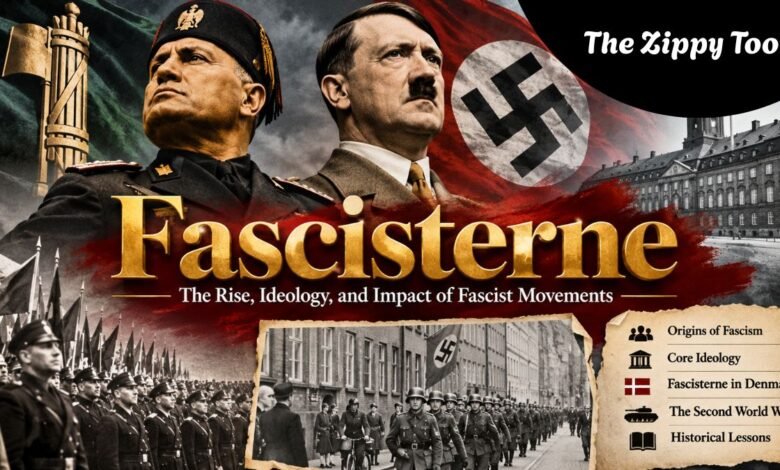
Introduction to Fascisterne
The term fascisterne comes from Danish and translates into English as “the fascists.” It refers to individuals and political groups associated with Fascism, an authoritarian ideology that significantly influenced European politics during the twentieth century. Fascist movements promoted aggressive nationalism, centralized political authority, and loyalty to powerful leaders while opposing many principles of democratic government. Their development changed the political direction of several European nations and contributed to some of the most destructive events in modern history.
Understanding fascism requires examining more than political speeches, military uniforms, and historical leaders. The subject also involves economic uncertainty, social divisions, political propaganda, and the conditions that allowed extremist organizations to attract supporters. Although fascist movements differed between countries, many shared hostility toward political pluralism, individual freedoms, and democratic institutions.
This article explores the origins of fascisterne, their defining beliefs, their development across Europe, their influence in Denmark, and the historical lessons that remain relevant when discussing authoritarian political movements.
What Does Fascisterne Mean?
Fascisterne is the definite plural form of the Danish word fascist, meaning the fascists. In historical discussions, the expression may refer to supporters of fascist organizations, political activists, or movements inspired by authoritarian nationalism. It is a descriptive term rather than the official name of a single organization, and its meaning depends on the historical context.
Fascism emerged as a recognizable political movement in Europe following the First World War. It emphasized national unity under centralized leadership and portrayed parliamentary democracy as ineffective or weak. Fascist leaders frequently argued that political disagreement threatened national strength and that a disciplined society required a commanding authority.
However, historians distinguish between different forms of Fascism. Italian Fascism and German National Socialism shared major ideological characteristics but were not identical. Their approaches to racial policy, state organization, and political objectives developed differently. Understanding these distinctions helps explain why the word fascist can describe several related political movements without suggesting that all operated in precisely the same way.
The Historical Origins of Fascism in Europe
The rise of Fascism was closely connected to the political and economic consequences of the First World War. European societies experienced widespread destruction, financial instability, unemployment, and uncertainty about their political future. Many citizens became dissatisfied with established governments, while revolutionary movements and nationalist organizations competed for public support.
Italy became the birthplace of organized Fascism under Benito Mussolini, whose movement developed in 1919. Mussolini used nationalist rhetoric, organized political violence, and promises of national restoration to expand his influence. In October 1922, the March on Rome helped create the conditions for his appointment as prime minister. Over the following years, he dismantled democratic institutions and established a dictatorship.
The Italian example influenced other movements across Europe. Fascist organizations adapted elements of Mussolini’s political methods, including mass rallies, uniforms, propaganda, and the glorification of national strength. Some achieved significant political power, while others remained relatively small.
The spread of Fascism demonstrated how political instability could create opportunities for authoritarian movements that promised decisive leadership while gradually undermining constitutional freedoms.
The Political Ideology and Core Beliefs of Fascisterne
Extreme Nationalism and National Identity
One defining characteristic of fascisterne was ultranationalism: the belief that the nation should dominate political and social life. Fascist movements often presented national identity as something that required constant protection against internal enemies and external threats.
Their political messages emphasized national pride, cultural unity, and collective responsibility. However, this vision frequently excluded people who did not fit the movement’s preferred definition of national belonging. Minority communities, political opponents, and other targeted groups could face discrimination, persecution, or organized violence.
Authoritarian Leadership and Political Control
Fascist political organizations generally favored concentrated authority rather than democratic competition. They promoted the idea that a powerful leader could represent the national will more effectively than elected institutions or independent political parties.
This approach weakened the principles of representative democracy, including accountability, freedom of expression, and the peaceful transfer of political power. Once fascist governments consolidated control, opposition parties, independent journalists, and civic organizations frequently faced increasing restrictions.
Militarism and Political Mobilization
Another important feature was the glorification of military discipline, sacrifice, and organized political action. Fascist movements often employed uniformed groups, marches, symbols, and public demonstrations to communicate strength and solidarity.
These activities served several purposes. They encouraged loyalty among supporters, attracted public attention, and sometimes intimidated political opponents. Militarism also supported the idea that conflict and expansion could demonstrate national greatness, contributing to aggressive foreign policies in states where fascists controlled the government.
Fascism and the Rise of Nazi Germany
The development of Nazism in Germany represents one of the most consequential examples of fascist politics during the twentieth century. Under Adolf Hitler, the National Socialist German Workers’ Party expanded its influence amid economic hardship, political instability, and resentment over Germany’s defeat in the First World War.
Hitler became German chancellor in January 1933. His government subsequently destroyed democratic safeguards, suppressed political opposition, and established a dictatorship. Nazi ideology incorporated extreme nationalism, racial hierarchy, antisemitism, and the pursuit of territorial expansion.
Although Nazism shared important characteristics with Italian Fascism, its racial ideology and policies of systematic persecution were especially central to its political program. The Nazi regime organized the Holocaust, murdering approximately six million European Jews and persecuting or killing millions of other victims.
The history of Nazi Germany demonstrates the devastating consequences that can follow when authoritarian rule, racial hatred, and unrestricted state violence become central principles of government.
Fascism in Denmark: A Distinct Historical Experience
The Development of Danish Fascist and Nazi Movements
Denmark experienced the influence of European Fascism during the interwar period, although its political development differed significantly from Italy and Germany. Various extremist nationalist groups appeared, but they struggled to establish broad electoral support.
One of the most important organizations was Danmarks Nationalsocialistiske Arbejderparti (DNSAP), the National Socialist Workers’ Party of Denmark. Founded on November 16, 1930, by Cay Lembcke, the party drew substantial inspiration from Hitler’s German Nazi movement.
Its political program incorporated aggressive nationalism, antisemitism, opposition to parliamentary democracy, and the principle of leadership authority. The organization also adopted political mobilization methods similar to those used by German National Socialists.
In 1933, Frits Clausen became the party’s leader. Under his leadership, DNSAP developed propaganda publications, organizational networks, and political activities intended to expand its influence throughout Danish society.
Why Danish Fascists Struggled to Gain Power
Despite its organizational efforts, DNSAP never achieved the political dominance enjoyed by fascist movements in some other European countries. Denmark maintained established parliamentary institutions and a political culture in which democratic parties continued to command substantial public support.
The party also faced a fundamental contradiction. It promoted Danish nationalism while closely imitating a German movement whose ambitions threatened Denmark’s independence. This conflict became particularly significant during the German occupation of Denmark.
DNSAP won three seats in the Danish parliament in 1939. Even during the occupation, its electoral support remained limited. In the March 1943 election, it retained only three parliamentary seats and received about 2.1 percent of the vote.
These results illustrate an important historical distinction: although fascist ideas attracted supporters in Denmark, they did not produce a successful nationwide fascist takeover.
The Second World War and Danish Fascist Organizations
Germany invaded Denmark on April 9, 1940, bringing the country under occupation during the Second World War. The occupation changed the political environment and created new opportunities for Danish Nazi organizations to seek influence.
DNSAP hoped to benefit from its relationship with German authorities and eventually obtain governmental power. Nevertheless, the occupying administration did not install the party as Denmark’s ruling government. Its limited public popularity remained a major obstacle.
Some Danish Nazis supported the German war effort through political collaboration, recruitment activities, or other forms of assistance. The DNSAP also helped recruit volunteers for German military service.
At the same time, opposition to German occupation developed across Danish society. The Danish resistance movement expanded through underground publications, intelligence gathering, sabotage, and assistance to people threatened by Nazi persecution.
The rescue of most Danish Jews in October 1943 became a particularly significant episode. Thousands escaped to neutral Sweden with help from Danish citizens and resistance networks. This operation stands as an important example of collective action against Nazi persecution.
The occupation therefore revealed competing political responses: collaboration with German authorities on one side and resistance to occupation and persecution on the other.
How Fascists Used Propaganda to Influence Society
Political propaganda played a central role in fascist movements. Leaders relied on newspapers, public speeches, posters, radio broadcasts, and carefully organized demonstrations to communicate their messages and build loyalty.
The purpose extended beyond ordinary political advertising. Fascist propaganda frequently presented national problems as the result of identifiable enemies, including political opponents, minority communities, and foreign influences. Complex economic and social challenges were reduced to emotionally powerful explanations.
Public rallies created visual impressions of unity and strength. Uniforms, flags, and coordinated symbols reinforced party leaders’ authority. Repeated slogans encouraged followers to associate political obedience with patriotism.
These methods were particularly effective when combined with censorship and restrictions on independent journalism. When governments controlled information, citizens had fewer opportunities to challenge official narratives or evaluate competing explanations.
Studying fascist propaganda demonstrates why media independence, historical education, and critical thinking are essential elements of an informed society.
The Relationship Between Fascism and Democracy
Fascism and liberal democracy differ fundamentally in how they understand political authority. Democratic systems depend on constitutional restraints, political competition, civil rights, and the principle that governments remain accountable to the public.
Fascist ideology generally rejects these arrangements when they interfere with the authority of the leader or the movement’s conception of national unity. Opposition becomes something to suppress rather than a legitimate part of public life.
However, democratic systems are not automatically immune to authoritarian movements. Political instability, public distrust, severe economic problems, and polarization can create conditions in which extremist messages become attractive.
The historical experience of fascism illustrates how democratic institutions can be weakened gradually. Restrictions on the press, attacks on judicial independence, intimidation of opposition groups, and the normalization of political violence can undermine accountability even before formal democratic structures disappear.
Recognizing these developments requires careful historical comparison rather than casually applying the word Fascism to every controversial political position.
The Decline of Fascism After World War II
The military defeat of Nazi Germany and Fascist Italy transformed the political landscape of Europe. Mussolini’s dictatorship collapsed in 1943, although German forces subsequently supported a Fascist regime in northern Italy until 1945. Nazi Germany surrendered in May 1945.
Following the war, major fascist organizations were dismantled, and several European countries introduced measures intended to prevent the revival of Nazi political structures. Trials and investigations addressed war crimes, collaboration, and crimes against humanity.
In Denmark, DNSAP disintegrated following liberation in May 1945. Membership in the organization alone did not automatically result in criminal prosecution, but some former members were prosecuted for specific acts of collaboration with German occupation authorities.
The collapse of these organizations did not mean that every ideology associated with Fascism disappeared. Extreme nationalist and neo-Nazi groups continued to emerge in various forms during the postwar period.
The distinction between historical fascist governments and later extremist movements remains important for understanding political developments accurately.
Why Understanding Fascisterne Still Matters Today
The historical study of fascisterne provides valuable insight into how political extremism develops and how public institutions respond under pressure. It explains why authoritarian movements sometimes gain support during periods of uncertainty and how appeals to national identity can be used to justify exclusion or repression.
Modern political circumstances differ significantly from those of interwar Europe. Contemporary governments, communication systems, and social conditions cannot be understood simply by assuming that history will repeat itself.
Nevertheless, historical research offers useful ways to evaluate political behavior. Attacks on democratic accountability, organized political intimidation, dehumanizing propaganda, and the normalization of discrimination deserve careful examination wherever they appear.
Understanding these patterns does not require treating every nationalist movement or strongly centralized government as fascist. The term has a specific historical and political meaning that should be applied with evidence and context.
Education about fascisterne also helps preserve the experiences of those who resisted authoritarianism, protected persecuted communities, and worked to rebuild democratic institutions after the Second World War.
Conclusion
The history of fascisterne reveals how political extremism, authoritarian leadership, and aggressive nationalism shaped twentieth-century Europe. From the emergence of Italian Fascism to the rise of Nazi Germany and the activities of Danish nationalist extremists, these movements left consequences that continue to influence historical understanding.
Denmark’s experience was particularly distinctive because fascist and Nazi organizations remained politically marginal despite their attempts to expand during the German occupation. Their limited electoral success contrasted sharply with the extensive destruction caused by fascist governments elsewhere in Europe.
Ultimately, studying fascisterne is not only about understanding political organizations from the past. It is also about recognizing the importance of democratic institutions, human rights, historical accuracy, and responsible political participation. These principles remain essential for understanding the relationship between political power and individual freedom.
(FAQs)
1. What does fascisterne mean in English?
Fascisterne is a Danish word meaning “the fascists.” It generally refers to individuals or political groups associated with fascist ideology, particularly in discussions of twentieth-century European history.
2. Who were the most prominent fascist leaders in Europe?
Benito Mussolini was the central figure in Italian Fascism, while Adolf Hitler led Nazi Germany. Their regimes shared important authoritarian characteristics, although their ideological programs and historical development differed.
3. Did fascists establish a government in Denmark?
No. Danish Nazi organizations, particularly DNSAP, attempted to expand their political influence but never established a fascist national government. DNSAP remained a minor parliamentary party.
4. What was the connection between fascisterne and World War II?
Fascist and Nazi governments played major roles in the political aggression and military conflicts surrounding World War II. Nazi Germany’s expansionist policies, persecution, and occupation of European countries had devastating consequences.
5. Why is fascisterne an important historical subject?
Studying fascisterne helps explain the emergence of authoritarian political movements, the effects of propaganda, the dangers of political persecution, and the importance of protecting democratic institutions and human rights.