Mutmax: The Powerful Woodworking Machinery Brand Transforming Modern Furniture Production
Discover Mutmax Woodworking Machinery, Its Key Features, Modern Technology, and Role in Furniture Manufacturing.

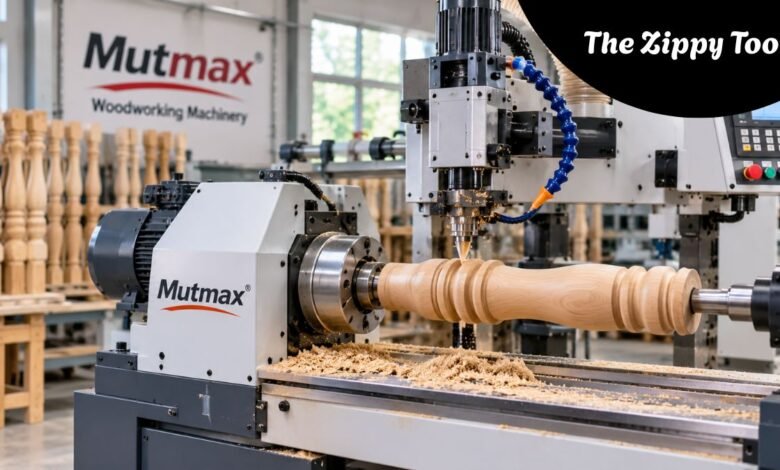
The woodworking industry has changed significantly as manufacturers look for better ways to combine traditional craftsmanship with modern production technology. Producing attractive wooden furniture requires more than creativity and high-quality materials. It also demands precision, consistency, efficient equipment, and skilled artistry. This is where specialist machinery manufacturers become important, helping businesses turn raw timber into carefully shaped furniture components.
Mutmax is a name associated with woodworking and furniture manufacturing machinery. Based in Turkey, the company produces equipment designed for operations such as wood turning, copying shapes, and sanding surfaces. These processes are essential when manufacturers need to create matching furniture components while maintaining consistent dimensions and appearance.
Whether a business produces dining tables, decorative wooden legs, chairs, or other furniture components, choosing the right machinery can make a big difference to daily operations. Modern woodworking equipment can reduce repetitive manual work, improve production planning, and deliver more consistent results when operated properly.
This article explores Mutmax, its background, woodworking machines, production applications, technological features, and the important considerations for businesses interested in industrial woodworking equipment.
What Is Mutmax?
Mutmax refers to Mutmax Makina, a Turkish business operating in the woodworking and furniture machinery industry. Published company information identifies Bursa, Turkey, as its original location and reports that the business was established in 2009.
The company is associated with machinery used to shape, process, and prepare wooden materials for furniture manufacturing. Rather than producing finished household furniture, its principal business involves equipment that manufacturers and woodworking workshops can use during production.
Woodworking machinery performs numerous specialized tasks, including turning timber into rounded forms, reproducing decorative profiles, and preparing surfaces for finishing. These operations require different mechanical systems and levels of operator involvement.
Mutmax equipment suits businesses that manufacture repeated wooden components, especially where maintaining consistent shapes and dimensions across multiple pieces is essential.
A machine’s effectiveness depends on its configuration, the materials it processes, operator training, and maintenance practices.
The Background and Development of Mutmax
According to published industrial business listings, Mutmax Makina began operating in Bursa in 2009. Bursa has an established industrial and manufacturing environment, making it a relevant location for businesses involved in engineering, machinery production, and furniture-related equipment.
The company’s stated business priorities include product quality, operational performance, efficiency, and economical resource use. These are the manufacturer’s stated objectives, not independently verified performance guarantees.
The woodworking sector has evolved considerably as furniture manufacturers face changing consumer preferences, tighter production requirements, and the need to manage material costs.
Traditionally, experienced craftspeople shaped many decorative wooden components by hand. Although manual woodworking remains valuable, producing hundreds of identical components can require substantial time and attention.
Specialized machinery offers a practical alternative for repetitive operations. Copying systems and computer-controlled equipment allow manufacturers to follow predefined shapes and production instructions more consistently.
Mutmax operates in this industrial environment, providing machinery for different stages of wood processing.
Main Types of Mutmax Woodworking Machinery
Different woodworking machines serve different purposes, and understanding their functions is important before investing in equipment. Published information about Mutmax identifies several machinery categories associated with turning, copying, and sanding wood.
1. Copy Wood Lathes
A copy wood lathe is designed to shape wooden components by following an existing profile or reference pattern. The machine uses a cutting tool to remove material from a rotating wooden workpiece, creating a shape that follows the selected design.
This type of machinery is particularly relevant to furniture manufacturers producing matching wooden legs, posts, and decorative elements.
For example, a workshop manufacturing a dining table may require four legs with identical curves and dimensions. A copying lathe helps reproduce the required profile without relying entirely on freehand shaping.
However, operators must still inspect finished components to confirm dimensional accuracy and surface quality.
2. Copy Lathes With Sanding Capabilities
Some woodworking processes require both shaping and surface preparation. Mutmax has been associated with copy lathes incorporating sanding functions, combining related manufacturing operations within the production process.
Sanding reduces roughness and prepares wooden surfaces for subsequent finishing procedures.
A potential advantage of combining these operations is that manufacturers may reduce unnecessary handling or movement between workstations.
Nevertheless, the amount of additional sanding required depends on the particular machine, wood species, cutting quality, and expected final finish.
A practical demonstration is the best way to establish whether a machine can produce the surface quality a workshop needs.
3. Dual Sanding Machines
Dual sanding machines use two sanding units or heads to process wooden components. They help smooth and prepare surfaces during woodworking operations.
Surface preparation is an important stage in furniture manufacturing because irregularities can become more noticeable once paint, stain, oil, or protective coatings are applied.
A suitable sanding system can support more predictable finishing results, particularly when workshops process similar pieces repeatedly.
However, two sanding heads do not automatically guarantee faster production or superior results. Performance depends on machine design, abrasive selection, operating settings, and the characteristics of the wood being processed.
4. Two-Axis CNC Wood Lathes
One of the more technologically advanced machinery categories associated with Mutmax is the two-axis CNC lathe.
CNC stands for Computer Numerical Control, a manufacturing method in which programmed instructions guide machine movements.
In woodworking, CNC systems can help operators produce predetermined shapes by controlling cutting movements according to a programmed design.
This technology is especially useful when manufacturers need repeatable dimensions or must reproduce components across larger production batches.
However, CNC equipment also requires suitable programming knowledge, setup procedures, maintenance, and operator training. Buyers should verify the control system and technical capabilities of the particular model before ordering.
How Mutmax Machines Support Furniture Manufacturing
Furniture production involves several interconnected stages, from preparing raw materials to shaping, sanding, finishing, and assembling components.
A manufacturer producing wooden table legs, for example, must begin with suitable timber. The material must be inspected, measured, and prepared according to the intended dimensions.
Once the wooden blanks are ready, specialized turning equipment can be used to create the required shapes. A copying system may follow a physical reference, while CNC machinery uses programmed instructions to guide the cutting process.
After shaping, the components are inspected for consistency and visible defects. Sanding may then be necessary to prepare the surfaces for finishing.
Finally, completed components move to subsequent manufacturing stages, including coating, assembly, or packaging.
Mutmax machinery fits into selected parts of this production workflow, particularly where turning and surface preparation are required.
Importantly, machinery does not eliminate the need for experienced workers. Operators remain responsible for selecting appropriate settings, checking components, maintaining equipment, and ensuring workplace safety.
Why Precision Matters in Woodworking Machinery
Precision is one of the most important considerations in furniture manufacturing because even relatively small dimensional differences can create problems during assembly.
Imagine a manufacturer producing a set of matching chairs. If individual wooden legs differ noticeably in length or shape, the finished furniture may appear uneven or fail to meet the required specifications.
Consistent measurements and repeatable machining processes help reduce these difficulties.
Copying equipment and CNC machines can support repeatability by following established profiles or programmed instructions.
However, actual precision depends on machine condition, tooling, material preparation, setup accuracy, and environmental factors.
Wood is a natural material that can respond to changes in moisture and temperature. Its grain direction, density, and internal defects can also influence machining results.
Therefore, quality control remains necessary even when sophisticated equipment is used. Manufacturers should inspect sample pieces and periodically check production output against approved specifications.
The Importance of Automation in Modern Woodworking
Automation has become increasingly relevant in manufacturing because businesses frequently need to balance productivity, labor requirements, and production consistency.
In traditional woodworking, repeated shaping operations can place considerable demands on workers, especially when a large number of similar components must be produced.
Mechanized and computer-controlled equipment can simplify selected repetitive activities by allowing operators to work from predefined references.
For example, CNC turning equipment may reduce the need for repeated manual adjustments when producing an established design.
This can help manufacturers organize their production processes more efficiently, although the actual benefit depends on batch size, setup time, and equipment suitability.
Automation should be seen as a tool that supports skilled manufacturing rather than replacing craftsmanship entirely.
Experienced workers are still required to prepare materials, select tooling, develop appropriate programs, inspect results, and respond to unexpected operating conditions.
Is Mutmax Suitable for Small Woodworking Workshops?
Small workshops often have different requirements from large manufacturing facilities. A business producing customized furniture may prioritize flexibility, manageable operating costs, and straightforward equipment maintenance.
Larger manufacturers may place greater emphasis on production capacity, repeatability, and compatibility with existing manufacturing systems.
Mutmax machinery may be worth investigating for either environment when its capabilities match the specific production task.
However, suitability cannot be determined from the manufacturer’s name alone.
A smaller workshop should consider available floor space, electrical requirements, machine dimensions, dust extraction, training needs, and anticipated production volumes.
It is also important to compare machinery purchase costs with the expected workload. A sophisticated machine may be difficult to justify if it remains unused for substantial periods.
Businesses should request technical specifications and, where possible, arrange demonstrations using materials and component designs similar to those used in their own operations.
Safety and Maintenance Considerations
Industrial woodworking machinery involves moving components, rotating workpieces, cutting tools, and potentially significant quantities of airborne wood dust.
For these reasons, machine safety and preventive maintenance are essential parts of professional woodworking operations.
Install and operate equipment according to the manufacturer’s instructions, applicable workplace regulations, and appropriate safety procedures.
Operators need training in safe workpiece loading, machine controls, emergency stopping, and proper use of guarding systems.
Suitable dust extraction is also important because wood dust can create respiratory and fire hazards.
Routine maintenance may include inspecting machine components, checking cutting tools, cleaning appropriate surfaces, and identifying unusual vibration or mechanical wear.
Machines should be properly isolated from their energy sources before maintenance whenever required by safe working procedures.
Before purchasing Mutmax equipment, buyers should ask about operating manuals, safety documentation, spare parts availability, and technical support arrangements.
What Should Buyers Consider Before Choosing Mutmax?
Buying woodworking machinery represents a significant business decision because the initial purchase price is only one part of the total investment.
First, manufacturers should identify the exact operations they need the machine to perform. A copying lathe may suit repeated decorative profiles, while a CNC lathe may offer different programming capabilities.
Second, buyers should examine the machine’s technical specifications, including working capacity, supported materials, power requirements, control functions, and overall dimensions.
Third, they should consider installation and ongoing operating expenses.
Training, replacement tools, maintenance, electricity consumption, and production downtime can all increase total cost of ownership.
Another important consideration is after-sales support. Access to technical assistance and replacement components may influence how quickly a workshop can resolve equipment problems.
For international purchases, businesses should additionally verify shipping arrangements, import requirements, electrical compatibility, and applicable machinery safety documentation.
A written quotation and an appropriate production demonstration can help buyers compare options more effectively.
The Future of Woodworking Technology
The woodworking industry continues to evolve as manufacturers explore improved digital controls, automated processes, and more efficient material use.
CNC technology already plays an important role in producing complex shapes and maintaining repeatable manufacturing instructions.
Future developments across the industry may include more accessible programming systems, improved machine monitoring, and greater integration between design software and production equipment.
These improvements could help workshops reduce unnecessary manual adjustments and identify potential production problems earlier.
However, such developments should not automatically be attributed to Mutmax without specific product documentation.
For manufacturers evaluating new machinery, the most useful approach is to focus on verified capabilities, practical production requirements, operator safety, and long-term operating value rather than promotional claims alone.
Conclusion
Mutmax is a specialist name in the woodworking machinery industry, with equipment for wood turning, copying, CNC machining, and sanding operations.
These manufacturing processes play an important role in producing consistent wooden components for furniture and related applications.
As woodworking businesses seek better production methods, choosing appropriate machinery becomes increasingly important. However, a machine’s value depends on how well it meets a workshop’s actual requirements.
For businesses considering Mutmax woodworking machinery, the most reliable approach is to review detailed specifications, request demonstrations, check safety requirements, and assess long-term maintenance and support.
(FAQs)
What is Mutmax?
Mutmax is associated with a Turkish woodworking machinery business that supplies equipment for processing wooden components used in furniture production.
Where is Mutmax located?
Published industrial listings identify Bursa, Turkey, as the company’s location and report that it was established in 2009.
What types of machinery are associated with Mutmax?
The reported range includes copy wood lathes, copy lathes with sanding functions, dual sanding machines, and two-axis CNC lathes.
Can small furniture manufacturers use Mutmax machinery?
Potentially, yes. Suitability depends on the particular machine, available workshop space, production requirements, operator skills, and budget.
How can businesses determine the price of Mutmax equipment?
Businesses should request a current quotation identifying the exact model, configuration, delivery arrangements, warranty terms, and included support services.