Theresa Villiers: Political Career, Cabinet Roles, Brexit Views and Life After Parliament

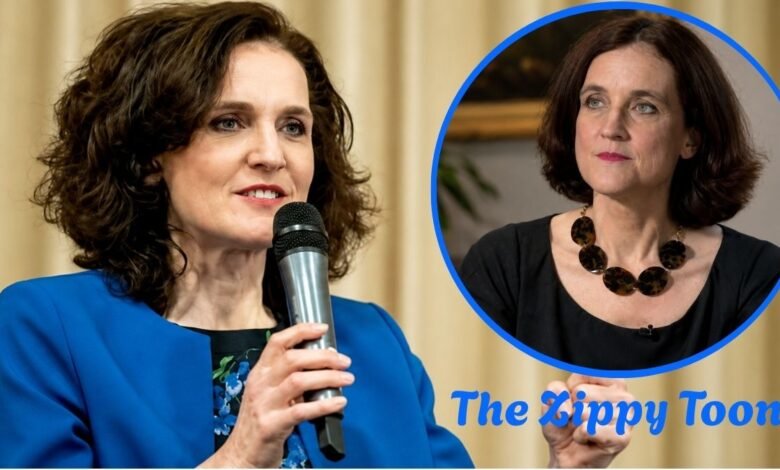
Theresa Villiers is a prominent British politician whose career spans European politics, Westminster, Cabinet government, constituency representation, and public policy. Best known for serving as the Conservative Member of Parliament for Chipping Barnet from 2005 until 2024, she also held senior ministerial positions including Secretary of State for Northern Ireland and Secretary of State for Environment, Food and Rural Affairs. Over more than two decades in public life, Villiers became associated with issues including Brexit, transport, environmental policy, local development, animal welfare, and national security. After leaving Parliament following the 2024 general election, she moved into legal education, charity governance, public speaking, and other professional roles.
This article explores the career, political background, government service, public positions, constituency work, honors, and post-parliamentary activities of Theresa Villiers. It focuses on widely reported and verifiable aspects of her public life while avoiding speculation about private matters irrelevant to her professional record.
Who Is Theresa Villiers?
Dame Theresa Anne Villiers is a British Conservative politician and former Cabinet minister who built a long career in both European and UK politics. She was born on 5 March 1968 and developed a professional background in law before entering frontline politics. Her legal education and understanding of constitutional matters later became important features of her political career, particularly during debates involving the European Union, devolution, Northern Ireland, and the constitutional consequences of Brexit. Villiers first achieved national political prominence as a Member of the European Parliament before becoming an MP in the House of Commons. Her transition from European politics to Westminster gave her experience in both institutions at a time when the UK’s relationship with the European Union was becoming an increasingly important political issue.
Early Political Career and European Parliament Service
Before becoming a Westminster MP, Theresa Villiers served as a Member of the European Parliament for London between 1999 and 2005. Her years in the European Parliament helped shape her understanding of EU institutions, regulation, and legislation, as well as Britain’s relationship with Europe. She became known for strong views on sovereignty and the direction of European integration. Although many British politicians developed their careers entirely within Westminster, Villiers entered the House of Commons with direct experience of the European Parliament, giving her a different perspective on debates surrounding EU membership. Her period as an MEP also helped establish her reputation within the Conservative Party and prepared her for a later role in the national debate over Britain’s future relationship with Europe.
Theresa Villiers as MP for Chipping Barnet
In 2005, Villiers was elected as the Member of Parliament for Chipping Barnet, a constituency in north London. She retained the seat through several general elections and represented the area for approximately 19 years. Her long period as an MP made her closely associated with local issues affecting Barnet residents, including housing, transport, green spaces, planning, public services, and community safety. Villiers frequently spoke about protecting the character of local neighborhoods and opposing development proposals that she believed could damage green areas or place excessive pressure on local infrastructure.
Her constituency work remained important even when she held national government positions. Like many long-serving MPs, she had to balance Cabinet responsibilities with the demands of representing residents. She became particularly vocal about protecting the Green Belt and other open spaces in and around her constituency. This local campaigning helped shape her public image as a politician concerned with planning, development, environmental preservation, and community interests.
Minister of State for Transport
After the formation of the Conservative-Liberal Democrat coalition government in 2010, Theresa Villiers was appointed Minister of State for Transport, with responsibilities including rail and aviation. Transport is one of the most complicated areas of government because it involves infrastructure, private companies, passenger interests, investment decisions, airport policy, and long-term economic planning. During her time in the role from 2010 to 2012, Villiers participated in discussions on rail services, aviation strategy, and major transport projects.
The position gave her significant ministerial experience and increased her visibility within the Conservative government. Her work in transport also demonstrated her ability to handle a policy portfolio involving complex technical, commercial, and regulatory issues. In 2012, she was promoted to one of the most significant Cabinet roles of her career.
Secretary of State for Northern Ireland
In September 2012, Theresa Villiers became Secretary of State for Northern Ireland and served in the position until July 2016. The role placed her at the center of sensitive political, security, and constitutional issues. Northern Ireland politics requires close engagement with political parties, community leaders, security agencies, the Irish government, and institutions created through the peace process.
Villiers served during a period when Northern Ireland continued to face political disagreements over issues such as flags, parades, dealing with the legacy of the Troubles, welfare reform, and the stability of devolved institutions. Her responsibilities required balancing the interests of different communities while supporting the continued functioning of power-sharing arrangements. She remained in the role for nearly four years, making Northern Ireland a defining part of her ministerial career.
Her legal and constitutional background was particularly relevant in this position because many Northern Ireland issues involve complicated questions of devolution, sovereignty, policing, governance, and international agreements.
Theresa Villiers and Brexit
One of the most significant aspects of Theresa Villiers’ political identity was her support for Brexit. During the 2016 referendum on the UK’s membership of the European Union, she backed the Leave campaign. Her support was consistent with her long-standing Eurosceptic views and her earlier experience as a Member of the European Parliament.
After the referendum voted to leave the EU, and Villiers continued to play an active role in parliamentary debates over Brexit. She was among the Conservative MPs who opposed aspects of the withdrawal arrangements proposed by Prime Minister Theresa May. Her position reflected concerns among some Conservative politicians that the proposed deal did not provide sufficient independence from European rules and institutions.
For Villiers, Brexit was connected to broader questions about national sovereignty, democratic accountability, lawmaking powers, and the UK government’s ability to determine its own policies. Regardless of political opinion, her support for Brexit became one of the issues most closely associated with her national political profile.
Environment Secretary Under Boris Johnson
In July 2019, Theresa Villiers returned to the Cabinet when Prime Minister Boris Johnson appointed her Secretary of State for Environment, Food and Rural Affairs. The department covers a wide range of important issues, including agriculture, farming, environmental protection, food policy, fisheries, animal welfare, rural communities, and climate-related regulation.
Her appointment came at a particularly significant time, as the government prepared for Britain’s departure from the European Union. Brexit required major changes to agricultural policy, environmental regulation, food standards, and other areas previously influenced by EU frameworks. Villiers therefore entered the department during a period of substantial policy transition.
She remained Environment Secretary until February 2020. Although her tenure was relatively short, it added another major Cabinet portfolio to her political record and strengthened her experience across different government departments.
Intelligence and Security Committee Role
After leaving the Cabinet, Villiers continued to participate actively in parliamentary affairs. From 2020 to 2024, she served as a member of the Intelligence and Security Committee of Parliament, which scrutinizes the work of the UK’s intelligence and security agencies. Committee membership involves handling sensitive information and examining matters connected to national security, intelligence operations, and government oversight.
The position demonstrated that Villiers continued to hold significant responsibilities even after returning to the Conservative backbenches. Her experience in Northern Ireland, government, European affairs, and constitutional law gave her a broad background that was relevant to the committee’s work.
Political Views and Public Campaigns
Throughout her career, Theresa Villiers became associated with several causes beyond her ministerial responsibilities. She has spoken frequently about animal welfare, environmental protection, opposition to antisemitism, local development, and public accountability. She also campaigned to preserve green spaces and expressed concerns about building on Green Belt land.
Her political outlook generally reflected traditional Conservative positions on sovereignty, taxation, regulation, and individual responsibility, while some of her campaigns focused heavily on environmental and animal welfare issues. This combination gave her political profile a mixture of national Conservative priorities and constituency-based campaigning.
Losing the Chipping Barnet Seat in 2024
Theresa Villiers‘ long period as an MP ended during the July 2024 UK general election. After representing Chipping Barnet continuously since 2005, she lost the seat to Labour candidate Dan Tomlinson. The result ended 19 years of Villiers representing the constituency and marked a major political change in an area that had historically been regarded as favorable territory for the Conservatives.
Her defeat came during a national election in which the Conservative Party suffered widespread losses. For Villiers, the result ended nearly a quarter-century of continuous elected political service, including her years in the European Parliament.
Damehood and Recognition
In 2025, Theresa Villiers was appointed a Dame Commander of the Order of the British Empire, allowing her to use the title Dame Theresa Villiers. The honor recognizedhonor recognized her long record of political and public service, including her work as an MEP, MP, minister, Cabinet member, and member of a parliamentary committee.
Receiving a damehood was significant recognition after she left frontline parliamentary politics. It also highlighted a career spanning several major areas of government policy and nearly two decades of constituency representation.
What Is Theresa Villiers Doing Now?
After leaving Parliament, Theresa Villiers moved into several professional activities connected with law, education, governance, and public speaking. She has returned to her legal interests by teaching constitutional and public law, drawing on both her academic background and direct experience in government.
She has also been involved in charity governance and non-executive work. These positions allow her to apply her knowledge of leadership, regulation, policy, and institutional decision-making outside Parliament. Villiers has also developed a career as a public speaker, discussing topics such as government, international affairs, Brexit, regulation, leadership, and public policy.
Her post-political career therefore reflects a continuation of many themes that defined her years in public life rather than a complete departure from politics and law.
Theresa Villiers’ Political Legacy
Theresa Villiers’ political legacy is closely connected to Brexit, Northern Ireland, Cabinet government, constituency politics, and Conservative public policy. Supporters may point to her long service, commitment to her constituency, ministerial experience, and willingness to maintain consistent positions on major political questions. Critics may disagree with her approach to Brexit, Conservative government policies, or other political decisions made during her time in office.
What is clear is that Villiers remained an influential figure in British politics for more than two decades. Serving in the European Parliament, House of Commons, Cabinet, and national security oversight structures gave her an unusually broad range of political experience.
Conclusion
Theresa Villiers built a long and varied career in British public life, progressing from service in the European Parliament to nearly two decades representing Chipping Barnet in Westminster. Her major roles included Transport Minister, Northern Ireland Secretary, Environment Secretary, and member of the Intelligence and Security Committee. She was also a prominent supporter of Brexit and an active campaigner on local development, green spaces, animal welfare, and other public issues.
Although her parliamentary career ended in the 2024 general election, her professional activities have continued through legal teaching, charity governance, non-executive responsibilities, and public speaking. Her appointment as Dame Theresa Villiers DBE further recognizedrecognized a public service career spanning national, European, constituency, and Cabinet-level politics. Whether viewed through the lens of Brexit, Northern Ireland, environmental policy, or local representation, Theresa Villiers remains a notable figure in recent British political history.
FAQs.
Who is Theresa Villiers?
Theresa Villiers is a British Conservative politician and former Cabinet minister who represented Chipping Barnet as an MP from 2005 to 2024. She also served as a Member of the European Parliament before entering Westminster.
What government positions did Theresa Villiers hold?
Theresa Villiers held several senior government roles, including Minister of State for Transport, Secretary of State for Northern Ireland, and Secretary of State for Environment, Food and Rural Affairs.
How long was Theresa Villiers an MP?
Theresa Villiers served as the Member of Parliament for Chipping Barnet for approximately 19 years, from 2005 until the 2024 general election.
Did Theresa Villiers support Brexit?
Yes. Theresa Villiers supported the Leave campaign during the 2016 EU referendum and remained a prominent Eurosceptic voice during subsequent parliamentary debates over Brexit.
Why did Theresa Villiers leave Parliament?
Theresa Villiers left Parliament after losing the Chipping Barnet seat in the July 2024 general election to Labour candidate Dan Tomlinson.
Is Theresa Villiers a Dame?
Yes. Theresa Villiers was appointed a Dame Commander of the Order of the British Empire (DBE) in 2025 in recognition of her political and public service.
What is Theresa Villiers doing now?
After leaving Parliament, Theresa Villiers has worked in legal education, charity governance, non-executive roles, and public speaking, drawing on her extensive experience in politics, law, and government.