Sandy Molloy: The Untold Story of Frederick Forsyth’s Wife, Her Career and Their Heartbreaking Final Years
She worked alongside Hollywood royalty, shared three decades with one of Britain's most successful thriller writers, and quietly influenced decisions that changed his later life.

When Sandy Molloy died on October 19, 2024, her husband, bestselling novelist Frederick Forsyth, was preparing to witness another important moment in his literary career. A new television adaptation of The Day of the Jackal was set for its London premiere. What should have been an occasion for celebration instead unfolded against the grief of losing his wife of 30 years.
For much of their marriage, Molloy stayed out of the intense publicity surrounding Forsyth’s novels, journalism, and extraordinary international experiences. Yet her own background was unusual. She had worked as a scriptwriter and had once served as a personal assistant to Hollywood actress Elizabeth Taylor.
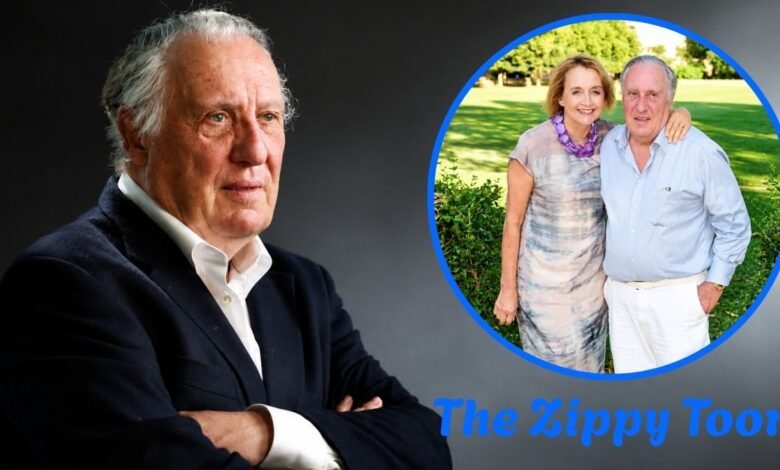
Her story drew renewed attention after Forsyth publicly reflected on her death and, later, his own passing in June 2025. Behind the familiar photograph of a celebrated author and his wife lay a relationship shaped by shared creative interests, private decisions, long-standing companionship, and difficult final years.
Sandy Molloy was a scriptwriter and former personal assistant to Elizabeth Taylor, best known publicly as the second wife of British thriller novelist Frederick Forsyth. The couple married in 1994 and remained together until her death on October 19, 2024, aged 76, following several years of serious health difficulties.
Quick Bio
| Detail | Information |
|---|---|
| Full name | Sandy Molloy |
| Known for | Scriptwriting and marriage to Frederick Forsyth |
| Professional background | Scriptwriter and former personal assistant |
| Notable professional association | Elizabeth Taylor |
| Husband | Frederick Forsyth |
| Marriage year | 1994 |
| Length of marriage | Approximately 30 years |
| Residence in later life | Buckinghamshire, England |
| Date of death | 19 October 2024 |
| Age at death | 76 years |
| Husband’s date of death | 9 June 2025 |
| Publicly verified personal wealth | Not available |
Before Frederick Forsyth: A Career Connected to Elizabeth Taylor
Sandy Molloy’s professional life began long before she became publicly associated with the author of The Day of the Jackal. Contemporary reporting identifies her as a scriptwriter and former personal assistant to Elizabeth Taylor, roles that suggest experience in the creative and entertainment industries. However, the surviving public record offers little information about her early career, professional training, or individual writing projects.
Working as Elizabeth Taylor’s personal assistant was a distinctive professional association. Taylor was among the most internationally recognized actresses of the twentieth century, with a career extending from her childhood performances in Hollywood to major roles in films such as Cleopatra and Who’s Afraid of Virginia Woolf? Her professional activities involved film productions, public appearances, charitable work and extensive international attention.
Molloy’s connection to Taylor is documented in published profiles. However, the material reviewed for this article has not independently established specific details about when she worked for the actress, how long the position lasted, or the responsibilities involved. It would therefore be misleading to assign her particular duties or describe private conversations between the two women.
What Is Actually Known About Her Scriptwriting?
Molloy has been consistently described as a scriptwriter in reports about Frederick Forsyth‘s personal life. That description establishes an important part of her professional identity, but it does not fully account for her writing career.
No reliably verified list of screenplays, television episodes, production credits, or published scripts was established during this review. Consequently, claims about specific films she supposedly wrote, major industry awards, or her earnings from screenwriting should be treated cautiously unless supported by original production records.
Her professional identity nevertheless matters. Molloy did not simply enter public life through marriage. Before her relationship with Forsyth became widely known, she had already worked in an environment connected to film, performance and storytelling.
A Literary Lunch in 1989 That Began a Lasting Relationship
Sandy Molloy and Frederick Forsyth’s relationship began in 1989, after the breakdown of their previous marriages. In a profile published by journalist Mark Dapin, Forsyth described meeting his future second wife at a literary lunch that year.
By then, Forsyth was already a major name in British publishing. His 1971 novel The Day of the Jackal had achieved international success, followed by books including The Odessa File, The Dogs of War and The Fourth Protocol. His writing drew heavily on his experience as a Reuters correspondent, BBC journalist, and observer of international conflict.
Forsyth married Carole Cunningham in 1973. They had two sons, Stuart and Shane, before they divorced in 1988.
Why Their 1994 Wedding Date Matters
Frederick Forsyth and Sandy Molloy married in 1994, according to major obituaries and biographical records, including reporting by The Washington Post and The Bookseller. They remained married until Molloy’s death in October 2024.
Some retrospective reports have confused the year their relationship began with their wedding date, occasionally identifying 1989 as the year of marriage. The distinction is important: 1989 refers to their meeting, while 1994 is the better-supported marriage date.
Their relationship developed while Forsyth remained professionally active and commercially successful. He was already known for demanding research methods, international travel and an unusually detailed approach to espionage fiction.
Unlike the fictional partnerships in his novels, Molloy’s role in his life was not defined by public drama. People who knew the couple describe a long relationship marked by shared humor, social occasions, and an established domestic life.
The Buckinghamshire Home and the Woman Who Influenced Its Character
By 2010, the couple had moved from their Hertfordshire property to a home in Buckinghamshire. Although Forsyth’s professional identity was strongly associated with international conflict and suspense, their private surroundings reflected different interests.
Molloy particularly appreciated Japanese and Chinese culture, an interest that shaped how their Buckinghamshire home was decorated and renovated. Forsyth acknowledged her involvement in shaping its interiors during an interview reported by The Telegraph and later referenced by Tatler.
This aspect of her life offers a more individual picture of Molloy. Rather than appearing only at literary dinners or accompanying her husband to formal gatherings, she had her own aesthetic preferences. She contributed directly to the environment in which the couple lived.
Photographs of the pair at public functions, including events at Guards Polo Club and gatherings in London’s Mayfair, provide glimpses of their social life. These appearances also show why she became familiar to readers who followed Forsyth’s career, even though she was not herself a major public celebrity.
The Warning That Changed Forsyth’s Research Travels
One of Molloy’s most clearly documented influences on her husband’s professional choices emerged in 2016.
Forsyth had long visited challenging locations to research his books. His previous travels included journeys connected to war reporting, intelligence matters and the subjects of his political thrillers.
After a research trip to Somalia for his novel The Kill List, published in 2013, Molloy urged him to reconsider the risks of continuing such journeys.
In 2016, Forsyth publicly explained that his wife believed he was getting too old for dangerous overseas assignments. He subsequently announced that he intended to stop writing the sort of thrillers that required such extensive travel.
The announcement did not mean that Molloy had ended his entire literary career. Forsyth went on to publish further work. It did, however, show how important her concerns were in his assessment of what he should still attempt as an older writer.
For someone whose novels depended so heavily on physical research, abandoning dangerous fieldwork represented a significant change.
The Difficult Final Years That Frederick Forsyth Later Discussed
The final years of Sandy Molloy’s life were marked by serious health problems that remained largely outside public attention until shortly before her death.
In October 2024, Forsyth spoke publicly about her prolonged difficulties with prescription painkillers. Reporting in Tatler, drawing on his account to journalist Richard Eden, described a four-year struggle involving opioid-containing medication, including morphine.
Forsyth believed that her dependence on these medications had contributed significantly to her deteriorating health. He also described her increasing need for medical assistance and periods spent in care facilities and hospitals.
These details require careful distinction. Forsyth’s personal account is evidence of what he witnessed and believed, but it is not a substitute for an independently verified medical diagnosis or death certificate. A specific certified medical cause of Molloy’s death has not been established by the sources examined here.
When the Roles of Care and Protection Reversed
For much of their relationship, Molloy protected her husband, particularly regarding his overseas research and personal safety. During her final illness, that pattern changed.
Forsyth described becoming increasingly involved in her care as her health worsened. Their age difference—she was 76, and he was 86 at the time of her death—made the reversal especially striking to him.
His public comments conveyed the difficulty of watching someone who had once been active and energetic become dependent on assistance.
The experience also shaped the way his final interviews were received. Readers accustomed to Forsyth discussing intelligence services, international politics and fictional assassinations instead encountered an elderly husband speaking about prolonged illness and personal loss.
Molloy’s final illness should not overshadow the preceding decades of her life. Her creative work, marriage, personal interests, and influence on Forsyth’s decisions remain equally relevant to understanding her biography.
October 2024: A Private Bereavement During a Public Premiere
Sandy Molloy died on October 19, 2024, aged 76.
Three days later, on October 22, Frederick Forsyth attended the London premiere of Sky’s television adaptation of The Day of the Jackal.
Eddie Redmayne starred in the central role, alongside Lashana Lynch. It introduced Forsyth’s best-known fictional creation to a new television audience more than half a century after the original novel appeared.
The timing gave the event particular emotional significance. While actors, producers, and guests celebrated the adaptation, Forsyth attended without the woman who had been his wife for about three decades.
In interviews published after her death, Forsyth reflected on the loss with unusual openness. He remembered Molloy as someone who had once been energetic, glamorous and deeply engaged with life.
The Later Death of Frederick Forsyth
On June 9, 2025, Frederick Forsyth died at 86, less than eight months after his wife.
His death was announced by his literary representatives at Curtis Brown. The agency confirmed that he died at home following a brief illness.
Obituaries revisited his decades of work as a journalist, intelligence informant and bestselling author. They also acknowledged his personal life, including his marriage to Molloy.
Their deaths within the same twelve-month period brought renewed attention to a relationship that had remained relatively private despite Forsyth’s international reputation.
What the Financial Record Reveals—and What It Does Not
Public interest in Sandy Molloy’s finances is understandable because of Frederick Forsyth’s commercial success. His novels sold tens of millions of copies worldwide, and several were adapted for film and television.
However, no authoritative estimate of Sandy Molloy’s personal net worth has been verified. Her earnings from scriptwriting, previous employment, individual investments, and personal assets were not publicly documented in sufficient detail to establish a reliable valuation.
Although some accounts discuss substantial sums Forsyth earned or lost during his publishing career, those figures cannot automatically be treated as Molloy’s individual wealth.
Similarly, reports about properties the couple occupied do not establish their ownership arrangements, asset distribution, or the value of her estate.
Any precise financial figure attributed to Molloy without supporting legal or financial records would therefore be speculative.
Sandy Molloy was 76 years old when she died on October 19, 2024. Her husband, Frederick Forsyth, was 86 at the time. Although her age and date of death have been reported, a complete publicly verified birth record establishing her precise date of birth was not located during this review.
What caused Sandy Molloy’s death?
Sandy Molloy’s death followed several years of serious health difficulties. Frederick Forsyth publicly described her struggles with opioid-containing prescription painkillers and believed they had damaged her health. However, an independently verified official medical cause of death was not available in the sources consulted, so it would be inaccurate to identify an exact cause with certainty.
Did Sandy Molloy influence Frederick Forsyth’s career?
Sandy Molloy influenced at least one important professional decision by Frederick Forsyth. After her research travels for The Kill List, she expressed concern about the danger of further overseas assignments. In 2016, Forsyth publicly acknowledged her advice while explaining his decision to move away from the demanding research trips associated with his thrillers.
Beyond the Famous Surname: Why Sandy Molloy’s Life Still Matters
Sandy Molloy’s public biography is inseparable from Frederick Forsyth, but it should not be reduced entirely to his achievements.
Her association with Elizabeth Taylor connects her to an earlier period of international entertainment culture. Her work as a scriptwriter gives her an independent professional identity, even though the public documentation of that work remains incomplete.
Her marriage to Forsyth also provides an important perspective on the later decades of his life. She participated in the social world surrounding his literary success, helped shape their home and expressed concerns that influenced his approach to dangerous research assignments.
The difficult circumstances of her final illness became public largely because her husband chose to discuss them. Those accounts reveal something about his experience as a caregiver, but they do not define her whole life.
Sandy Molloy deserves to be remembered not only as Frederick Forsyth’s wife, but also as a woman with her own professional history, cultural interests and a substantial place in his personal life. The surviving record is incomplete, and acknowledging those gaps offers a more accurate portrait than filling them with unsupported claims.
(FAQs)
Who was Sandy Molloy?
Sandy Molloy was a scriptwriter and former personal assistant to actress Elizabeth Taylor. She became more widely known as the second wife of British novelist Frederick Forsyth, author of The Day of the Jackal. They married in 1994 and remained together for approximately 30 years, until her death in October 2024.
When did Sandy Molloy marry Frederick Forsyth?
Sandy Molloy married Frederick Forsyth in 1994. The couple had first met in 1989, reportedly at a literary lunch. They were married until her death on October 19, 2024. Forsyth had previously been married to Carole Cunningham, with whom he had two sons.
What did Sandy Molloy do for a living?
Sandy Molloy worked as a scriptwriter and previously served as Elizabeth Taylor’s personal assistant. Both occupations are mentioned in contemporary reporting about her life. However, detailed employment dates and a complete, independently verified list of her professional writing credits are not publicly established in the sources reviewed.
How old was Sandy Molloy when she died?
You might also like:Beverley Osgoode: The Surprising Life and Career Behind Richard Kline’s Long-Standing Marriage
Editorial Disclaimer
This biography distinguishes documented events from personal recollections and unverified claims. Information about Sandy Molloy’s early life, individual scriptwriting credits, financial assets, and precise certified cause of death remains incomplete. Medical observations are attributed to Frederick Forsyth rather than presented as independently confirmed clinical findings. No unsupported financial estimates or private family details have been added.