PLG Supplies: The Complete Guide to Wholesale Products, Business Solutions, and Smarter Purchasing

Every successful business depends on more than talented employees and effective management. Behind daily operations is a network of products, equipment, and materials that keeps everything functioning properly. From manufacturing facilities that need industrial tools to healthcare organizations that need protective equipment, access to dependable supplies can make a significant difference. PLG Supplies supports this essential part of business operations, positioning itself as a wholesale distributor that helps commercial customers manage their purchasing needs.
Finding the right supplier is not always straightforward. Businesses often face fluctuating prices, multiple vendors, inconsistent product availability, and complex delivery arrangements. These challenges can waste valuable time and increase operating costs. A distributor offering several product categories through one purchasing channel can help organizations simplify procurement while maintaining better control over inventory and budgets.
Understanding what a supplier actually offers is important before making a commercial purchasing decision. This article explores PLG Supplies’ business model, product categories, potential benefits, ordering arrangements, and key considerations, providing a practical overview for companies evaluating supply options.
What Is PLG Supplies?
PLG Supplies Ltd. describes itself as a United States-based business-to-business wholesale distributor serving commercial organizations and institutions. Its stated purpose is to provide products used in everyday operations, including industrial equipment, packaging materials, office essentials, plumbing components, and medical safety supplies.
Rather than focusing on a single product category, the company offers a broader procurement model. This approach is intended to support purchasing teams that need different kinds of materials for maintaining facilities, operating warehouses, supporting employees, and completing commercial projects.
The name also appears in discussions of general trade materials or product-led growth software. However, the company discussed here is specifically the wholesale distribution business. Its published information identifies organizations, rather than individual retail shoppers, as its intended customers.
Major Product Categories Available Through PLG Supplies
A central feature of the company’s business model is its multi-category product offering. Different industries depend on different materials, but many share common requirements involving maintenance, packaging, employee safety, and workplace organization.
Industrial Equipment and Maintenance Materials
Industrial operations require equipment that can tolerate demanding working conditions. Manufacturing plants, engineering workshops, commercial maintenance teams, and construction businesses regularly purchase tools, fasteners, machinery accessories, and related operational materials.
The company offers hand tools, power tools, machinery accessories, cleaning products, and protective equipment. These products can support routine maintenance, equipment installation, facility repairs, and general workplace operations. Selecting suitable industrial materials involves more than comparing prices. Buyers should consider durability, compatibility, manufacturer specifications, and whether the equipment suits its intended operating environment.
Office and Workplace Essentials
Although industrial equipment often gets more attention, office supplies remain essential for everyday business activity. Even organizations that rely heavily on digital systems need workplace furniture, cleaning materials, printing products, and organizational equipment.
The distributor’s published product categories include office desks, chairs, paper, toner, writing materials, and other administrative essentials. Centralizing these purchases alongside maintenance and operational supplies may reduce the need to coordinate with multiple unrelated vendors. For companies managing multiple branches, consistent purchasing standards can also simplify internal budgeting and stock management.
Packaging and Logistics Supplies
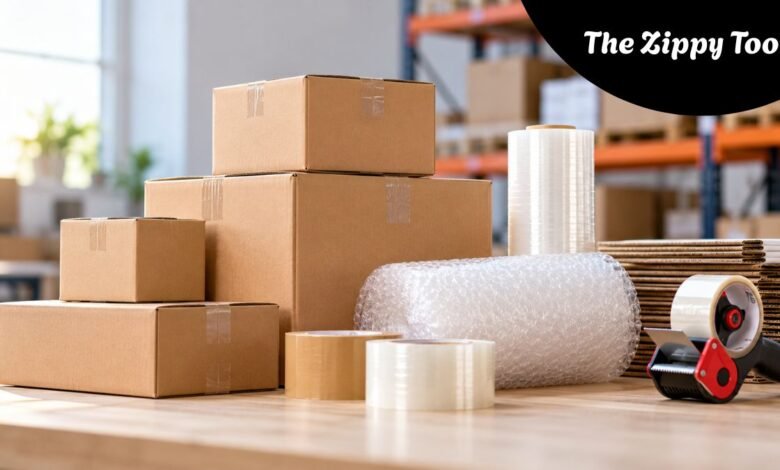
Packaging materials help businesses protect products during storage, handling, and transportation. A poorly selected carton or insufficient protective wrapping can cause damage, add costs, and reduce customer satisfaction.
The company’s listed packaging products include corrugated boxes, bubble wrap, foam rolls, industrial tape, stretch film, pallet covers, and shipping labels. These materials serve different purposes, ranging from protecting fragile goods to securing large shipments. Businesses should choose packaging based on product weight, dimensions, handling conditions, and transportation requirements rather than assuming that one solution will suit every shipment.
Plumbing and Gas Equipment
Commercial buildings and industrial facilities depend on functional plumbing systems and correctly selected gas components. Maintenance teams often require pipes, valves, fittings, drainage materials, and accessories for repairs or planned installations.
Published product information identifies PVC, CPVC, copper, and PEX pipes, along with valves, fittings, water meters, and gas-related components. For these categories, technical compatibility and regulatory compliance are particularly important. Purchasing teams should confirm pressure ratings, material suitability, applicable standards, and installation requirements. Appropriately qualified professionals should specify and install gas-related equipment.
Medical and Workplace Safety Products
Workplace health and safety requirements extend across hospitals, schools, manufacturing facilities, offices, and public institutions. Different environments require different protective materials, hygiene products, and emergency-response supplies.
The business lists disposable gloves, masks, gowns, face shields, first-aid products, cleaning materials, thermometers, and related safety goods. However, buyers should not assume that every listed product is appropriate for clinical use. Medical purchasing teams should verify the relevant product classification, documentation, certification, intended use, and any applicable regulatory requirements before ordering.
How PLG Supplies Supports Business Procurement
Procurement involves more than simply purchasing products when supplies run low. Effective purchasing requires planning, price comparison, supplier communication, inventory monitoring, and coordination with operational departments. A centralized procurement approach can reduce administrative complexity when one distributor can meet several different purchasing requirements.
According to its published business information, the company offers online purchasing, quotation requests, bulk-order arrangements, and custom product sourcing. This structure is intended to accommodate organizations with both routine purchasing needs and less common requirements.
For example, a warehouse operator might require cartons, pallet wrapping, protective gloves, and cleaning supplies within the same purchasing cycle. Ordering these products through a single supplier could simplify invoice management and reduce the number of supplier relationships involved. However, practical savings depend on quoted prices, delivery charges, stock availability, and contract terms.
Why Wholesale Supply Management Matters
Wholesale purchasing is commonly associated with lower unit prices, but its value extends beyond potential discounts. Businesses also need predictable supply arrangements, suitable product specifications, and effective communication when orders change.
A manufacturing company experiencing an unexpected shortage of essential materials may face production interruptions. Similarly, a logistics provider without adequate packaging can struggle to dispatch goods efficiently. These situations demonstrate why inventory planning and supplier reliability are central to business continuity.
Working with a multi-category distributor can simplify procurement, especially when different departments share purchasing requirements. Nevertheless, relying entirely on one supplier also introduces concentration risk. Companies should maintain alternative sourcing options for critical products and periodically compare supplier performance.
Ordering, Payments, and Delivery Arrangements
Understanding the ordering process is essential before establishing a wholesale purchasing relationship. The company’s published information describes a process that includes product selection, quotation requests, order placement, and delivery coordination. It also promotes bulk-order quotations and recurring purchasing options.
Its published terms state that transactions are intended for business customers rather than personal retail purchases. Prices are expressed in US dollars and may change. Payment is generally required at purchase unless different arrangements have been agreed upon in writing.
The company’s website describes shipping coverage across the United States, while its terms state that international shipping is not currently available. Delivery estimates are not guaranteed, meaning businesses should confirm dispatch arrangements and expected arrival dates when purchasing time-sensitive materials.
Commercial buyers should also review freight charges, insurance arrangements, delivery responsibilities, and when transportation risk transfers from the supplier to the purchaser.
Returns, Refunds, and Important Purchasing Conditions
A supplier’s return policy can directly affect costs, especially when businesses purchase large quantities of specialized goods.
According to the company’s published terms, eligible returns must generally be requested within 15 days of delivery, with items unused, unopened, and in their original packaging. A return authorization is required before products are sent back. Standard returns exclude certain purchases, including custom orders, clearance products, and opened medical supplies.
The terms also contain warranty limitations and conditions concerning responsibility for goods during shipping. Review these details carefully before placing an expensive order.
For major purchases, request written confirmation of product specifications, delivery obligations, cancellation rights, and any applicable manufacturer warranty to minimize misunderstandings.
How to Evaluate PLG Supplies Before Purchasing
Businesses should approach every new wholesale relationship with a consistent evaluation process. A professional-looking website or extensive product description alone does not establish whether a supplier will meet a particular organisation’s operational expectations.
First, confirm the supplier’s legal identity, current business details, and available customer-support channels. Next, request a written quotation that clearly identifies product names, quantities, technical specifications, delivery charges, and payment terms.
It is equally important to establish whether the requested goods are physically available, require special sourcing, or involve extended lead times. For regulated products, buyers should obtain the appropriate compliance documentation and confirm the materials’ suitability.
Companies considering recurring orders may also benefit from beginning with a manageable purchase before committing to a larger supply arrangement. This provides an opportunity to assess order accuracy, communication, packaging quality, and delivery performance.
Industries That May Benefit From Multi-Category Wholesale Distribution
The company’s stated customer groups include manufacturing businesses, healthcare organizations, schools, construction companies, logistics providers, commercial offices, and government contractors.
Each industry uses supplies differently. Manufacturing businesses may prioritize maintenance equipment and safety materials, while educational institutions often require cleaning products, office items, and general facility supplies. Construction companies tend to focus on trade materials and protective equipment, whereas logistics businesses have substantial packaging and shipping requirements.
A broad supplier’s potential benefit is its ability to meet overlapping requirements. However, specialist industries may still require dedicated distributors for highly technical, regulated, or unusual products. The best purchasing strategy depends on the organization’s actual needs, not the size of a supplier’s advertised catalog.
The Future of Business Supply and Procurement
Wholesale procurement is increasingly influenced by digital ordering systems, inventory visibility, purchasing data, and changing expectations around delivery efficiency. Organizations are looking for ways to reduce repetitive administrative work while maintaining stronger oversight of operating expenses.
Digital platforms can potentially simplify quotation requests, purchase approvals, order histories, and repeat purchasing. At the same time, buyers are placing greater emphasis on product traceability, transparent commercial terms, and supply-chain resilience.
For distributors operating across multiple industries, future competitiveness will depend on how effectively they balance broad product availability with accurate information, responsive service, and dependable fulfillment. These are important benchmarks for evaluating PLG Supplies or any other wholesale provider.
Conclusion
PLG Supplies offers a multi-category wholesale distribution model that helps businesses source essential operational materials through a more centralized purchasing process. Its advertised product range covers industrial equipment, workplace supplies, packaging, plumbing components, and medical safety materials.
Potential advantages include purchasing convenience, consolidated supplier management, and access to a wider range of commercial products. However, businesses should weigh these advantages against actual pricing, availability, delivery performance, contractual terms, and product suitability.
Ultimately, effective procurement depends on informed decisions, not marketing promises. Organizations that compare suppliers carefully, verify key details, and plan inventory requirements are better positioned to control costs and maintain reliable operations.
(FAQs)
What is PLG Supplies used for?
PLG Supplies Ltd. operates as a business-focused wholesale distributor offering product categories intended for commercial operations, including industrial maintenance, office management, packaging, plumbing, and workplace safety.
Does PLG Supplies offer wholesale purchasing?
The company describes wholesale distribution and bulk-order quotations as central parts of its business model. Buyers should confirm current minimum quantities, prices, and specific purchasing conditions before ordering.
Can individual customers purchase from PLG Supplies?
Its published terms describe the platform as intended for businesses and institutions rather than personal retail customers.
Does PLG Supplies provide nationwide shipping?
The company advertises delivery within the United States. Its published terms state that international shipping is not currently offered, and delivery estimates are not guaranteed.
Is PLG Supplies suitable for construction businesses?
Its advertised catalog includes tools, plumbing components, gas-related equipment, and safety materials that may be relevant to construction and maintenance operations. Product suitability should be verified before purchase.
How can businesses choose the right wholesale supplier?
Companies should compare pricing, product specifications, availability, delivery arrangements, customer service, return conditions, and evidence of business legitimacy before choosing a supplier.