Snapchatplanetsorders.com Explained: What the Site Gets Right About Snapchat Planets—and What Users Should Verify
The website promises a simple answer to Snapchat’s confusing Friend Solar System, but understanding what is official, what is interpretation, and what your planet actually means matters more than ever.

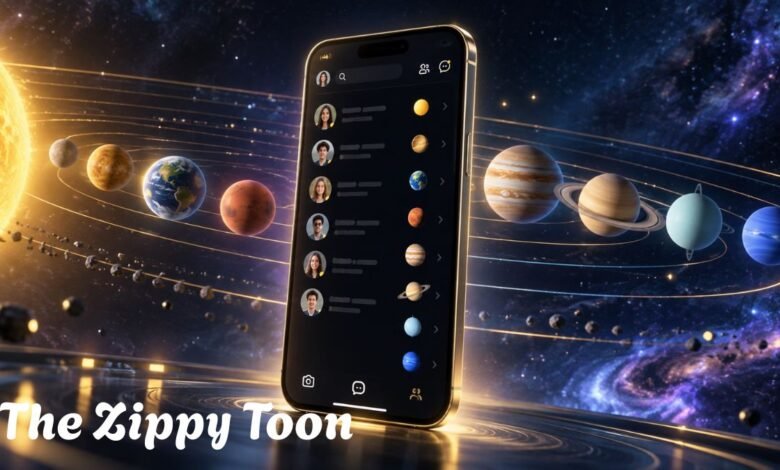
Snapchat’s friendship features can look deceptively simple. A heart emoji, a streak number, or a tiny planet can suddenly become something users interpret as a measure of who matters most. That is exactly why searches for Snapchatplanetsorders.com and terms such as “Snapchat planets order,” “Mercury Snapchat meaning,” and “Friend Solar System” continue to attract attention.
The website Snapchatplanetsorders.com focuses specifically on explaining those planetary symbols. Its homepage presents guides covering the order from Mercury through Neptune, Snapchat+ access, friendship badges, and ways users can interpret their position. The site also clearly states that it is an informational website with no official affiliation with Snap Inc.
That distinction is important. Snapchat’s own documentation confirms the core Friend Solar System concept, but some descriptions found on third-party guides go beyond what Snap publicly documents about its underlying ranking system.
Bottom line: Snapchatplanetsorders.com is an independent informational website focused on Snapchat’s Friend Solar System. The official Snapchat+ feature uses eight planets—Mercury, Venus, Earth, Mars, Jupiter, Saturn, Uranus, and Neptune—to represent positions within a user’s Best Friends system. Still, Snap Inc. does not operate or endorse the website. Why Snapchat Planets Cause So Much Confusion
The Friend Solar System does not simply put eight friends on one public leaderboard.
Snapchat says a Snapchat+ subscriber can see a Best Friends badge with a gold ring on a Friendship Profile. “Best Friends” means that person is among the eight people the user Snaps and Chats with most. Tapping the badge reveals which planet the viewer occupies in that friend’s Solar System.
This means the perspective matters.
If you open another person’s Friendship Profile and appear as Mercury, the planet is describing your position in their Solar System, not necessarily their position in yours.
Snap has also stressed that the Solar System is private. In an April 5, 2024 newsroom statement, the company said the feature does not expose other friends, is not presented as a public numerical ranking, and cannot be viewed by other people.
That privacy detail is easy to miss when third-party explanations simplify the feature into a “top eight friends ranking.”
Mercury sits closest to the Sun.
Mercury represents the first position in the eight-planet sequence. Because Mercury is physically closest to the Sun in the real solar system, Snapchat uses it as the closest Friend Solar System position.
Snapchatplanetsorders.com similarly identifies Mercury as the most-interacted-with friendship position.
Venus, Earth, and Mars fill the next three positions.
Venus represents position two, Earth position three, and Mars position four.
These planets should primarily be understood as positions within the Friend Solar System, rather than psychological descriptions of a relationship. Labels such as “strong friend,” “good friend,” or “casual friend” are interpretations used by explanatory websites, not official measurements of emotional closeness published by Snapchat.
Jupiter through Neptune complete the eight places.
Jupiter corresponds to the fifth position, Saturn to the sixth, Uranus to the seventh, and Neptune to the eighth.
Being Neptune therefore does not mean Snapchat has determined that two people are “bad friends.” It simply places the user at the outermost position represented in that particular eight-planet Solar System.
That distinction prevents a playful interface from being mistaken for a definitive judgment about a real relationship.
What Snapchat Officially Says About How Rankings Work
This is where careful verification matters.
Snapchat officially describes Best Friends as people users Snap and Chat with the most. It also says its Best Friends feature reflects the people someone talks to most frequently over a rolling period.
Snapchatplanetsorders.com discusses interactions, chats, and streaks when explaining how the planets are determined.
However, Snapchat has not publicly provided a complete weighting formula showing exactly how many Snaps, chats, streak days, Story interactions, response times, or other signals equal a particular planet.
That means claims such as “a 100-day streak automatically makes someone Mercury” should not be treated as official rules unless Snapchat itself documents them.
The safest interpretation is simple: the planets visualize relative communication patterns inside Snapchat, but they should not be treated as a precise scientific measurement of friendship.
Snapchat Quietly Changed the Feature After Well-Being Concerns
One of the most important facts surrounding the Friend Solar System has little to do with the planets themselves.
On April 5, 2024, Snap publicly acknowledged concerns that friendship-ranking features could make some users feel uncomfortable about where they stood with friends. The company said it was switching off the Solar System by default, allowing Snapchat+ subscribers to enable it voluntarily.
Snapchat Support still says the Solar System is off by default for first-time subscribers and can be turned on or off in the Snapchat+ feature-management area.
Snap also reported in that 2024 statement that the Solar System was used by less than 0.25% of its community per day on average at that time.
That figure is historical rather than a current 2026 usage estimate, so it should not be presented as today’s adoption rate without newer data.
Where Snapchatplanetsorders.com Is Useful—and Where Official Sources Matter More
Snapchatplanetsorders.com can be convenient when a user wants a visual or plain-English explanation of individual planets. Its homepage covers every position, from Mercury to Neptune, and the site publishes additional guides about finding and interpreting the Solar System feature.
But three boundaries are worth remembering.
First, it is a third-party website. The site’s disclaimer confirms it has no official connection to Snap Inc.
Second, Snapchat itself should be the deciding source for subscription eligibility, feature availability, privacy behavior, billing, and changes to Snapchat+.
Third, users should be cautious about any third-party service that claims it can access private Snapchat friendship information merely by entering a username or account details. Snapchat handles the Solar System itself, so you don’t need to give an independent explainer site your credentials to understand the planet order.
How to Check Your Planet Inside Snapchat
For Snapchat+ users, the official process is straightforward.
- Open Snapchat and access the relevant Friendship Profile.
- Look for the Best Friends badge with its gold ring.
- Tap the badge.
- Snapchat will display which planet you occupy in that person’s Friend Solar System.
- If the feature does not appear, check the Snapchat+ feature-management settings and confirm that Solar System is enabled.
Snapchat says the feature is available through Snapchat+ and is disabled by default for first-time subscribers.
Snapchat+ itself includes many additional premium and experimental features beyond Solar System, and Snap notes that pricing can vary by country, device, and platform. Users should check the price displayed inside Snapchat for the current amount rather than relying on an old article or fixed online price.
What a Planet Cannot Tell You About a Friendship
A planet can show a position derived from activity within Snapchat.
It cannot measure trust.
It cannot measure how long two people have known one another offline.
It cannot determine whether someone would help another person during a difficult moment, nor does Neptune prove that a friendship is weak.
Snap itself described the feature as a way of providing additional context around communication patterns, while also recognizing that users can feel disappointed when the displayed position differs from what they expected.
This distinction matters most for younger users, who may take app-generated signals more seriously than intended.
The Planet Is a Signal, Not a Friendship Scorecard
Snapchatplanetsorders.com answers the question behind its domain name: what order do Snapchat’s planets follow?
The answer is straightforward—Mercury → Venus → Earth → Mars → Jupiter → Saturn → Uranus → Neptune.
The more important answer is what those symbols should mean to users. Snapchat built its Friend Solar System as an optional visualization of communication activity, not as an objective definition of human closeness. Snap’s decision to make the feature opt-in by default reinforces that distinction.
Use Snapchatplanetsorders.com for an accessible explanation. Use Snapchat’s own Support and Newsroom pages when you need authoritative details about how the feature works. And treat the planet you see as what it actually is: a private app signal based on Snapchat activity, not a final verdict on a friendship.
FAQs.
Is Snapchatplanetsorders.com an official Snapchat website?
Snapchatplanetsorders.com is an independent information website, not an official Snap Inc. property. Its own disclaimer states that it has no official ties with Snap Inc. Users can consult it for explanatory material. Still, Snapchat Support remains the authoritative source for Snapchat+ feature availability and operation.
What is the correct Snapchat planets order?
The Snapchat planets order is Mercury, Venus, Earth, Mars, Jupiter, Saturn, Uranus, and Neptune. The eight planets correspond to eight positions in the Friend Solar System, moving outward from the closest position, represented by Mercury, to the eighth, represented by Neptune.
Do I need Snapchat+ to see the Friend Solar System?
Yes. The Friend Solar System is a Snapchat+ feature. Snapchat Support lists Solar System among its Snapchat+ features and explains that first-time subscribers need to enable it because the feature is off by default.
Does Mercury mean someone is your number-one friend?
Mercury represents the first position in the Friend Solar System sequence. It indicates the closest position among the eight represented through the feature. Snapchat describes Best Friends as the people users Snap and Chat with most, but it does not publish the full internal formula behind every ranking change.
Why did my Snapchat planet change?
A Snapchat planet can change as communication patterns change. Snapchat describes Best Friends as reflecting people users communicate with most frequently over a rolling period, so the displayed relationship can shift rather than remaining permanent. The company does not publicly disclose the exact mathematical weighting behind every movement.
Can other people see my entire Snapchat planet ranking?
The Friend Solar System is designed as a private feature. Snap says it doesn’t show other friends and isn’t visible to everyone else. A user viewing a Friendship Profile sees their own relevant position rather than a public leaderboard showing everyone in another person’s social circle.
Editorial Disclaimer
This article was fact-checked against publicly accessible information available on September 23, 2026. Snapchat features, interfaces, subscription terms, and availability can change. Snapchatplanetsorders.com is a third-party informational website and should not be confused with Snapchat or Snap Inc. Interpretations about friendship strength beyond Snapchat’s documented descriptions should be treated as explanatory commentary rather than verified measures of real-world relationships.