AICOT Explained: Meaning, Innovative Technology, Key Features, and Real-World Applications

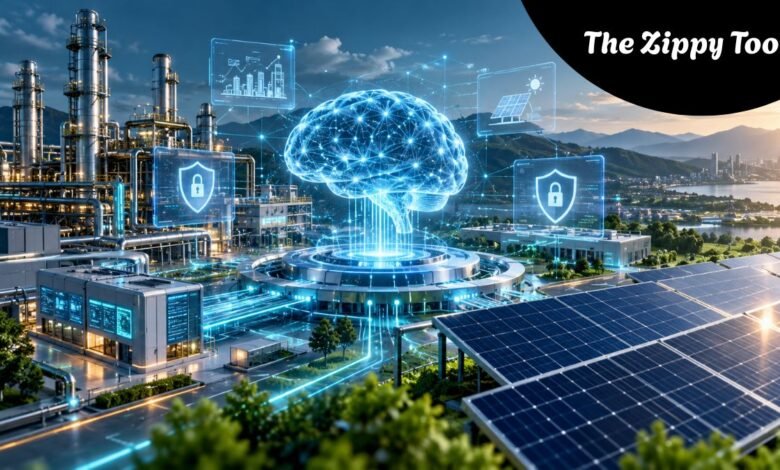
Technology continues to transform how businesses operate, how industries protect their infrastructure, and how people interact with modern digital systems. Among the many names in the technology landscape, AICOT has attracted attention for its connections to artificial intelligence, cybersecurity, renewable energy, and business innovation. However, understanding the term requires more than a simple definition. Unlike widely recognized technology brands, AICOT doesn’t refer to a single, universal product or organization. Instead, several independent companies, projects, and technologies use the same name for different purposes.
Notable examples include Artificial Intelligence Concepts Of Technology, an IT services organization; a European cybersecurity project focused on protecting operational Technology; and Anti-Islanding Control Technology, developed by Japanese electronics manufacturer OMRON. Each serves a different purpose, though they share an emphasis on addressing technological challenges.
This article explores AICOT, its applications, key features, potential benefits, and how related technologies support modern industries. It also explains how readers can distinguish these organizations and understand their practical importance.
What Is AICOT?
AICOT is a name used by several technologies and organizations across different industries. Its meaning depends on the context. In artificial intelligence and IT services, it can refer to Artificial Intelligence Concepts Of Technology, which focuses on digital services, automation, data management, and business technology. In European industrial cybersecurity, the AICOT Project is developing an AI-driven platform to improve the protection of operational technology systems. Meanwhile, in the renewable energy industry, OMRON uses AICOT as the name of its Anti-Islanding Control Technology, which helps protect electricity networks connected to solar power installations.
These uses are distinct and should not be treated as different products belonging to the same company. This distinction matters especially for businesses researching technology providers, engineers exploring solar equipment, and cybersecurity professionals investigating industrial protection systems.
AICOT and Artificial Intelligence Concepts Of Technology
AICOT describes itself as Artificial Intelligence Concepts of Technology. Its business positioning focuses on helping organizations adopt technology solutions that can improve efficiency, connectivity, and operational performance. Its published areas of expertise include artificial intelligence, machine learning, cloud computing, data analytics, cybersecurity, automation, and technical support.
The broader importance of these services becomes clearer when considering how modern businesses manage information. Companies often run multiple software applications, maintain extensive customer records, and rely on reliable communication between departments. Without suitable technology infrastructure, these activities can create unnecessary administrative work and increase operating costs. AICOT’s technology services aim to address these challenges by supporting digital systems, improving access to business information, and helping organizations modernize their infrastructure.
Artificial intelligence can support this process through pattern recognition, information analysis, and automating repetitive tasks. However, a service’s effectiveness depends on its implementation, data quality, security controls, and suitability for a customer’s requirements.
How AICOT Relates to Modern Business Automation
Business automation is a key part of digital transformation. Many organizations still depend on manual procedures for tasks such as processing documents, updating databases, preparing reports, and responding to routine customer inquiries. These processes can consume valuable working hours, particularly when the same information must be entered into several systems.
Technology services for AICOT business solutions target areas where automation and system integration can improve productivity. For example, a company might connect its customer management software with reporting tools so that employees can review operational information without preparing separate spreadsheets. Another organization might use automated workflows to organize service requests or direct technical problems to the appropriate department.
Nevertheless, automation should not be confused with complete independence from human supervision. Sensitive decisions, unusual requests, and unexpected system behavior still require professional judgment. Successful implementation depends on selecting appropriate tasks, carefully testing the Technology, and ensuring employees understand the new procedures.
The European AICOT Cybersecurity Project
Another significant use of the name is the AICOT Project, a European initiative focused on protecting Operational Technology (OT). Operational Technology includes hardware and software that monitor or control physical equipment. Such systems are widely used in manufacturing facilities, electricity infrastructure, transport networks, water treatment plants, and other essential services.
The project proposes an AI-driven cybersecurity platform specifically designed for these industrial environments. Its development is led by Logstail and supported through the European Union’s Digital Europe Program. The planned platform combines machine learning, anomaly detection, industrial communication analysis, and cybersecurity threat intelligence to more effectively identify suspicious activity.
Unlike ordinary business software, operational Technology frequently interacts directly with physical machinery. A security incident could therefore affect production, equipment availability, or essential public services. The AICOT Project seeks to address these specialized risks through a modular security platform designed around industrial requirements.
How AI-Driven Industrial Cybersecurity Works
Industrial cybersecurity requires a different approach from protecting ordinary computers or office applications. Many industrial facilities run equipment installed years ago that may not support modern security software. Some systems also need to remain available continuously because unexpected shutdowns can interrupt production or affect public safety.
The European AICOT initiative aims to improve protection by analyzing information generated across operational networks. Machine learning and anomaly detection can help security teams recognize patterns that differ from established operating behavior. For example, an unusual communication request, unexpected equipment interaction, or unfamiliar network activity could indicate a technical problem or possible security threat.
The project also proposes secure cyber threat intelligence sharing, helping organizations exchange relevant security information while considering privacy and trust. These capabilities remain part of the project’s development and validation objectives, not evidence that every proposed feature has already achieved widespread commercial deployment.
Important Features of the AICOT Cybersecurity Approach
One of the project’s important characteristics is its focus on operational Technology rather than conventional IT alone. Industrial networks use specialized devices, communication protocols, and operational procedures that standard office security tools cannot always protect effectively. AICOT therefore aims to provide security monitoring that accounts for industrial equipment abehavior nd the need to maintain service availability.
Another key feature is its proposed modular design. Different industrial organizations have different security requirements, and a flexible platform could allow them to adopt capabilities that match their infrastructure. The project also emphasizes proactive threat detection, secure information exchange, and testing in realistic industrial environments. These objectives are intended to help operators identify potential risks earlier and respond more effectively without creating unnecessary disruption to essential processes.
AICOT in Solar Energy: OMRON’s Anti-Islanding Control Technology
One of the most established technical meanings of AICOT comes from Japanese technology company OMRON Corporation. In this context, the acronym stands for Anti-Islanding Control Technology, a system developed to improve the safety of grid-connected photovoltaic installations.
Solar panels generate direct current, which an inverter converts to alternating current suitable for standard electrical systems. When solar installations operate alongside the public electricity grid, special protection is needed to detect when the main grid supply is disconnected.
An electrical condition called islanding can occur when local generation continues supplying power to an isolated section of the network following a grid failure. This can create hazards for maintenance workers and electrical equipment. Anti-islanding technology is designed to detect such conditions and prevent unsafe operation.
OMRON developed its AICOT system particularly to address situations involving multiple neighboring solar installations, where conventional detection methods could interfere with one another.
How OMRON’s AICOT Technology Works
OMRON’s Technology monitors electrical conditions associated with grid-connected solar power generation. When the system detects evidence of islanding, it is designed to initiate protective action that stops the inverter from continuing to energize the disconnected network.
According to OMRON’s published technical explanation, its AICOT technology can detect islanding from frequency variations in approximately 0.2 seconds under the described operating conditions. The company introduced a photovoltaic inverter equipped with the Technology in 2011 after years of development and research into clustered solar installations.
This innovation was particularly valuable in communities where numerous homes operated rooftop solar systems. By reducing interference between neighboring installations, the Technology helped remove barriers to installing more photovoltaic systems in the same area. Its significance therefore extends beyond protecting individual inverters to the broader development of distributed renewable energy.
Why AICOT Matters for Renewable Energy
As solar energy adoption increases, electricity networks must manage power from numerous smaller installations rather than relying exclusively on central power stations. This creates technical challenges involving voltage, frequency, network stability, and electrical safety.
Reliable anti-islanding protection is one important part of managing these challenges. It allows grid-connected solar equipment to respond appropriately when the public electricity supply becomes unavailable. In areas with many rooftop installations, dependable detection methods matter because multiple inverters may share electrical infrastructure.
OMRON’s development demonstrates how an innovation focused on a specific safety problem can support broader energy objectives. Although anti-islanding control is only one component of a properly designed solar installation, it helps safely integrate renewable electricity into existing distribution networks.
Other Organizations Using the AICOT Name
The name also appears outside industrial cybersecurity and solar power. A German consultancy operating under AICOT helps smaller businesses, tradespeople, and self-employed professionals introduce artificial intelligence into everyday operations. Its published services include AI strategy, workplace training, automation guidance, and support for responsible technology adoption.
Another unrelated initiative, Art in Country of Tokyo, also uses the abbreviation AICOT. This Japanese contemporary art project explores connections between urban environments, nature, cultural identity, and artistic expression. Its 2024 program included exhibitions and activities involving Shikinejima Island and other Tokyo locations.
These examples demonstrate why identifying the exact organization is essential when researching the keyword. Similar names do not establish common ownership, shared Technology, or a formal business relationship.
Benefits of Technologies Associated with AICOT
Although the different uses of the name are unrelated, they demonstrate several ways modern Technology can address practical challenges. Business-focused AI and IT services may help organizations improve information management, reduce repetitive tasks, and support more efficient workflows. Industrial cybersecurity research aims to strengthen the protection of connected machinery and critical infrastructure. Solar anti-islanding control addresses electrical safety in renewable energy systems.
However, benefits should always be evaluated against the relevant application. An AI service cannot be assessed using the same measures as a solar inverter safety function. At the same time, a research-stage cybersecurity platform should not be presented as a fully proven commercial solution.
The most useful evaluation considers reliability, security, technical compatibility, operational requirements, implementation costs, and measurable performance. These considerations help organizations distinguish practical technological value from broad marketing claims.
Challenges and Limitations
Despite the opportunities these technologies offer, several challenges deserve attention. Artificial intelligence systems require appropriate data, careful configuration, and effective supervision. Poor-quality information may produce inaccurate results, while weak privacy controls can expose sensitive business records. Organizations introducing automation must also consider employee training and integration with existing software.
Industrial cybersecurity adds complexity because older equipment may have limited processing capacity or strict availability requirements. Security tools must be tested carefully to avoid interfering with essential machinery. Similarly, solar power technology needs professional installation, compatibility assessment, and compliance with applicable electrical safety standards.
Another challenge is the ambiguity of the AICOT name itself. Readers may encounter information about one organization and mistakenly associate it with another. Checking the relevant industry and original organization remains the most reliable way to avoid such confusion.
The Future of AICOT-Related Technologies
The future of the different technologies associated with AICOT will depend on developments within their respective industries. Artificial intelligence services are likely to remain important as businesses seek ways to analyze information, support employees, and improve operational efficiency. Organizations adopting these services will increasingly need to consider privacy, accountability, technical reliability, and the financial value of their investments.
Industrial cybersecurity will also remain important as factories, energy providers, and transport systems become more digitally connected. The European AICOT Project illustrates efforts to develop more specialized protection for these environments, although its eventual impact will depend on successful validation and adoption.
In renewable energy, improvements in inverter design, grid monitoring, and protective control systems will continue to support safer electricity generation. OMRON’s AICOT provides an established example of innovation in this field. Taken together, these developments show how targeted technologies can help industries address increasingly complex challenges.
Conclusion
AICOT is an interesting example of how a single name can represent several independent technological ideas, organizations, and initiatives. From artificial intelligence services and industrial cybersecurity to solar energy protection, the name’s different uses highlight a range of practical challenges facing modern industries.
The key point is that AICOT should never be treated as a single universal platform without first identifying the intended organization. OMRON’s Anti-Islanding Control Technology, the European AICOT cybersecurity project, and companies offering artificial intelligence services each serve distinct purposes and have different capabilities.
Understanding these differences allows readers, researchers, and businesses to evaluate the relevant technologies more accurately. As digital systems and renewable energy infrastructure continue to develop, the principles associated with these applications—safety, efficiency, reliability, and responsible innovation—will remain important across the technology sector.
(FAQs)
What does AICOT stand for?
AICOT has different meanings depending on the organization or industry. It can stand for Artificial Intelligence Concepts Of Technology in IT services or Anti-Islanding Control Technology in solar energy. It is also the name of a European industrial cybersecurity project.
Is AICOT an artificial intelligence platform?
Not universally. Some organizations and projects use the name for artificial intelligence, but OMRON’s AICOT is an electrical safety technology. The correct meaning depends on the context.
What is the purpose of the European AICOT Project?
The European project aims to develop an AI-driven cybersecurity platform for operational technology environments, helping protect industrial equipment and critical infrastructure against cyber threats.
Who developed AICOT solar Technology?
OMRON Corporation developed AICOT anti-islanding Technology for grid-connected photovoltaic systems. It introduced an inverter equipped with this Technology in 2011.
Can AICOT-related technologies benefit businesses?
Yes, depending on the specific Technology. AI and IT services may support business automation and data management, while industrial cybersecurity systems aim to improve infrastructure protection. The suitability of any solution should be assessed individually.