Bodenxt: The Powerful Green Transformation Reshaping Sweden’s Industrial Future

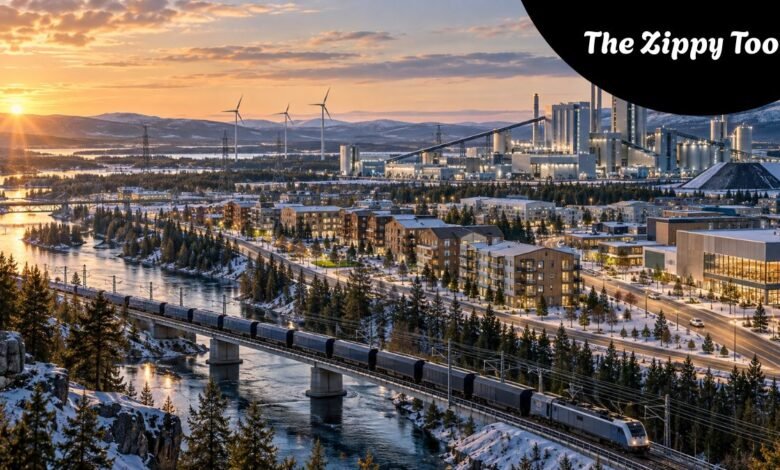
Across Europe, cities and communities are searching for better ways to balance economic development with environmental responsibility. Northern Sweden has become a key part of this movement, especially as major industrial investments create opportunities for cleaner manufacturing and regional growth. At the center of one remarkable local transformation is Bodenxt, an initiative designed to help the Swedish municipality of Boden prepare for a changing industrial economy while maintaining a strong and welcoming community.
Unlike conventional development projects that concentrate on a single factory, road, or residential neighborhood, Bodenxt approaches growth as a connected process. Industrial expansion creates employment opportunities, but new workers also require housing, transport, education, healthcare, and dependable public services. Addressing these needs together is essential for successful long-term development.
The initiative reflects a broader ambition to create a community where green technology, economic opportunities, sustainable infrastructure, and quality of life develop alongside one another. Understanding how this approach works provides valuable insight into the opportunities and challenges facing rapidly growing industrial regions.
What Is Bodenxt?
Bodenxt is a municipal development platform that supports Boden’s green transformation. It coordinates important aspects of community development, including workforce recruitment, housing, business expansion, and infrastructure improvements. The program is associated with Boden Municipality and its response to major industrial investments taking place in northern Sweden.
The word platform can be confusing because it often refers to digital applications or commercial software. However, the official Bodenxt initiative is not an artificial intelligence application, subscription service, or standalone technology company. Instead, it represents a coordinated approach to planning and managing significant changes throughout an entire municipality. Its purpose is to ensure that investment in sustainable industry is accompanied by improvements that benefit residents, employers, and future generations.
The Background and Development of Bodenxt
Boden has traditionally been known for its strategic location, established community, and connections to important industries and public services in northern Sweden. However, the growing international demand for lower-emission manufacturing has introduced a new chapter in the municipality’s development. Major industrial investments have increased the need for skilled employees, suitable housing, reliable transportation, and modern public facilities.
The Bodenxt communication platform was publicly established in 2021, when a dedicated website was launched to share information about the municipality’s transformation. From the beginning, the initiative recognized that rapid industrialization could create significant pressure on a community unless different areas of development were coordinated effectively.
Municipal leaders have described the transformation as a development leap comparable to approximately 20 years of ordinary growth compressed into a much shorter period. This comparison demonstrates both the scale of the ambition and the difficulty of managing several major changes simultaneously.
The Main Development Areas of Bodenxt
The initiative connects four broad development areas: housing and community life, workforce development, business growth, and infrastructure. The municipality also distinguishes between above- and below-ground infrastructure, reflecting the importance of everything from transport networks to essential utility systems.
1. Housing and Community Development
One of the most important responsibilities in the Bodenxt transformation is meeting demand for suitable housing. When industrial companies recruit employees from other parts of Sweden or overseas, those workers need places to live. Many also relocate with families, increasing demand for schools, childcare facilities, healthcare services, and recreational opportunities.
Sustainable housing development is therefore about more than building more housing. It involves creating neighborhoods where residents can build comfortable and stable lives. Thoughtful urban planning considers accessibility, energy efficiency, public transport, outdoor spaces, and access to everyday services. For Boden, meeting housing demand matters because a shortage of affordable accommodation can prevent companies from recruiting employees even when suitable jobs are available.
2. Workforce Development and Employment Opportunities
Industrial transformation requires people with a wide range of professional skills. Engineers, electricians, construction specialists, technicians, logistics professionals, and manufacturing workers are all essential to developing modern industrial facilities. However, employment growth also extends beyond factories to education, retail, hospitality, healthcare, and other essential services.
Bodenxt supports a coordinated approach to workforce development and skills supply, recognizing that employers and educational organizations must respond to changing labor requirements. Cooperation between training providers, businesses, and public institutions can help prepare residents for emerging opportunities while making the municipality more attractive to skilled professionals from other regions. The broader objective is to build a labor market that supports both established employers and new industries.
3. Business Growth and Economic Development
Major industrial investments can generate opportunities for smaller companies, particularly those providing construction, maintenance, engineering, transportation, professional services, and technical support. Businesses operating near expanding industrial centers may benefit from new customers, stronger commercial networks, and increased demand for specialized products.
Through its business development focus, Bodenxt aims to support an environment where existing companies can expand, and new enterprises can establish themselves. Encouraging local entrepreneurship and business cooperation is important because a successful regional economy should not depend entirely on one major employer. A diverse commercial environment can create additional employment opportunities and help communities remain resilient when individual industries experience financial or operational difficulties.
4. Infrastructure and Transportation
Infrastructure is another essential component of the program. Large manufacturing facilities require dependable access to electricity, water, communications networks, and efficient transportation systems. At the same time, growing residential areas need roads, public utilities, and services that can accommodate changing population demands.
Boden’s industrial development has involved investment in railway connections and supporting infrastructure around Boden Industrial Park. These improvements are intended to strengthen industrial logistics while connecting new economic activity with existing regional transport networks. Equally important are less visible systems, including wastewater treatment and other municipal utilities. By coordinating transport infrastructure and essential public services, the municipality can support development that serves both industrial operations and everyday community life.
How Green Steel Production Connects With Bodenxt
One of the strongest drivers behind Boden’s transformation is Stegra, the industrial company previously known as H2 Green Steel. The company is developing a large-scale steel production facility in Boden, aiming to manufacture steel through processes that generate substantially lower carbon emissions than conventional coal-based production.
Traditional steelmaking is associated with significant greenhouse gas emissions, particularly when coal is used to reduce iron ore. Hydrogen-based production offers an alternative approach in which hydrogen replaces much of the coal traditionally used in the reduction process. When hydrogen is produced using low-emission electricity, the resulting manufacturing process can significantly reduce emissions.
Stegra and Bodenxt are separate organizations. Stegra manages the industrial project, while Bodenxt addresses the wider community transformation around developments of this scale. The distinction matters because the factory’s success depends partly on the availability of workers, housing, infrastructure, and services.
The industrial project also faces financial and operational challenges. In September 2026, Stegra acknowledged that it would need additional capital to complete its facility, despite financing arrangements secured earlier in the year. This highlights the uncertainty that can accompany ambitious industrial transformation.
Why Sustainable Development Matters to Bodenxt
Environmental responsibility is a major part of the initiative’s wider identity. However, genuine sustainability requires more than simply attracting companies that describe themselves as green. It also involves examining resource consumption, emissions, land use, and the long-term environmental effects of industrial and residential development.
Boden’s industrial ambitions are tied to opportunities in renewable electricity, hydrogen technology, resource efficiency, and circular economy practices. Circular development aims to use materials, energy, and industrial by-products more effectively rather than treating them as waste. For example, recovering useful heat from industrial processes could potentially support other activities, including greenhouse cultivation or nearby facilities, where technically and economically practical.
These possibilities are promising, but they require careful planning and investment. Large industrial operations can consume substantial amounts of electricity and water, making efficient resource management and environmental oversight essential to their long-term success.
The Importance of Housing in Boden’s Transformation
Although new factories often attract the most public attention, housing has become one of Boden’s most pressing development challenges. In May 2026, Boden Municipality reported that the vacancy rate for rental apartments was close to zero, demonstrating the pressure facing people seeking accommodation.
The municipality was working with development plans that could enable approximately 1,300 apartments and 500 detached houses. Nevertheless, high construction costs, financing difficulties, and the commercial challenges of residential development were slowing progress.
This situation illustrates why Bodenxt’s integrated planning model is necessary. A new job does not automatically bring a new resident if housing is unavailable. Similarly, employers may struggle to expand when potential recruits cannot relocate. Housing availability and affordability consequently influence the success of industrial investment, population growth, and community development.
How Bodenxt Can Benefit Local Residents
For existing residents, Bodenxt’s value depends on whether economic transformation improves everyday life. Industrial expansion may create employment opportunities, strengthen local businesses, and encourage investment in public facilities. New residents can also contribute to community organizations, cultural activities, and the wider local economy.
However, rapid growth can introduce difficulties. Housing shortages may increase competition for accommodation, construction activity can affect traffic, and public services may experience additional demand. People who have lived in Boden for many years may also have different priorities from newly arriving workers.
A successful transformation therefore requires meaningful communication, realistic planning, and consideration of the different groups affected by change. The objective should be inclusive community development, where economic progress creates lasting benefits without overlooking the needs of existing residents.
Challenges and Risks Facing the Initiative
Large-scale transformation creates uncertainty, even with strong public planning. One important challenge is the financial sustainability of major industrial projects. Construction delays, shifts in market demand, rising operating costs, and additional funding needs can affect investment timelines and employment expectations.
Another concern involves the speed of community development. Housing construction, educational capacity, transport improvements, and utility expansion do not always keep pace with industrial investment. When one essential area falls behind, it can create difficulties throughout the wider economy.
Environmental concerns also require continued attention. Renewable energy projects and low-emission manufacturing can support climate objectives, but their benefits depend on practical implementation and responsible management. Maintaining public confidence will require transparency, realistic expectations, and clear evidence of progress, not just ambitious promises.
What Makes Bodenxt Different From Traditional Development Projects?
Bodenxt’s most distinctive feature is its emphasis on coordinating across municipal planning functions. Traditional development programs may address housing, employment, infrastructure, and business support through separate departments with different priorities and schedules.
Bodenxt encourages these areas to be considered together. For example, forecasts about industrial recruitment can inform housing plans, education programs, transport requirements, and public service investment. This approach does not eliminate every difficulty, but it can make it easier to identify connections between different challenges.
Its experience may provide useful lessons for other communities preparing for rapid industrial growth. The central lesson is that economic development and community development must progress together if major investment is to produce sustainable long-term results.
The Future of Bodenxt
Bodenxt’s future will depend on how effectively Boden balances industrial ambitions with the practical needs of its population. Expanding housing availability, developing specialized skills, maintaining essential infrastructure, and encouraging a diverse business environment will remain important priorities.
Stegra’s industrial project is another significant factor. Its construction timetable, financing, and eventual operational performance will shape employment needs and the pace of broader development. However, Boden’s long-term strategy also involves creating opportunities beyond a single manufacturing facility.
If coordinated planning continues to drive meaningful improvements, the municipality could offer a compelling example of how regions respond to the demands of industrial decarbonization. Success will ultimately be measured not only by the scale of industrial investment, but also by the quality of life, economic resilience, and environmental outcomes achieved over time.
Conclusion
Bodenxt represents an ambitious approach to managing one of the most important transformations taking place in northern Sweden. By linking industrial investment to housing, workforce development, infrastructure, and business growth, the initiative recognizes that sustainable progress involves more than building advanced manufacturing facilities.
Its greatest strength lies in the understanding that people, businesses, and public services are interconnected. Although financing pressures, housing shortages, and infrastructure demands pose significant challenges, coordinated planning offers a practical way to address them.
Ultimately, the importance of Bodenxt will be determined by its ability to turn ambitious green development plans into lasting improvements for the community. Its experience offers a valuable lesson for other regions: a successful industrial future depends not only on cleaner technology, but also on building places where people can live, work, and thrive.
(FAQs)
What is Bodenxt in simple words?
Bodenxt is a development initiative managed by Boden Municipality in northern Sweden. It connects housing, employment, business growth, and infrastructure planning to support the area’s transition towards a greener industrial economy.
Is Bodenxt a technology company?
No. The official Bodenxt initiative is a municipal development platform, not a private technology company or downloadable software product.
Why is Bodenxt important for Sweden?
It demonstrates how communities can coordinate public services, housing, workforce development, and infrastructure while responding to substantial investment in lower-emission industries.
How is Stegra related to Bodenxt?
Stegra is developing a major green steel production facility in Boden. Its investment is one of the main reasons the municipality needs coordinated planning through Bodenxt.
What are the biggest challenges facing Bodenxt?
The main challenges include housing shortages, workforce recruitment, infrastructure demands, uncertainty around industrial financing, and ensuring rapid economic growth remains environmentally and socially sustainable.