Asake Bomani: The Award-Winning Author Who Helped Shape Danny Glover’s Early Career
Before Hollywood fame brought Danny Glover worldwide recognition, Asake Bomani was already part of his story—but her own achievements in literature and African American art deserve equal attention.

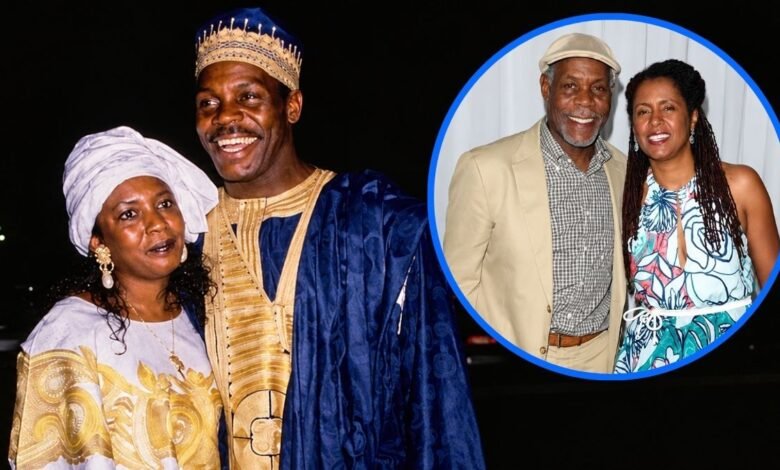
Many people remember Asake Bomani primarily as the first wife of Hollywood actor Danny Glover. Their marriage lasted approximately 25 years, spanning his transition from an aspiring performer in San Francisco to one of America’s most recognizable film actors. Yet the familiar account of their relationship leaves out a substantial part of Bomani’s identity.
She engaged with the arts beyond film, working with African American cultural expression through gallery exhibitions and publishing. Her editorial contribution to Paris Connections: African American Artists in Paris earned recognition through an American Book Award in 1993. That achievement provides an important reason to look beyond her former marriage.
As interest in Glover’s family history continues, Bomani’s story raises a more revealing question: how much of her cultural work has been overlooked because of her association with a famous husband? Archival records, an interview with Glover, and contemporary reporting offer a clearer picture of her career, family, and lasting contribution.
Asake Bomani is an American author, editor and former art gallery owner best known publicly as Danny Glover’s first wife. They married in 1975, welcomed their daughter, Mandisa Glover, in 1976, and divorced in 2000. Bomani also co-edited the 1992 publication Paris Connections, associated with a 1993 American Book Award.
Quick Bio
| Detail | Information |
|---|---|
| Full name | Asake Bomani |
| Reported birth name | Sandra Henderson |
| Reported birth date | July 1, 1945 |
| Reported birthplace | Wilmington, Delaware, USA |
| Nationality | American |
| Known professions | Author, editor, art gallery owner |
| Former husband | Danny Glover |
| Marriage | 1975–2000 |
| Children | Mandisa Glover |
| Notable publication | Paris Connections: African American Artists in Paris |
| Literary recognition | 1993 American Book Award |
| Associated gallery | Bomani Gallery, San Francisco |
From a College Classroom to a Relationship That Lasted 25 Years
Long before Danny Glover became known for The Color Purple, Lethal Weapon, and To Sleep with Anger, his life revolved around education, political engagement, and San Francisco’s cultural atmosphere. During college, he met Asake Bomani.
The two met while attending San Francisco State College, now San Francisco State University. Glover studied economics and was active in student politics, while Bomani attended English classes. They met as the university became associated with student activism and demands for greater representation in higher education.
A 2004 interview with The Independent provides an unusually personal account of their first encounters. Glover recalled being too shy to approach Bomani directly. Instead, he repeatedly waited outside her English class, briefly greeted her and walked away. Eventually, he found the confidence to telephone her and arrange a date.
Recalling his attraction to Bomani, Glover told the newspaper:
“I was just blown away by this woman.”
That recollection is particularly valuable because it comes from Glover himself rather than from retrospective celebrity speculation.
Their relationship developed before the professional achievements that would eventually make his name internationally familiar. The couple married in 1975, the same decade in which Glover began seriously pursuing acting.
Why Bomani’s Encouragement Mattered to Glover
Early in his professional life, Glover worked outside entertainment, including in city administration. Acting represented a significant change in direction, especially before he had established financial security through performance.
Bomani encouraged him to pursue acting professionally. Glover’s own account, reported in The Independent, identifies her as an important influence behind that decision.
He went on to train with the Black Actors’ Workshop associated with the American Conservatory Theater in San Francisco. His career gradually expanded through theatre and television before he appeared in the 1979 film Escape from Alcatraz.
By 1985, Glover had appeared in major productions including Witness, Silverado and The Color Purple. His role as Roger Murtaugh in Lethal Weapon followed in 1987.
Although it would be excessive to credit Bomani with creating Glover’s success, her early encouragement played a meaningful role in his professional development. Importantly, she supported that transition before Hollywood recognition made the outcome appear inevitable.
Bomani Gallery and the Cultural Work That Deserves More Attention
Describing Asake Bomani solely through her marriage overlooks her documented involvement in San Francisco’s artistic community.
Bomani operated an art gallery, and the institutional record of Bomani Gallery shows its connection to exhibitions and publications on African American art. The gallery was connected with Jernigan Wicker Fine Arts, another San Francisco exhibition space, through a cultural project that examined the lives and work of Black artists in Paris.
In the late twentieth century, galleries played an important role in giving visibility to artists whose work received limited attention from dominant commercial institutions. Exhibition catalogs were especially valuable because they preserved information about artists, their creative practices and the circumstances surrounding their work.
Bomani’s documented involvement in this setting places her within a broader cultural network, not merely alongside Hollywood personalities.
It also changes how her public identity should be understood. She was not exclusively a celebrity spouse attending film premieres. She helped present and document artistic work with historical and cultural significance.
The Publication That Preserved a Transatlantic Artistic Conversation
In 1992, Asake Bomani and Belvie Rooks edited Paris Connections: African American Artists in Paris, an exhibition publication associated with artist and curator Raymond Saunders.
The Smithsonian Libraries and Archives catalog identifies Bomani and Rooks as editors and Saunders as curator. WorldCat also records Bomani Gallery and Jernigan Wicker Fine Arts among the organizations associated with the publication.
The project examined African American artistic activity in Paris, a city with an extensive history of attracting Black writers, musicians and visual artists.
For African American artists, Paris carried particular historical significance. During parts of the twentieth century, some artists found opportunities for travel, exhibition and intellectual exchange that differed from those available in the United States. Nevertheless, their experiences varied, and France was not free from racism or professional exclusion.
The publication helped record that international artistic exchange. Rather than presenting individual careers in isolation, it connected artists to broader questions about geography, racial identity, and cultural recognition.
Library records also identify related editions or cataloging descriptions concerning African and Caribbean artists in Paris. These variations matter for research, since the publication sometimes appears under slightly different titles.
Why the 1993 American Book Award Matters
One of the clearest independently documented achievements in Bomani’s career is her association with the 1993 American Book Award.
Historical recipient lists identify Asake Bomani and Belvie Rooks among the winners for their work on Paris Connections: African American Artists in Paris.
The award is associated with the Before Columbus Foundation, an organization established to recognize and promote multicultural American literature. Unlike some literary prizes, the American Book Awards have historically recognized a broad range of writing and publishing contributions.
The distinction between the publication and award dates is important:
- 1992: Paris Connections: African American Artists in Paris was published.
- 1993: Asake Bomani and Belvie Rooks were recognized among American Book Award recipients.
Some online profiles incorrectly place the award in 1991 or shorten the book title to Paris Connection. The 1992 publication records and 1993 recipient lists provide a more reliable chronology.
The award highlights another dimension of Bomani’s professional identity: she edited and documented artistic work, not simply written a conventional celebrity memoir or personal autobiography.
That achievement remains traceable in institutional catalogs decades after the original exhibition.
Marriage, Motherhood and the Family Life Shared With Danny Glover
Asake Bomani and Danny Glover welcomed their daughter, Mandisa Glover, on January 5, 1976, according to People magazine.
Mandisa was raised in San Francisco, where her parents maintained family life while Glover’s acting career continued to develop.
The family lived in the Haight-Ashbury neighborhood, an area closely tied to San Francisco’s cultural and social history.
As Glover’s visibility increased throughout the 1980s and 1990s, Bomani and Mandisa occasionally appeared alongside him at public events. Photographic archives document family appearances at film premieres, including events connected with Predator 2 and Listen Up: The Lives of Quincy Jones in 1990.
Those photographs provide a visible record of the family as Glover became a familiar international screen presence.
However, public photographs cannot establish everything about the couple’s private relationship. Available reporting provides considerably more reliable evidence about their marriage dates and family than about their day-to-day domestic experiences.
Mandisa Glover Chose a Different Professional Path
Mandisa Glover did not pursue the same prominent acting career as her father.
She has worked in several professional areas, including film production support and the food industry. In July 2024, people reported that she had built a career as a chef, sharing multicultural cooking and working on private dining projects.
Her film credits include behind-the-scenes work on You’ve Got Mail and The Drummer.
Mandisa is also a mother. Her son, Adesola, was born in January 2004, making Asake Bomani a grandmother.
Although Mandisa has occasionally attended public events associated with her father, her professional activities have taken an independent direction.
The family’s continued public visibility also offers a useful distinction: Bomani’s association with Glover did not end all family connections when their marriage dissolved.
What Happened When the Marriage Ended?
After approximately 25 years of marriage, Asake Bomani and Danny Glover divorced in 2000.
Biographical references indicate that divorce proceedings began in 1999, although published accounts differ over the precise filing date. The most consistently reported year for the completed divorce is 2000.
Neither the length of their marriage nor the eventual separation provides sufficient evidence to speculate about the private circumstances surrounding their decision.
What is documented is that the former spouses were photographed together after their divorce.
Getty Images holds an archival photograph of the pair attending the October 2001 premiere of The Royal Tenenbaums in New York City. Its caption identifies them as a divorced couple.
Their appearance at the event demonstrates that they could still attend the same public occasion after their marriage ended. It does not, by itself, establish the precise nature of their personal relationship at that time.
Glover subsequently married Brazilian educator Eliane Cavalleiro in 2009. Their marriage also later ended.
Bomani, meanwhile, has maintained a comparatively limited public profile. Reliable reporting is insufficient to provide a definitive account of her personal life after the divorce, including any later romantic relationships.
Financial Records: What Can Actually Be Established?
Asake Bomani’s personal wealth has attracted speculation on celebrity biography websites, but reliable financial documentation is limited.
No authoritative, independently verified figure for Asake Bomani’s personal net worth is publicly established.
Her documented professional activities include gallery ownership and editorial work, but these records do not establish her total income, business earnings, property holdings, or current assets.
Likewise, Danny Glover’s professional earnings cannot reasonably be treated as evidence of Bomani’s personal financial position.
No sufficiently detailed public financial records were identified to support estimates of her gallery business’s value, any divorce settlement, or her current finances.
Consequently, presenting a specific amount as her confirmed wealth would be misleading.
(FAQs)
Who is Asake Bomani?
Asake Bomani is an American author, editor, and former art gallery owner, publicly known as actor Danny Glover’s first wife. Beyond their marriage, she is also listed as a co-editor of Paris Connections: African American Artists in Paris, a publication that won a 1993 American Book Award.
How did Asake Bomani meet Danny Glover?
Asake Bomani met Danny Glover during their college years at San Francisco State. In a 2004 interview with The Independent, Glover recalled greeting her repeatedly outside an English class before eventually asking her out. The couple developed a relationship and married in 1975.
How many children does Asake Bomani have?
Asake Bomani has one publicly documented child with Danny Glover: their daughter, Mandisa Glover, born January 5, 1976. Mandisa has worked in film production and the culinary industry. She also has a son named Adesola, born in 2004.
What book did Asake Bomani write?
Asake Bomani is best documented as a co-editor, alongside Belvie Rooks, of Paris Connections: African American Artists in Paris, published in 1992. The exhibition-related publication examined African American artistic activity in Paris. Bomani and Rooks received the 1993 American Book Awards.
Why did Asake Bomani and Danny Glover divorce?
Asake Bomani and Danny Glover divorced in 2000 after approximately 25 years of marriage. Reports indicate proceedings began in 1999, but reliable public information does not fully explain their private reasons for separating. Claims about specific personal conflicts should therefore be treated cautiously.
Where is Asake Bomani now?
Asake Bomani maintains a relatively private public profile. Her work in publishing, gallery exhibitions, and her marriage to Danny Glover is well documented, but reliable, up-to-date information about where she lives, what she does day to day, or her current professional commitments is limited.
Why Asake Bomani’s Work Should Be Remembered Independently
The easiest way to describe Asake Bomani is as Danny Glover’s first wife. It is also the least complete.
Her relationship with Glover falls within an important period of his personal and professional development. Their marriage accompanied his rise from aspiring actor to international film star, and her encouragement was acknowledged in his own account of that early transition.
But Bomani’s contribution to cultural life stands on separate evidence. Her association with Bomani Gallery, her editorial work with Belvie Rooks and the 1993 American Book Award establish a professional identity extending beyond Hollywood.
Substantial gaps remain in the accessible biographical record, particularly regarding her early life, finances, and recent activities. Those gaps should not be filled with invented details.
What remains clear is that Asake Bomani helped preserve the history of Black artistic expression while supporting a future film star during the uncertain beginnings of his career.
Her lasting significance is not simply that she shared Danny Glover’s life, but that she also contributed to a cultural history worth remembering on its own terms.
You might also like:Jonathan Stamp: The Fascinating Life of Alex Kingston’s Husband and the Man Behind HBO’s Rome
Editorial Disclaimer
This profile distinguishes documented historical facts from unverified personal details. Birth information, present-day circumstances, and financial estimates should not be treated as independently confirmed where authoritative records are unavailable. No private financial valuation or unsupported explanation for the divorce has been presented as fact.