Messeregge Explained: The Powerful Agricultural Tool Transforming Modern Soil Preparation

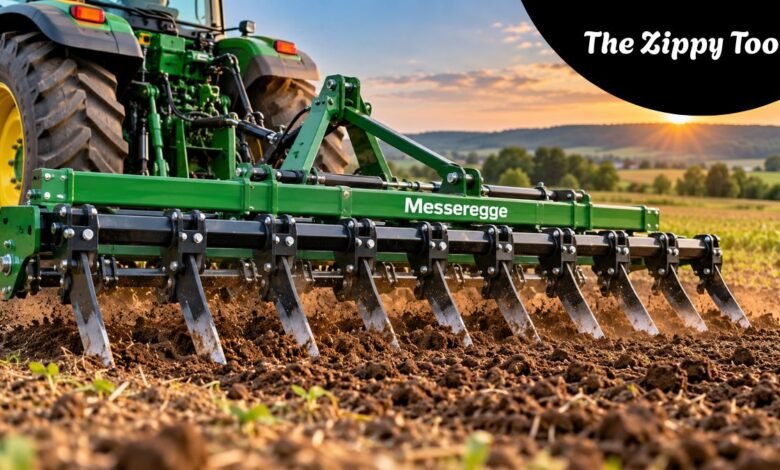
Modern agriculture depends on effective machinery, careful soil management, and efficient farming practices. Among the many agricultural implements used to prepare farmland, Messeregge is a specialized tool associated with shallow soil cultivation and seedbed preparation. Although many English-speaking readers may find the term unfamiliar, it has a practical meaning in German agricultural terminology and machinery design.
Farmers face several challenges when preparing fields, including compacted surfaces, uneven soil, crop residues, and unwanted vegetation. Choosing the right equipment can address these conditions while supporting productive farming operations. A Messeregge uses knife-like working elements to disturb and break up the upper soil layer, making it useful in certain cultivation systems.
Understanding this equipment involves more than learning its name. Its construction, working depth, soil compatibility, and relationship with other farming implements all influence its practical value.
This article explores what Messeregge means, how it works, its key components, agricultural applications, advantages, limitations, and role in modern farming.
What Is Messeregge?
Messeregge is a German agricultural term for a knife harrow, a harrow-like soil-working attachment equipped with blade-shaped elements. It belongs to a broader family of agricultural implements used for shallow cultivation, soil preparation, and breaking up surface clods.
Unlike heavy equipment designed for deep soil disturbance, a knife harrow generally focuses on the upper portion of the field. Its working elements interact with the surface soil to improve its condition before planting or other agricultural operations.
The term does not describe one universally identical machine. Different manufacturers may use knife-shaped components in various configurations, including attachments fitted to larger soil preparation systems.
A useful example appears in agricultural machinery produced by Kerner Maschinenbau, where Messeregge is identified as an available working attachment for a front-packer system.
Meaning and German Origin of Messeregge
The meaning becomes clearer when the German word is divided into two parts. Messer means knife or blade, while Egge means harrow, an agricultural implement used for working the soil surface.
Together, these words suggest a knife-equipped harrow designed for agricultural cultivation. The name reflects the implement’s working components rather than a particular brand, geographical location, or digital technology.
Traditional harrows have long been used to break soil clumps and prepare fields. Agricultural engineering has introduced numerous variations featuring discs, spring tines, rollers, and cutting elements. Knife-based harrowing fits within this broader development of specialized soil cultivation equipment.
Do not confuse the term with Messe, a separate German word for exhibitions or trade fairs.
How Does Messeregge Work?
A Messeregge works by mechanically contacting the soil with its blade-like elements. As a tractor moves the equipment across a field, the working parts engage the surface, breaking clods and disturbing the upper layer according to the machine’s design and adjustment.
Cutting and Breaking Surface Soil
The blades apply force to soil clumps, helping divide larger pieces into smaller particles. This action can improve a field that needs further preparation before sowing.
The result depends on soil moisture, texture, blade arrangement, forward speed, and working depth. Dry, hard soil may respond differently from moist or friable ground.
Preparing a More Uniform Seedbed
A properly prepared seedbed provides suitable conditions for placing seeds at consistent depths. Knife harrowing helps by reducing surface irregularities and breaking down clods that interfere with planting equipment.
However, the implement does not automatically produce an ideal seedbed. Additional leveling, consolidation, or other preparation may be necessary.
Important Components of Messeregge
Construction varies between machines, but a knife-harrow attachment typically includes a supporting frame, soil-working elements, mounting connections, and adjustment mechanisms.
Blade-Shaped Working Elements
Steel knives or cutting components form the main working section. Depending on the design, these may include straight or differently angled blades positioned across the equipment’s working width.
Their condition matters because worn or damaged blades can produce inconsistent results and put unnecessary strain on related components.
Frame and Mounting Structure
The frame supports the working elements and keeps them aligned during operation. It must withstand the forces generated as the equipment travels across uneven ground.
Mounting systems connect the attachment to its host implement or tractor arrangement.
Working Depth Adjustment
Some modern systems provide mechanical or hydraulic adjustment. These mechanisms let operators adjust how aggressively the working elements engage the ground.
Proper adjustment matches cultivation intensity to field conditions and the intended agricultural task.
Major Agricultural Applications of Messeregge
Seedbed Preparation Before Planting
One of the most important applications is preparing cultivated ground before sowing. When the soil contains relatively large surface clods, a knife-harrow system can help produce a more manageable structure for subsequent field operations.
A more consistent surface may improve planting machinery performance and help farmers achieve suitable seed placement.
Surface Crust Disruption
Certain soil types develop a surface crust after rainfall and drying. Shallow cultivation can break this layer and improve surface conditions, provided the operation does not damage an emerging crop or unnecessarily disturb the soil.
Supporting Integrated Field Preparation
Messeregge attachments can work alongside equipment such as packers and rollers. In these combinations, different working sections perform complementary jobs, including clod reduction, leveling, and consolidation.
This arrangement may reduce the need for separate field passes where soil conditions and machinery configuration permit.
Benefits of Using Messeregge in Agriculture
A significant advantage of knife-based harrowing is its ability to concentrate mechanical action near the soil surface. When deeper cultivation isn’t needed, a properly adjusted attachment can accomplish the task without extensively disturbing lower soil layers.
Another benefit is the flexibility it offers in seedbed preparation. Adjustable working elements help operators adapt the equipment to different conditions, improving the usefulness of a cultivation system throughout the planting season.
When integrated into a combination machine, the attachment may also support operational efficiency by performing several related field tasks during a single pass.
These benefits are conditional, not guaranteed. Actual performance depends on machinery specifications, operator decisions, soil characteristics, and weather.
Messeregge Compared With Other Agricultural Harrows
Understanding the differences between agricultural implements helps farmers choose equipment suited to their land.
Messeregge vs Disc Harrow
A disc harrow uses rotating discs to cut and mix soil. Depending on its construction, it may work more aggressively and incorporate more crop residue.
A Messeregge relies on knife-like working elements and may be preferable for more targeted surface preparation. Neither implement is universally better because they serve different purposes.
Messeregge vs Spring-Tine Harrow
A spring-tine harrow uses flexible metal tines that move through soil while responding to resistance. It is commonly associated with seedbed cultivation and surface loosening.
A knife harrow uses differently shaped working parts, creating another form of mechanical contact with soil. Performance differences depend on the specific machines being compared.
Messeregge vs Roller
A roller primarily consolidates or finishes the soil surface through pressure. A knife harrow breaks or disturbs soil using working elements.
Combination equipment can use both functions to balance clod reduction and surface consolidation.
A Real Example: Kerner TORON Messeregge Attachment
Kerner Maschinenbau provides a documented example of Messeregge terminology in modern agricultural machinery.
Its TORON front packer offers several front-working configurations, including Messeregge, spring-tine harrow, and Crossboard options. These attachments let the machine perform different soil-preparation tasks.
The manufacturer’s TORON brochure lists working widths of 2.5 meters, 3 meters, and 3.5 meters, and an adjustable working-depth range of 0–10 centimeters.
The same documentation identifies 24 working elements, 125-millimeter spacing, and an attachment weight of approximately 200 kilograms for the listed Messeregge configuration.
These figures describe this particular equipment arrangement. They should not be interpreted as standard measurements for every knife harrow.
Soil Conditions That Influence Performance
Soil condition is one of the most important factors determining the effectiveness of shallow cultivation.
In relatively dry, friable soil, knife-shaped elements may break surface clods effectively. In excessively wet ground, the same equipment could smear soil, create undesirable compaction, or leave an inconsistent finish.
Clay-rich soils may require particular attention to moisture and timing, while lighter sandy soils can respond differently to mechanical disturbance.
Operators should also consider crop residue coverage, surface hardness, slope, drainage, and the intended planting method.
The aim is not simply to create the finest possible soil particles. Excessively intensive cultivation can damage soil structure and increase erosion susceptibility.
Common Limitations of Messeregge
Although useful in appropriate situations, Messeregge is not a universal solution for agricultural soil management.
Shallow-working attachments generally cannot replace specialized equipment when significant deep compaction must be addressed. They may also struggle when heavy residue, stones, severe surface irregularities, or unsuitable moisture conditions interfere with operation.
Mechanical weed control also requires care. Disturbing young weeds may help manage some infestations, but successful control depends on weed species, growth stage, weather, and operating depth.
Repeated, unnecessary soil disturbance can also increase fuel use, equipment wear, and erosion risk.
For these reasons, farmers should judge the implement by the actual field problem rather than assuming every cultivation pass provides a benefit.
Maintenance and Safe Operation
Regular maintenance is essential to keep agricultural implements reliable and perform well.
Operators should inspect blade condition, fasteners, frame connections, and depth adjustment mechanisms according to the manufacturer’s instructions. Repair or replace damaged components promptly.
Before operating the equipment, the tractor and attachment must be compatible in terms of mounting, weight, hydraulic requirements, and safe transport arrangements.
Carry out all adjustments and inspections with the equipment safely secured and its moving parts stopped.
Proper maintenance and correct operation can reduce avoidable breakdowns, improve consistency, and extend service life.
Messeregge and Sustainable Farming Practices
Modern farming increasingly emphasizes efficient machinery use, careful soil management, and reducing unnecessary cultivation.
A Messeregge may support these objectives when shallow surface preparation is sufficient for the intended operation. Avoiding unnecessary deeper disturbance can help protect portions of the existing soil structure.
Combination implements may also reduce separate tractor passes, potentially saving time and fuel under suitable working conditions.
Nevertheless, sustainability depends on the entire farming system. Crop rotation, ground cover, weather, soil health, and cultivation frequency all influence outcomes.
The most responsible approach is to use soil preparation technology only where it provides a clear agronomic benefit.
What Should Farmers Consider Before Choosing Messeregge?
Choosing a knife-harrow attachment requires considering the farm’s cultivation needs, available tractor power, machinery compatibility, and typical soil conditions.
Farmers should examine working width, depth adjustment, blade design, wear-part availability, operating weight, and maintenance demands.
It is also useful to evaluate whether a stand-alone implement or a combined front-packer system better suits the farm’s existing operations.
Manufacturer documentation and practical demonstrations can help determine whether a particular configuration offers sufficient value for the intended application.#
Conclusion
Messeregge represents a specialized approach to agricultural soil preparation, using knife-shaped working elements to cultivate, break down, and condition the upper soil layer. Its German name reflects its practical purpose, while modern equipment demonstrates how the concept can be integrated into versatile farming machinery.
The main value of this technology lies in matching the working action to a field’s specific requirements. Appropriate depth settings, suitable soil conditions, regular maintenance, and correct equipment selection all contribute to effective operation.
For farmers, agricultural researchers, and machinery enthusiasts, understanding Messeregge provides useful insight into the wider development of efficient cultivation techniques, seedbed management, and modern agricultural engineering.
(FAQs)
What does Messeregge mean in English?
Messeregge is a German agricultural term that can be understood as a knife harrow. It describes soil-working equipment associated with blade-shaped elements used in harrowing and cultivation.
What is the main purpose of Messeregge?
Its main purpose is to work the upper soil layer, particularly to reduce clods and prepare a seedbed. Its precise function depends on the machine design and operating conditions.
Is Messeregge suitable for every soil type?
Not necessarily. Its effectiveness varies according to soil texture, moisture, residue levels, surface condition, and equipment configuration. Suitable adjustment and timing are important.
Can Messeregge replace a disc harrow?
It may perform some overlapping surface-preparation tasks, but it cannot replace a disc harrow. Both implements have different operating characteristics and agricultural applications.
Is Messeregge still relevant in modern agriculture?
Yes. Current machinery documentation identifies Messeregge as an available agricultural attachment, particularly for combination soil-preparation equipment.