EasyJet Flight U24429 Emergency: Shocking Mid-Air Incident That Forced a Return to Lyon

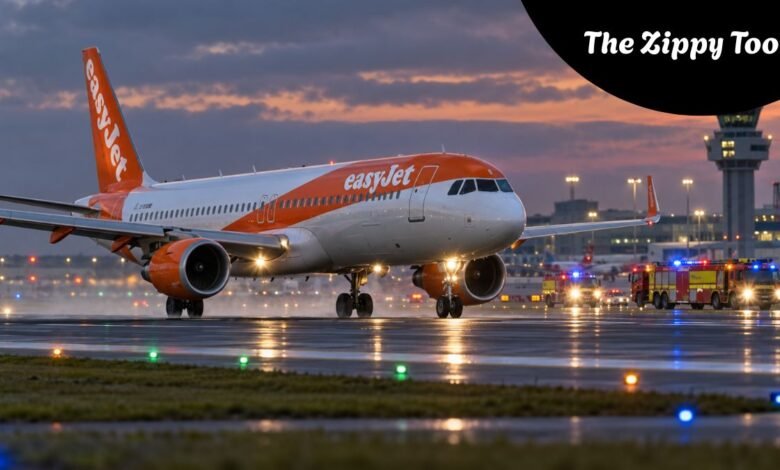
Air travel is generally considered one of the safest forms of transportation, but unexpected incidents can occasionally turn an ordinary journey into a frightening experience. The EasyJet Flight U24429 emergency on August 22, 2025, demonstrated how quickly an aircraft crew may need to respond when passenger behavior threatens onboard security. What began as a scheduled flight between Lyon, France, and Porto, Portugal, became urgent after a passenger reportedly tried to access the cockpit shortly after departure.
The incident attracted attention because it involved a possible threat to cockpit security rather than a mechanical problem with the aircraft. The pilots declared an emergency and returned to Lyon Saint-Exupéry Airport, where police and ground authorities responded. Fortunately, the aircraft landed safely, and the journey eventually continued after the disruptive passenger was removed. The event shows how aviation safety procedures, trained airline personnel, and effective communication can prevent a difficult situation from becoming a serious accident.
What Happened During the EasyJet Flight U24429 Emergency?
The emergency occurred on Friday, August 22, 2025, aboard an EasyJet Airbus A320 operating a scheduled passenger service from Lyon Saint-Exupéry Airport to Francisco Sá Carneiro Airport in Porto. Flight U24429 had departed Lyon when an unexpected disturbance developed inside the passenger cabin. According to contemporary reports citing French police and the airline, a 26-year-old Portuguese passenger began behaving unusually and attempted to enter the restricted cockpit area.
The attempted intrusion immediately raised security concerns. Commercial aircraft cockpits are protected areas because pilots must be able to operate the aircraft without interference. Any unauthorized attempt to access the flight deck therefore demands immediate attention, regardless of the passenger’s intentions. Other passengers helped restrain the individual while the pilots coordinated a return to the departure airport. Rather than continuing to Portugal, the flight crew prioritized everyone’s safety.
Why Did EasyJet Flight U24429 Declare an Emergency?
The primary reason for the emergency was an attempted unauthorized entry into the cockpit. Reports published shortly after the event indicated that the passenger was experiencing an acute episode involving confusion and disturbed behavior. French police subsequently reported that medical examinations identified motion sickness and an acute psychological disturbance. These details matter because they suggest the incident involved an individual experiencing a serious personal crisis rather than a confirmed attempt to hijack the aircraft.
Nevertheless, airline crews cannot delay their response while trying to establish someone’s exact intentions. When a passenger becomes aggressive or tries to approach the flight deck, crews may need to take immediate protective action. Pilots must consider cockpit security, the cabin crew’s ability to control the situation, the welfare of other passengers, and the availability of suitable airports. In this case, returning to Lyon allowed the aircraft to land in a familiar operational environment where ground personnel could assist.
Was There a Mechanical Problem With the Aircraft?
Available reporting does not identify a mechanical failure as the cause of the emergency. The Airbus A320 was diverted because of the passenger disturbance, not because of a reported engine malfunction, loss of cabin pressure, or structural damage. This distinction matters because an emergency declaration does not automatically mean that an aircraft is malfunctioning. Pilots may declare an emergency for medical incidents, security concerns, smoke, technical failures, or any other situation requiring urgent assistance.
Timeline of the EasyJet Flight U24429 Emergency
Departure From Lyon Airport
On the evening of August 22, 2025, Flight U24429 departed Lyon at about 6:34 p.m. local time, about an hour behind schedule. Aviation tracking reports identified the aircraft as an Airbus A320-214 with registration OE-IJL. The service was expected to complete the short European journey to Porto without major complications. However, during the initial climb, cabin crew encountered a developing passenger disturbance that would ultimately change the aircraft’s route.
Passenger Incident During the Climb
Shortly after takeoff, the passenger reportedly attempted to enter the cockpit, creating an immediate security concern. Other travelers helped contain the individual, while airline personnel worked to maintain order aboard the aircraft. This was critical because the pilots needed to remain focused on flying while the cabin situation was controlled. Public reports do not provide a complete second-by-second account of the incident, but they consistently describe the attempted cockpit entry as the trigger for the return to Lyon.
Emergency Declaration and Return
Aviation tracking coverage reported that the aircraft stopped climbing at approximately 20,000 feet and transmitted the emergency transponder code 7700. The pilots then turned the aircraft around and headed back toward Lyon Saint-Exupéry Airport. According to the flight-tracking account published on the day of the incident, the aircraft landed on runway 35R approximately 45 minutes after departure. The landing was safe, allowing the emergency to shift from an airborne security problem to a situation handled by authorities on the ground.
Police Response and Flight Resumption
After the aircraft returned to Lyon, police intervened and removed the passenger. French authorities reported that they took him into custody and later hospitalized him after a medical assessment. The remaining passengers experienced a significant travel disruption, but EasyJet later confirmed the service resumed and reached Porto late that evening. The outcome highlighted the effectiveness of a coordinated response involving the flight crew, passengers, air traffic control, and airport authorities.
What Does Squawk 7700 Mean in Aviation?
One of the most important technical details associated with the incident was the use of Squawk 7700, an internationally recognized transponder code indicating a general emergency. Aircraft transponders transmit identifying and operational information that helps air traffic controllers monitor aircraft movements. When pilots select code 7700, controllers recognize the aircraft is in a serious situation that requires special attention.
How Emergency Transponder Codes Work
Aviation uses several standard transponder codes for particular circumstances. Code 7700 indicates a general emergency, 7600 indicates radio communication failure, and 7500 indicates unlawful interference. These codes help air traffic services understand the nature or urgency of a problem, although pilots also communicate specific details by radio whenever possible.
Why Code 7700 Was Appropriate
The passenger disturbance aboard U24429 presented a potentially serious security issue that could not safely be ignored. Declaring an emergency helped communicate the aircraft’s urgent operational needs while its pilots prepared to return. It did not indicate that the aircraft was crashing or that its engines had failed. Instead, it was part of a precautionary response intended to reduce uncertainty and enable a controlled landing.
How Did the Flight Crew Handle the Situation?
Airline personnel receive training for a wide range of unexpected circumstances, including disruptive passengers, medical emergencies, cabin disturbances, and attempted interference with aircraft operations. During the U24429 incident, maintaining separation between the cockpit and the developing disturbance was particularly important. Reports indicate that fellow passengers helped restrain the individual, while the flight crew arranged a safe return.
The pilots also had to make several operational decisions. Returning to Lyon meant changing the original flight plan, coordinating with air traffic control, and preparing for an unscheduled arrival. Meanwhile, the cabin needed to remain secure throughout the descent and landing. Although the crew’s internal procedures aren’t publicly documented, the safe return demonstrates the value of clear communication, established safety protocols, and coordinated emergency management.
Why Cockpit Security Is Essential on Commercial Flights
Cockpit security plays a central role in modern passenger aviation. Reinforced doors and controlled access arrangements separate flight decks from passenger cabins and are designed to prevent unauthorized interference. These measures matter because an unexpected cockpit disruption could interfere with navigation, communication, or other essential flight operations.
However, protective equipment is only one part of aviation security. Cabin crews must also recognize concerning behavior, respond without unnecessary escalation, and communicate with pilots when the situation affects overall flight safety. The U24429 incident illustrates why preventive action matters. An attempted intrusion does not require cockpit access to become a significant operational concern.
The Importance of Mental Health Awareness During Air Travel
The reported circumstances also raise questions about how airlines and airports respond when travelers experience sudden medical or psychological distress. French authorities described the passenger as experiencing motion sickness alongside an acute disturbance in his mental state. Such information should be handled carefully because experiencing a mental health crisis does not automatically make someone dangerous, and most people with mental health conditions never engage in violent behavior.
During an active incident, however, airline personnel must respond to observable conduct and immediate risks. A person who appears distressed may require medical assistance, while attempts to enter restricted aircraft areas require an appropriate security response. The broader lesson is that passenger welfare and aviation security are complementary responsibilities. Recognizing distress, reducing unnecessary confrontation, and obtaining professional medical support after landing can all contribute to a safer outcome.
How Did the Emergency Affect Other Passengers?
Passengers aboard the Lyon-to-Porto service faced an unexpected return, uncertainty about their journey, and a substantial delay before reaching Portugal. Even when an emergency ends safely, witnessing a serious disturbance in an aircraft cabin can be unsettling. Travelers may worry about the individual’s intentions, the security of the cockpit, and whether the situation could escalate before landing.
In this case, the decision to return allowed authorities to address the disturbance before the flight continued. Contemporary reports indicate the service eventually reached Porto later that evening. The incident shows that interrupting a journey can be necessary when immediate safety concerns take priority over the original schedule.
What Can Airlines and Travelers Learn From This Incident?
The EasyJet Flight U24429 emergency offers several lessons about managing unexpected events during commercial flights. For airlines, it reinforces the importance of ongoing crew training, communication between the cabin and cockpit, and practical procedures for obtaining assistance from air traffic control and airport authorities. For passengers, it highlights the importance of following crew instructions, avoiding actions that could interfere with emergency procedures, and recognizing that a diversion may be the safest available decision.
Travelers should also understand that an emergency declaration does not necessarily indicate an aircraft defect or an imminent accident. Commercial aviation depends on identifying potential risks early and responding before they become uncontrollable. The successful return of U24429 illustrates this preventive approach.
Conclusion
The EasyJet Flight U24429 emergency on August 22, 2025, shows how a routine passenger flight can encounter an unexpected security incident without suffering a mechanical failure or aviation accident. What began as a normal journey from Lyon to Porto changed when a passenger attempted to access the cockpit, prompting an urgent but controlled response from the flight crew.
The aircraft returned safely to Lyon, police dealt with the passenger, and the flight later continued to Portugal. Beyond the disruption, the incident highlights the essential importance of cockpit security, emergency preparedness, passenger cooperation, and professional aviation procedures. The central lesson is that swift decisions and effective coordination can turn a potentially dangerous situation into a manageable emergency with a safe outcome.
(FAQs)
What caused the EasyJet Flight U24429 emergency?
The emergency was triggered by a passenger who reportedly attempted to enter the cockpit shortly after takeoff from Lyon on August 22, 2025. The incident prompted the pilots to declare an emergency and return to the departure airport.
Did EasyJet Flight U24429 land safely?
Yes. The Airbus A320 returned safely to Lyon Saint-Exupéry Airport approximately 45 minutes after departing. The aircraft subsequently continued to Porto after the incident was resolved.
What does Squawk 7700 mean?
Squawk 7700 is the standard aviation transponder code for a general emergency. It helps air traffic controllers identify an aircraft requiring urgent attention and appropriate assistance.
Was the emergency caused by an engine failure?
No mechanical or engine failure was identified as the cause in contemporary reporting. The emergency involved a passenger disturbance and an attempted unauthorized entry into the cockpit.
What happened to the passenger involved?
French police reported that the 26-year-old Portuguese passenger was taken into custody after the aircraft returned to Lyon. He was subsequently hospitalized following medical examinations.
