MataRecycler Is Spreading Across Search—But What Is It Actually?
The name is increasingly linked with recycling, sustainability, and AI-powered waste sorting, yet the verifiable facts are narrower than many online descriptions suggest.

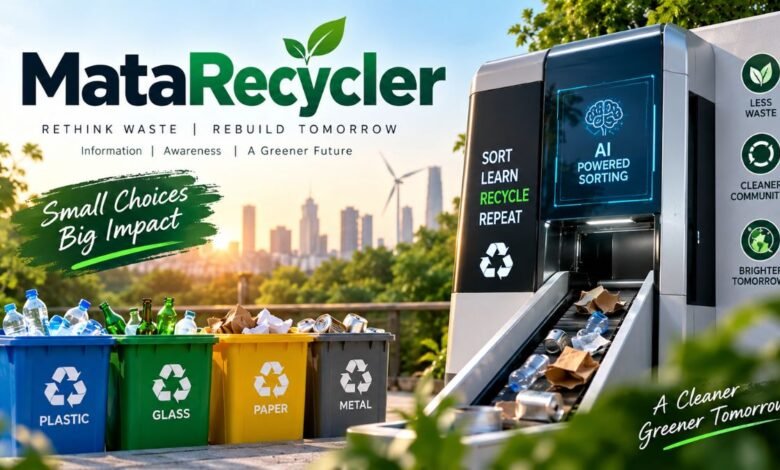
MataRecycler is becoming a surprisingly difficult search term to decode. Some pages describe it as a smart recycling system powered by artificial intelligence, sensors, and automated sorting. Others treat it as a sustainability concept. Other websites use the MataRecycler name primarily as publishing platforms.
That difference matters. Recycling technology is a real and rapidly developing field, but attaching genuine technologies such as computer vision, sensors, and automated material recovery to a specific name does not prove that a commercial product exists under that name.
As of September 17, 2026, the clearest publicly verifiable information comes directly from the websites using the MataRecycler name. MataRecycler.com describes itself as an educational platform focused on recycling, waste management, and environmental awareness, while MataRecycler.org presents itself as an information website covering sustainable recycling and technology.
BLUF: MataRecycler is best treated as an online information name associated with recycling and sustainability rather than a confirmed AI recycling machine or established waste-management product. Its own websites emphasize educational content, while specific claims about proprietary sensors, AI sorting accuracy, or commercial hardware currently lack clearly identifiable product documentation.
The Verified MataRecycler Picture Is Simpler Than the Search Results Suggest
A direct look at the websites provides a clearer starting point than repeating descriptions circulating across third-party articles.
MataRecycler.com says its purpose is to provide information about responsible recycling, waste reduction, reuse, sustainability, and environmental awareness. Its stated content includes explanations of recycling processes, waste-management practices and eco-friendly alternatives.
MataRecycler.org describes itself as a digital information platform covering sustainable recycling and technology. Its current homepage also includes material across categories beyond recycling, including entertainment, technology, fashion, sports, and lifestyle-oriented subjects.
This distinction prevents a common search mistake: confusing articles about smart recycling with technical documentation proving that MataRecycler itself operates a particular recycling system.
The Claims Around MataRecycler Do Not All Describe the Same Thing
Recent web pages demonstrate how widely the term has been interpreted.
Some describe MataRecycler as a combination of artificial intelligence, cameras, sensors and automated machinery capable of identifying plastics, glass, paper, metal or electronic waste. Others explicitly note that no single accepted technical definition or confirmed commercial product has been established.
The safest editorial approach is therefore to separate MataRecycler, the online name, from smart recycling technology as a real industrial field.
Real Smart Recycling Technology Exists—Without Needing the MataRecycler Label
Automated recycling is not fictional.
Modern material-recovery operations can use different mechanical and digital processes to separate useful materials from mixed waste. The U.S. Environmental Protection Agency describes recycling as a cycle involving collection and processing, manufacturing, and purchasing products containing recycled material. Recovery facilities sort, clean, and process recyclables before returning them to manufacturing markets.
Technology can assist that process through material detection, sorting machinery, data collection and increasingly sophisticated automation.
That reality, however, should not be used as indirect proof of features belonging to a particular brand.
Where Technology Fits Into the Recycling Chain
EPA guidance also highlights a persistent practical problem: people are often unsure about what belongs in recycling bins, which can cause recyclable material to be discarded and non-recyclable material to contaminate recycling streams.
Education, therefore, remains important even where sophisticated sorting equipment is available.
Recycling Comes After Prevention and Reuse
One of the most useful ways to understand MataRecycler’s sustainability theme is through the broader waste hierarchy.
Recycling is valuable, but environmental policy generally does not treat it as the first option.
The European Commission’s Waste Framework Directive establishes a hierarchy beginning with waste prevention, followed by preparing products for reuse, recycling, other forms of recovery, and finally disposal.
UK government guidance follows the same basic sequence and emphasizes that businesses and public bodies should consider prevention and reuse before recycling and disposal.
Why This Changes the Sustainability Conversation
Imagine a usable electronic device.
Sending it immediately for material recycling may recover metal, plastic, or glass. Repairing and continuing to use the device, however, can preserve more of the manufacturing effort already invested in it.
The same principle can apply to packaging, furniture, clothing and many household items.
EPA guidance similarly places source reduction and reuse ahead of recycling in its preferred waste-management hierarchy.
This is why a genuinely responsible interpretation of the MataRecycler concept should extend beyond simply putting more objects into a recycling bin.
The Circular Economy Gives the Term a More Useful Context
The broader concept behind responsible recycling is the circular economy.
Rather than continuously extracting resources, manufacturing products, using them briefly and disposing of them, circular models seek to keep materials in productive use for longer.
EPA describes a circular economy as reducing material consumption, designing products to be less resource-intensive, and recovering materials that might otherwise become waste so they can re-enter productive use.
The European Commission likewise links waste management to recovering secondary materials and transitioning to a more resource-efficient circular economy.
For readers researching MataRecycler, this provides a much stronger conceptual foundation than unsupported claims about a mysterious machine.
How to Use MataRecycler Information Without Making Recycling Mistakes
Recycling rules vary significantly by material and location.
An item labeled recyclable does not automatically mean every local authority, collection service or recycling facility accepts it. EPA specifically advises consumers to check what their local recycling program actually collects.
MataRecycler.com itself acknowledges this limitation, stating that its information is educational and that readers should verify guidance against local recycling requirements.
That produces a practical verification chain:
Learn the material → identify the waste type → check local collection rules → prepare the item correctly → use an authorized collection or recycling route.
Electronics, batteries, chemicals and other specialist waste streams deserve particular care because disposal requirements can differ substantially from normal household packaging.
FAQs
What is MataRecycler?
MataRecycler is an online name associated with recycling, sustainability and environmental information. MataRecycler.com presents itself as an educational resource covering recycling processes, reuse and waste reduction, while MataRecycler.org describes itself as a sustainability and technology information platform.
Is MataRecycler an AI-powered recycling machine?
MataRecycler is not currently verified as one specific AI recycling machine. Some online articles describe cameras, sensors, automated sorting, and artificial intelligence. Still, the reviewed official pages do not clearly identify a machine model, provide manufacturer specifications, include independent technical tests, or offer commercial product documentation to support those descriptions.
Is MataRecycler a real website?
Yes. MataRecycler.com and MataRecycler.org are publicly accessible websites using the name. Their stated focus includes recycling, sustainability, environmental information, and technology, although their editorial scopes are not identical.
Can MataRecycler tell me whether an item is recyclable?
MataRecycler can provide general educational information, but local recycling authorities should determine the final answer. Accepted materials vary by collection program and processing facility. EPA likewise recommends checking the rules of the recycling program serving your community rather than assuming every theoretically recyclable product belongs in your local bin.
How is MataRecycler connected with the circular economy?
MataRecycler connects conceptually through its emphasis on recycling, reuse, and resource awareness. Circular-economy policy goes further by prioritizing reduced material consumption, longer product use, resource recovery, and returning secondary materials into production rather than relying exclusively on disposal.
Should businesses rely on MataRecycler for regulatory waste advice?
MataRecycler should not replace official regulatory guidance. Businesses handling waste may face legal requirements involving classification, storage, transport, documentation, and disposal. Official government and environmental regulators should therefore be the primary sources for compliance decisions.
The Important Story Is Verification, Not the Buzzword
MataRecycler illustrates a larger problem in modern search results.
A term can quickly acquire detailed descriptions simply because multiple websites repeat similar language. Cameras become “AI cameras.” Sorting equipment becomes a proprietary platform. Unverified performance figures can begin to look authoritative after enough repetition.
But repetition is not documentation.
What can currently be established is much narrower: MataRecycler exists as an online information name associated with recycling and sustainability. Its own published descriptions support an educational role. Claims that it is a specific commercial AI recycling machine require substantially stronger evidence before they can be treated as fact.
That distinction does not weaken the sustainability discussion. It improves it.
Real recycling depends on accurate sorting, appropriate infrastructure, viable markets for recovered materials, clear public guidance and—most importantly—reducing unnecessary waste before recycling becomes necessary. EPA, UK government guidance and the European Commission all place recycling inside this larger resource-management framework.
Editorial Disclaimer
Information in this article reflects publicly accessible material reviewed as of September 17, 2026. References to unverified MataRecycler products, artificial-intelligence capabilities, sorting percentages, commercial installations or proprietary technology should not be treated as facts unless supported by identifiable technical documentation, regulatory records, manufacturer information or independently verifiable testing.