Consolidated Gulf Company: The Remarkable Story Behind Qatar’s Technology and Engineering Enterprise

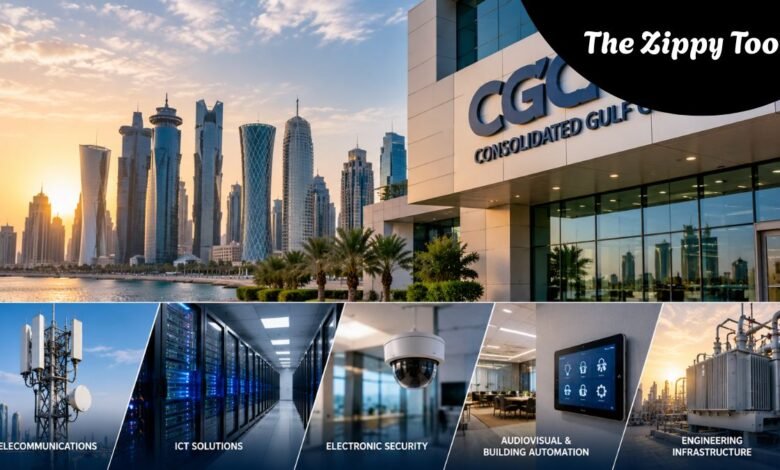
Technology is essential to modern business, shaping everything from communication and security to industrial operations and infrastructure development. In Qatar, several companies have contributed to this transformation by introducing advanced equipment, engineering expertise, and integrated digital solutions. Consolidated Gulf Company (CGC) is one such organization, with a history that stretches back to 1987.
Headquartered in Doha, the company developed a business portfolio covering telecommunications, information and communication technology, electronic security, audiovisual systems, engineering, and consumer electronics. Its activities reflect the changing technological requirements of businesses and public institutions in a country that has experienced substantial economic and infrastructure development.
The company’s history is interesting because it spans two distinct markets: large-scale technology projects for organizations and the distribution of electronic products for everyday consumers. Understanding these activities clarifies how technology service providers support business growth and infrastructure development.
This article explores Consolidated Gulf Company’s background, key services, major partnerships, engineering capabilities, and position in Qatar’s evolving technology industry.
What Is Consolidated Gulf Company?
Consolidated Gulf Company is a privately held technology and engineering business based in Doha, Qatar. Established in 1987, it has operated across several technical fields, including enterprise IT infrastructure, telecommunications, audiovisual solutions, electronic security, building automation, and mobile technology.
The company is commonly identified by the abbreviation CGC and has been associated with both commercial technology distribution and complex engineering projects. Its publicly available corporate profile describes services ranging from initial consultancy and engineering design to equipment procurement, installation, commissioning, and long-term maintenance.
One defining feature of the business is its systems integration approach. Rather than focusing solely on equipment supply, this work brings together hardware, software, communication networks, and related technologies to create a functional system. These capabilities are especially relevant to organizations managing multiple buildings, complex communication needs, or critical operational infrastructure.
History and Establishment of Consolidated Gulf Company
CGC’s origins date back to 1987, when digital communication and computer technology began reshaping commercial activity worldwide. Qatar’s technological environment differed considerably from today’s, and demand for specialized equipment and technical services created opportunities for companies that could connect international technology suppliers with local customers.
Over time, CGC expanded beyond individual products into a broader collection of engineering and technology services. Its historical business profile shows two major areas of activity: project-based systems integration and retail distribution. This combination allowed it to serve organizations requiring complex technical installations while also participating in the consumer electronics market.
The company’s development coincided with significant changes in telecommunications. Mobile phones became widely adopted, computer networks grew more sophisticated, and businesses increasingly depended on reliable digital systems. CGC’s involvement in these areas illustrates the way technology companies could diversify as customer needs changed.
Its history also includes partnerships with international technology manufacturers. These relationships helped connect global products and technical expertise with Qatar’s commercial and institutional markets.
Major Services Offered by Consolidated Gulf Company
Information and Communication Technology Solutions
Information and communication technology (ICT) forms an important part of CGC’s documented service portfolio. Enterprise technology environments require more than computers and internet connections. They depend on connected hardware, reliable communication infrastructure, appropriate network design, and technical support that helps employees work effectively.
The company offers capabilities in infrastructure planning, engineering design, procurement, implementation, and technical maintenance. In practice, such services help organizations coordinate equipment and systems from different suppliers while maintaining a coherent operational environment.
For businesses, integrated technology infrastructure can reduce unnecessary complexity and improve communication between departments. However, actual performance depends on project design, technical execution, cybersecurity arrangements, and maintenance quality. These are essential considerations whenever a company evaluates an ICT service provider.
Telecommunications and Mobile Technology
Telecommunications represents another significant part of the company’s history. CGC became particularly visible in Qatar through its association with Nokia, helping distribute and promote mobile phones during a key period of the country’s consumer telecommunications development.
Historical newspaper reports document its involvement in launching Nokia devices, including the Nokia 808 PureView in 2012 and Lumia smartphones in 2013. These activities demonstrate the company’s earlier consumer-facing operations and its connections with retail distribution channels.
Its telecommunications interests extended beyond mobile handsets. The company’s broader service descriptions have also included professional communication systems and related technical infrastructure. Such systems can support organizations that need dependable communication across offices, operational facilities, or geographically distributed teams.
Audiovisual Systems and Building Automation
Modern buildings increasingly depend on audiovisual equipment, automated controls, and integrated electronic systems. CGC has identified audiovisual technology and building automation among its specialist business areas, reflecting demand for solutions that improve the functionality of commercial and institutional spaces.
Audiovisual integration may involve coordinated presentation equipment, display systems, communication technology, and meeting-room installations. Building automation, meanwhile, involves technologies that help manage selected building functions through connected controls and monitoring systems.
The company has also described receiving an Audiovisual Provider of Excellence designation from InfoComm International. This historical recognition appears in its corporate profile, although it should not automatically be interpreted as confirmation of a currently active certification.
Security and Extra-Low-Voltage Systems
CGC’s engineering portfolio also includes electronic safety and security infrastructure. Extra-low-voltage (ELV) systems commonly include technologies used in building communication, access control, monitoring, fire detection, and related low-voltage installations.
These technologies often need to operate together rather than as isolated products. For example, a commercial building may require coordinated security monitoring, network connectivity, alarm communication, and centralized system management.
CGC’s historical business descriptions include electronic security, life-safety technology, and alarm-related services. This combination indicates experience in technical areas where careful installation, testing, regulatory compliance, and dependable maintenance are especially important.
Engineering and Infrastructure Projects
Beyond ICT and telecommunications, CGC has participated in engineering work related to industrial and utility infrastructure. A notable historical example emerged in January 2009, when CGC and BPL Global were reported to have secured a transformer-monitoring installation contract associated with Qatar General Electricity & Water Corporation, commonly known as Kahramaa.
The project involved online transformer monitoring equipment intended to provide information about the condition of electrical infrastructure. Such monitoring can help utility operators identify potential equipment problems and support informed maintenance decisions.
This example illustrates an important distinction between supplying technology and applying technology to an operational problem. In industrial settings, equipment must function within a wider environment that includes engineering constraints, reliability requirements, technical procedures, and safety considerations.
CGC’s involvement in this type of project demonstrates that its historical activities extended beyond traditional consumer electronics into specialized technical infrastructure.
International Technology Partnerships
Partnerships have played a visible role in the company’s development. CGC’s published profiles and historical reporting identify relationships with prominent international technology businesses, including Nokia, Cisco, Huawei, and Honeywell.
One documented development occurred in September 2012, when CGC entered a distribution arrangement in Qatar for Honeywell industrial products. The reported product range included instruments, valves, programmable logic controllers, and supervisory control and data acquisition technology.
These categories are particularly relevant to industrial automation, where organizations need reliable information about equipment and operational processes.
Working with international manufacturers can give local engineering companies access to specialist products, technical knowledge, and established technology platforms. However, partnerships can change over time, so historical agreements should not be treated as evidence that every commercial authorization remains active in 2026.
Business Model and Project Management Approach
A useful way to understand CGC’s business model is to examine the difference between equipment distribution and project integration. In distribution, the primary activity involves making products available to customers through commercial channels. Systems integration is a broader process that often requires consultation, design, installation, testing, and ongoing technical support.
CGC’s corporate descriptions identify both models as part of its business. The project-oriented side of the organization has included engineering design, planning, procurement, project management, technical staffing, and operations support.
This broader service structure can be valuable for organizations seeking a provider that can coordinate multiple technical responsibilities. Nevertheless, a provider’s suitability depends on the specific project, available expertise, contractual commitments, technical standards, and support arrangements.
For prospective clients, evaluating previous work in a comparable sector is generally more useful than relying on broad claims about technical capability.
Quality, Safety, and Professional Standards
Technology projects frequently involve strict requirements for installation quality, employee safety, operational reliability, and environmental responsibility. These considerations matter most when work takes place in industrial facilities or buildings that contain essential infrastructure.
CGC’s published corporate history references quality, environmental, and occupational health and safety management certifications, including older versions of ISO 9001, ISO 14001, and OHSAS 18001.
These references help illustrate the company’s historical emphasis on structured management practices. However, older certification references do not establish present-day accreditation. Before relying on them for procurement or compliance decisions, independently check current certificates, their scope, and their validity.
The distinction matters because technology companies operate in an environment where standards, regulations, and technical expectations change over time.
Role in Qatar’s Technology Development
Qatar’s economic development has increased the importance of sophisticated communication networks, digitally connected buildings, industrial monitoring, and reliable information systems. Technology and engineering service providers help organizations translate technical requirements into functioning infrastructure.
Consolidated Gulf Company’s long-standing presence places it within this wider history of technological development. Its activities span several areas closely tied to modernization, including telecommunications, industrial equipment, building systems, and enterprise technology infrastructure.
These areas also support Qatar’s broader economic diversification ambitions. As organizations invest in digital services and more efficient infrastructure, they need contractors, distributors, engineers, and systems integrators to support complex technology environments.
Measuring CGC’s precise economic contribution would be difficult without independently verified financial and project data. Even so, its documented business activities offer a useful example of the services that form part of Qatar’s technology ecosystem.
Opportunities and Challenges in a Changing Industry
Technology companies operate in a competitive environment shaped by changing customer expectations and rapid innovation. Equipment that was considered advanced a decade ago may now require replacement or integration with newer systems.
For a business with CGC’s historical service portfolio, developments in cybersecurity, connected infrastructure, cloud technology, automation, and intelligent building systems represent areas of market opportunity. They also introduce challenges involving specialized skills, product compatibility, information security, and long-term service obligations.
Another key issue is the shift from equipment-based business models to solutions that include software, maintenance, and ongoing technical support. Organizations increasingly want systems they can upgrade and manage over time, rather than installations that become difficult to maintain.
Whether CGC expands in any particular emerging technology field will depend on its actual investments, workforce capabilities, partnerships, and commercial priorities. Without recent verified disclosures, specific future expansion plans should not be presented as facts.
Conclusion
Consolidated Gulf Company’s business history reflects several important stages of Qatar’s technological development. Since its establishment in 1987, the organization has been associated with telecommunications, mobile technology distribution, information systems, engineering projects, electronic security, and integrated building solutions.
Its documented relationships with international manufacturers and involvement in projects such as utility equipment monitoring demonstrate the variety of technical fields in which it has operated. The company’s combination of consumer-facing distribution and enterprise engineering services is a particularly distinctive feature of its historical business model.
As Qatar continues developing its digital economy and infrastructure, the need for reliable technology integration and professional technical support remains significant. CGC’s documented history provides insight into that market, while its current operations, certifications, leadership, and commercial partnerships should always be assessed using the latest verified company information.
(FAQs)
What is Consolidated Gulf Company known for?
Consolidated Gulf Company is known for technology services, engineering, telecommunications, ICT infrastructure, audiovisual solutions, and electronic systems integration. Historically, it has also handled mobile phone distribution and consumer electronics.
When was Consolidated Gulf Company established?
According to its publicly available corporate and employment profiles, the company was established in 1987. Its business has grown alongside the expansion of Qatar’s telecommunications and engineering sectors.
Where is Consolidated Gulf Company located?
The company’s headquarters are listed as Doha, Qatar. Its corporate profile also describes a wider business presence, although current office locations should be independently confirmed.
Is Consolidated Gulf Company associated with Nokia?
Yes. CGC had a documented historical commercial relationship with Nokia in Qatar and helped distribute and launch Nokia mobile phones. This does not necessarily establish the status of any present-day distribution agreement.
What industries does Consolidated Gulf Company serve?
Its documented capabilities relate to telecommunications, enterprise technology, industrial engineering, commercial building systems, consumer electronics, and related technical services. The exact range of active services may evolve.
Is Consolidated Gulf Company the same as Combined Group Contracting Company?
No. Consolidated Gulf Company in Qatar should not be confused with Combined Group Contracting Company, a separate construction-focused business associated with Kuwait. The shared abbreviation CGC can create confusion.