Jeroen Dik: The Remarkable Dutch Tuning Expert Behind JDEngineering and a Championship Racing Career

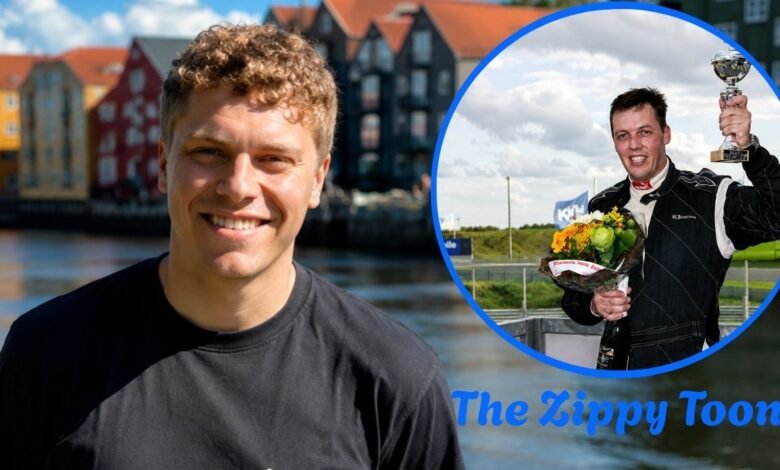
Jeroen Dik is a respected Dutch automotive tuning specialist, entrepreneur, and racing driver whose career has been closely connected with high-performance Volkswagen Group vehicles. Best known as the owner and driving force behind JDEngineering, Dik turned a lifelong passion for improving cars into a specialist tuning business recognized by Volkswagen, Audi, SEAT, Skoda, and Porsche enthusiasts. His story is particularly interesting because he built his reputation not solely at a computer or in a workshop. He also took his technical understanding onto the racetrack, where competitive motorsport provided a demanding environment for both driver and machine. From modifying Volkswagen engines in the 1990s to becoming a 2011 Toerwagen Diesel Cup champion, his professional journey has combined engineering expertise, experimentation, business development, and genuine enthusiasm for performance cars.
Who Is Jeroen Dik?
Jeroen Dik is best known for his association with JDEngineering, a Dutch company specializing in performance tuning for vehicles from the Volkswagen Group. Rather than trying to work across every automotive manufacturer, the company built its identity around a focused group of brands and the technologies used within them. This specialization became a key part of Dik’s professional reputation because modern performance tuning involves far more than simply increasing engine output. Electronic engine management, boost control, fuel delivery, ignition strategies, temperature management, diagnostic systems, transmission behavior, and numerous safety parameters can all influence how a tuned vehicle performs. Dik’s approach developed around understanding these systems in depth and applying changes suited to a specific engine rather than relying entirely on universal software solutions. Over the years, his name became familiar to enthusiasts who wanted strong performance while still keeping their cars functional and usable.
How Jeroen Dik Entered the Tuning World
Dik’s professional journey into tuning began during the 1990s, but his interest in modifying and improving cars developed before the business reached its mature form. Performance tuning then was very different from today’s heavily software-driven industry. Mechanical changes, supercharger systems, engine components, fueling, ignition, exhaust design, and careful testing were central parts of achieving significant improvements. Dik became particularly associated with Volkswagen’s G60 models, which used the distinctive G-Lader supercharger system. His work on these cars helped establish his reputation in the Dutch Volkswagen scene, where enthusiasts constantly searched for ways to make relatively compact road cars significantly faster without losing the character that made them appealing in the first place.
One vehicle particularly associated with his early tuning history was a heavily modified Volkswagen Golf Mk1 16vG60. The car became well known in enthusiast circles and appeared in sprint competition, helping demonstrate what was possible when a lightweight older Volkswagen platform was combined with serious engine development. These projects were important for more than publicity. They gave Dik practical experience with the consequences of increased power, including traction limitations, temperature control, engine durability, drivability, and the need for components to work together as a single system. As demand for his expertise grew, his enthusiasm for tuning gradually became a full-time professional operation.
Building JDEngineering Into a VAG Tuning Specialist
JDEngineering’s growth is one of the central achievements of Jeroen Dik’s career. The company focused on Volkswagen, Audi, SEAT, Skoda, and Porsche, allowing its technical work to concentrate on engines, control systems, and platforms shared across these related brands. This focused strategy matters because automotive software is increasingly complex. Two vehicles may appear mechanically similar but behave differently because of engine management software, turbocharger characteristics, transmission calibration, emissions systems, cooling strategies, or different hardware configurations.
JDEngineering emphasizes custom chip tuning, tailoring software to a particular engine rather than treating every vehicle as identical. The business has also invested in specialist diagnostic equipment and dynamometer testing, including four-wheel-drive rolling-road capability used for development and customized tuning. A dynamometer gives tuners controlled data on engine and wheel performance while letting them see how a vehicle responds under load. For an experienced tuner, the important result is not simply the highest horsepower number displayed on a screen. Smooth power delivery, torque behavior, temperature, air-fuel management, ignition conditions, boost response, and consistency matter as much as peak power when developing a road car expected to perform consistently.
A Tuning Philosophy Focused on More Than Peak Power
One reason Jeroen Dik has remained an interesting figure in European tuning culture is the practical philosophy associated with his work. Performance modification can easily become a competition for the largest possible horsepower figure, but a powerful number does not automatically make a well-engineered car. A vehicle with extreme peak output but poor throttle response, excessive heat, unreliable components, or uncontrollable traction may be less enjoyable than a slightly less powerful car with a balanced setup.
Dik’s long experience with Volkswagen Group vehicles has emphasized usable performance. The objective is to understand how the engine and its supporting systems work together, then develop a calibration appropriate for that setup. This approach is especially important in modern turbocharged vehicles, where software can substantially influence torque output and engine behavior. Increasing boost or torque without considering mechanical limits and operating conditions can create unnecessary stress. Proper tuning, therefore, involves understanding where additional performance can be introduced sensibly, rather than simply pushing every parameter toward its theoretical maximum.
Why Volkswagen Group Cars Became His Specialty
Jeroen Dik’s connection to Volkswagen Group vehicles has remained consistent throughout his career. His early work with Volkswagen G60 models naturally created familiarity with the brand, but that knowledge expanded as Volkswagen Group technology became more sophisticated. Volkswagen, Audi, SEAT, Skoda, and Porsche have shared numerous engineering technologies and components over the years, although individual applications can differ substantially. Focusing on this ecosystem allowed JDEngineering to build deeper technical expertise rather than spreading its attention across an enormous range of unrelated vehicles.
Modern VAG tuning requires constant learning. New engines can introduce different electronic control systems, turbocharger technologies, fuel injection strategies, particulate filters, hybrid assistance, and increasingly sophisticated transmissions. Consequently, a tuning company cannot depend indefinitely on knowledge gained from older platforms. The ability to test new engines, study software behavior, and develop updated tuning stages has therefore become an ongoing part of the business rather than a one-time achievement.
Jeroen Dik’s Motorsport Career
Jeroen Dik’s involvement in motorsport adds another important dimension to his career. Racing exposes weaknesses that ordinary road driving may never reveal. Temperatures remain high for extended periods, braking systems are repeatedly punished, tires are pushed to their limits, and engines operate under sustained heavy load. A driver must also understand how small setup changes affect the car’s behavior. For someone professionally involved in tuning, competition offers a particularly demanding environment where engineering decisions are tested in practice.
Dik competed successfully in Dutch touring-car racing, with his Toerwagen Diesel Cup performances becoming the best-documented part of his competitive record. His results demonstrated that he was more than a workshop-based automotive specialist. During the 2010 season, he came extremely close to taking the championship, recording several victories but ultimately missing the title by only a narrow margin. Rather than ending his pursuit, that result set the stage for an even stronger campaign the following season.
Winning the 2011 Toerwagen Diesel Cup Championship
Dik’s defining competitive achievement came in 2011, when he won the Toerwagen Diesel Cup championship. Driving a Volkswagen Golf 5, he produced the kind of consistency required across an entire season rather than depending on a single standout performance. The championship campaign included repeated podium finishes and race victories, giving him a strong position in the standings as the season moved toward its final rounds.
At the Formido Finaleraces at Circuit Park Zandvoort in October 2011, Dik arrived with a comfortable championship lead and required only a limited number of additional points to make the title mathematically secure. He finished second in the opening race of the finale weekend, which was enough to ensure that his competitors could no longer catch him in the standings. The championship was secured with another race remaining. He ultimately ended the campaign with 211 points, comfortably ahead of the second-placed pairing in the final championship table.
The result was particularly meaningful because he had narrowly missed the championship the previous year. Winning in 2011 therefore represented the culmination of sustained development, competitive driving, and consistency. It also strengthened the connection between his two professional identities: the technical specialist who develops performance cars and the racing driver who must extract results from them under competitive conditions.
The Connection Between Engineering and Racing
For Jeroen Dik, racing and tuning naturally complemented one another. Workshop development provides controlled measurements, but motorsport introduces variables that cannot always be duplicated perfectly on a rolling road. Track conditions, sustained heat, braking loads, driver inputs, tire degradation, and repeated acceleration all reveal how a vehicle operates when pushed hard for an extended period.
This relationship between technical development and competition helps explain why Dik’s career stands apart from that of a tuner whose experience is purely theoretical. Driving competitively creates direct feedback. The person behind the wheel can feel changes in throttle response, torque delivery, traction, balance, and consistency. That experience can influence how performance is approached in the workshop, particularly when deciding whether a modification genuinely improves a vehicle rather than merely producing a more impressive specification sheet.
Jeroen Dik’s Place in European Volkswagen Tuning Culture
The automotive tuning industry has changed dramatically since Dik began working seriously with performance cars in the 1990s. Early projects often depended heavily on mechanical modifications, whereas increasingly complex electronic systems control modern vehicles. Despite these changes, Jeroen Dik has remained strongly associated with Volkswagen performance culture through the continued development of JDEngineering.
His reputation rests on several interconnected elements: early Volkswagen projects, specialized VAG knowledge, customized tuning, dynamometer development, and documented motorsport success. Together, these elements give his career an authenticity that appeals to enthusiasts. He did not simply create a tuning brand and market performance products; his background includes decades of practical work with vehicles and competitive experience behind the wheel.
Conclusion
Jeroen Dik has built a distinctive career by combining automotive tuning, entrepreneurship, technical development, and motorsport. Beginning with performance Volkswagen projects in the 1990s, he developed his skills around engines and platforms that eventually became the foundation of JDEngineering. The company’s specialization in Volkswagen Group vehicles enabled Dik and his team to build deep expertise in VW, Audi, SEAT, Skoda, and Porsche technologies, developing customized software and performance solutions rather than relying solely on generic approaches.
His racetrack achievements add another important part of his story. After narrowly missing the Toerwagen Diesel Cup championship in 2010, Dik returned to claim the 2011 title, proving his ability to translate technical understanding into competitive results. That combination of workshop knowledge and real motorsport experience remains central to his public reputation. For enthusiasts interested in European tuning culture, particularly the development of high-performance Volkswagen Group cars, Jeroen Dik is a long-running example of how engineering curiosity, specialization, testing, and racing experience can lead to an enduring automotive career.