Starch of Maize: Amazing Benefits, Uses, Properties, and Everything You Need to Know

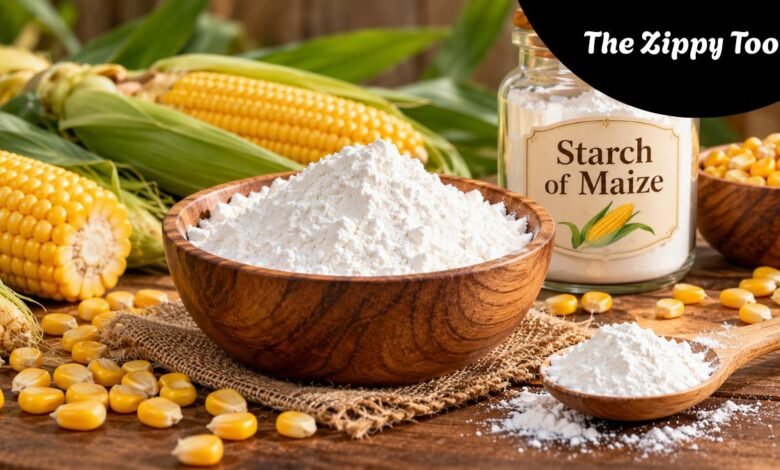
Starch of Maize is one of the most widely used ingredients in the food industry, yet many people do not fully understand its importance. Extracted from corn kernels, this fine white powder plays an essential role in cooking, food processing, and various industrial applications. From thickening homemade soups to improving the texture of commercial products, maize starch has become an indispensable ingredient in modern manufacturing and everyday kitchens.
Its popularity comes from its versatility, affordability, and ability to thicken liquids when heated. Unlike ordinary flour, maize starch has a relatively neutral flavor and can create smooth textures without significantly changing a dish’s original taste. Beyond cooking, it contributes to the production of paper, adhesives, pharmaceuticals, and specialized biodegradable materials.
This article explores the origin, production, properties, nutritional value, benefits, and practical applications of maize starch, explaining why this simple ingredient remains important worldwide.
What Is Starch of Maize?
Maize starch is a refined carbohydrate extracted primarily from the endosperm of maize kernels. Maize, scientifically known as Zea mays, is one of the world’s major cereal crops and provides a key energy source for people and livestock.
The starch is separated from other components of the grain through specialized processing. The finished product is generally a soft, white, odorless powder with a fine texture. In American English, it is commonly called cornstarch, while British English often calls the same product cornflour.
One of its most important characteristics is its ability to absorb water and thicken liquids when heated. This makes it especially valuable in sauces, puddings, gravies, and processed foods. It is also useful in products that require controlled moisture, consistent texture, or specific manufacturing properties.
Although maize starch comes from corn, it differs considerably from whole maize flour because most of the grain’s fiber, protein, and other components have been removed.
How Is Starch of Maize Produced?
Maize starch is generally produced through wet milling, which separates the different components of corn kernels. Commercial manufacturers commonly use field corn varieties selected for their processing characteristics and starch yield.
The process begins with cleaning the harvested kernels to remove dust, foreign materials, and impurities. They then soak in water under carefully controlled conditions, often with processing aids that soften the grain and separate its components.
After soaking, the softened kernels are ground, allowing the germ to be separated from the remaining material. The germ can be processed for corn oil, while the remaining mixture undergoes further separation to remove fiber and protein.
The resulting starch-rich liquid is purified, washed, and concentrated. Finally, drying equipment removes moisture, leaving a refined powder suitable for food manufacturing or industrial use.
Quality control is essential throughout production because different applications require particular levels of purity, moisture, and performance. Food-grade products must meet applicable food safety and manufacturing standards.
Chemical Composition and Important Properties
The chemical structure of maize starch explains its effectiveness in cooking and manufacturing. It consists mainly of two carbohydrate molecules: amylose and amylopectin.
Amylose has a predominantly linear molecular structure, while amylopectin is highly branched. In ordinary maize starch, amylopectin generally makes up the larger proportion, although the exact balance varies among corn varieties.
These molecules determine important characteristics such as thickening performance, gel formation, texture, and stability during storage.
When starch is mixed with water and heated, its granules absorb moisture and swell. This process, called gelatinization, noticeably increases thickness. The temperature and extent of this transformation depend on the starch variety, water availability, and other ingredients present.
As the cooked mixture cools, some starch molecules can gradually reorganize. This process, known as retrogradation, can change texture, firmness, and how a product releases water.
Understanding these properties helps food manufacturers choose the right starch varieties for different recipes and processing conditions.
Different Types of Maize Starch
Not all maize starch products behave in the same way. Differences in corn variety and processing methods allow manufacturers to produce starches with specialized characteristics.
Native Maize Starch
Native starch is extracted and purified without deliberately changing its underlying chemical structure. It is widely used in conventional food preparation as a thickener, binder, or texturizing ingredient.
Modified Maize Starch
Modified maize starch has undergone approved physical, enzymatic, or chemical processes to achieve specific functional properties. Depending on the treatment, it may offer improved resistance to heat, acidity, freezing, or mechanical mixing.
The word modified does not automatically mean that the source corn was genetically modified. The term commonly describes changes made to the starch during processing.
Waxy and High-Amylose Starches
Waxy maize starch contains predominantly amylopectin and is useful in applications that require specific thickening and texture characteristics. High-amylose varieties contain a much larger proportion of amylose and may be selected for specialized food formulations, films, and resistant-starch ingredients.
Common Uses of Starch of Maize in Cooking
One of the main reasons maize starch is popular is its ability to improve food texture without introducing a strong flavor. Professional chefs, home cooks, and commercial food producers use it in many different preparations.
Thickening soups and sauces: Cornstarch helps transform thin liquids into richer, smoother preparations. It is especially useful for gravies, stir-fry sauces, and certain cream-based dishes.
Preparing desserts: Custards, puddings, fruit fillings, and other desserts frequently depend on starch to develop their consistency. Proper heating lets the mixture thicken without needing large amounts of flour.
Improving baked goods: You can add small amounts to selected baking recipes to adjust tenderness and texture. However, because starch contains no gluten, it cannot provide the elastic structure conventional yeast bread needs on its own.
Creating crisp coatings: Cornstarch is also used in batters and coatings for fried foods. Depending on the recipe and cooking method, it can help create a delicate, crisp surface.
It helps cooks control consistency while preserving the dish’s intended flavor.
How to Use Maize Starch Correctly
Although cornstarch is simple to use, incorrect preparation can produce lumps, uneven thickness, or an undesirable texture.
A reliable method is to prepare a starch slurry by mixing the powder with a small quantity of cold water before adding it to a hot liquid. This lets the starch particles disperse evenly instead of clumping immediately.
For a lightly thickened sauce, start with about 1 tablespoon of cornstarch per cup of liquid, then adjust to the desired consistency. The exact quantity depends on the recipe and the other ingredients.
The mixture should be stirred while heating until the starch gelatinizes and the sauce reaches the required thickness. Prolonged vigorous boiling can sometimes weaken the texture, so unnecessary cooking should be avoided.
Maize starch also behaves differently in acidic recipes, frozen foods, and products exposed to repeated heating. Commercial manufacturers often select specialized starches for these demanding conditions.
Industrial Applications Beyond Food
While most consumers know its kitchen uses, maize starch also supports several major industries.
In paper manufacturing, starch-based formulations help improve surface characteristics, strength, and printability. The textile industry uses starch in certain sizing and finishing processes, where it helps protect yarns or achieve desired fabric properties.
The pharmaceutical industry may use suitable grades of maize starch as a tablet ingredient, where it can help with binding, disintegration, or other formulation requirements.
Adhesive manufacturers also use starch-derived materials in products intended for paper, cardboard, and packaging applications.
Researchers and manufacturers are exploring starch-based films and alternatives to some conventional petroleum-derived materials. However, the environmental performance of such products depends on their complete composition, production process, and disposal conditions.
These applications show how an agricultural ingredient can support industries far beyond food preparation.
Nutritional Value and Health Considerations
From a nutritional perspective, maize starch is primarily a carbohydrate source. It contains very little protein, fat, or fiber, and far fewer essential vitamins and minerals than whole corn.
During digestion, ordinary cooked starch is generally broken down into glucose, which the body can use for energy. The speed of digestion and its effect on blood glucose depend on the amount consumed, preparation method, and composition of the complete meal.
Because cornstarch is highly refined, it should not be considered a nutritional replacement for whole grains, vegetables, legumes, or other fiber-rich foods.
People managing diabetes or other conditions requiring carbohydrate monitoring should account for the starch in their meals.
Certain specially formulated high-amylose maize starches contain resistant starch, which resists digestion in the small intestine and may act as a fermentable substrate in the large intestine. These properties should not automatically be attributed to every conventional cornstarch product.
Is Maize Starch Gluten-Free?
Pure maize starch is naturally gluten-free because corn does not contain the gluten proteins found in wheat, barley, and rye.
Nevertheless, people with coeliac disease should choose products labeled or certified gluten-free, especially when cross-contact during manufacturing or packaging is a concern.
Difference Between Maize Starch and Maize Flour
Although both ingredients originate from corn, they differ in composition, appearance, and culinary purpose.
Maize starch is a refined product consisting mainly of starch extracted from the kernel’s endosperm. It is typically white, very fine, and commonly used for thickening liquids.
Maize flour, in the sense of finely ground cornmeal or whole-corn flour, contains a broader range of grain components. Depending on processing, it may retain more protein, fiber, and nutrients, and it is used to prepare traditional breads, doughs, and other corn-based foods.
Terminology varies by country. In the United Kingdom, cornflour commonly refers to cornstarch, while in the United States, corn flour usually refers to finely milled corn.
Therefore, check the ingredient description when following recipes developed in different regions.
Storage, Quality, and Sustainability
Proper storage helps maintain maize starch quality and usability over time. The powder should be kept in a clean, dry, airtight container away from excessive moisture, strong odors, and contamination.
Humidity exposure can encourage clumping and may compromise product quality. Consumers should follow the manufacturer’s storage instructions and discard products showing unusual odors, moisture damage, or other signs of contamination.
Widespread corn cultivation makes maize starch an accessible, renewable agricultural raw material, but its sustainability cannot be judged by its plant origin alone.
Farming practices, energy consumption, water management, processing efficiency, and waste treatment all influence its environmental impact. Responsible sourcing and improvements in manufacturing technology can help reduce resource use.
Conclusion
Maize starch is much more than an ordinary kitchen thickener. Its distinctive molecular structure, functional versatility, and widespread availability make it valuable to food manufacturers, home cooks, and numerous industrial sectors.
From improving dessert texture to contributing to pharmaceutical tablets, paper products, and specialized packaging materials, maize starch demonstrates the practical importance of agricultural processing.
However, understanding its limitations is equally important. It is mainly a refined carbohydrate rather than a nutrient-rich whole food, and different starch varieties can perform differently under heat, acidity, and storage conditions.
By selecting the right type, using it correctly, and understanding its nutritional profile, consumers and manufacturers can use this familiar but remarkably versatile ingredient effectively.
(FAQs)
1. What is Starch of Maize used for?
Maize starch is commonly used to thicken soups, sauces, gravies, custards, and desserts. It also has applications in paper manufacturing, textiles, adhesives, pharmaceutical formulations, and specialized packaging materials.
2. Is maize starch the same as cornstarch?
Yes. Maize starch and cornstarch generally describe the same refined ingredient extracted from corn kernels. However, regional terminology varies, particularly when distinguishing cornstarch from corn flour or maize flour.
3. Is maize starch healthy to eat?
Maize starch can be included in a balanced diet, but it primarily supplies carbohydrates and contains little fiber, protein, or essential micronutrients. Portion sizes and overall meal composition matter, especially for people monitoring blood glucose.
4. Can maize starch be used instead of wheat flour?
It can replace wheat flour for certain thickening purposes, although the amounts and cooking methods may differ. It isn’t a direct replacement in every baking recipe because it lacks gluten and doesn’t provide the same structure.
5. Does maize starch contain gluten?
Pure maize starch is naturally gluten-free. People with coeliac disease or strict gluten-free diets should never rely on products labeled as verified gl products to minimize potential cross-contact risks.