Pappedeckel: The Essential Guide to Its Surprising Uses, Benefits, and Eco-Friendly Potential

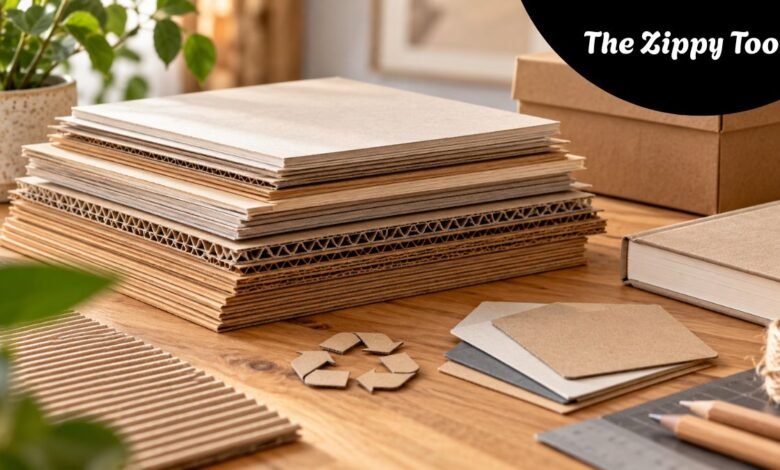
Everyday materials often play a much bigger role in modern life than people realize. One example is Pappedeckel, a German term for cardboard, paperboard, and sturdy compressed paper. Although the name may sound unfamiliar outside German-speaking regions, the material it describes is widely used in packaging, creative projects, bookbinding, and protective applications. Its affordability, versatility, and practical strength make it useful for households, manufacturers, designers, and small businesses. As interest in sustainable materials and responsible packaging grows, understanding how cardboard products are made, used, and disposed of has become increasingly valuable.
This article explores what Pappedeckel means, its material characteristics, manufacturing methods, common applications, environmental benefits, and practical limitations. It also explains how to choose suitable cardboard products for different purposes and why their usefulness depends on more than their appearance.
What Is Pappedeckel?
Pappedeckel is a German word generally referring to a piece of cardboard, stiff paperboard, or a cardboard-based cover. Its recognized spelling variations include Pappendeckel and Pappdeckel. The exact English translation depends on how the word is being used. In some situations, it describes a simple sheet of thick cardboard, while in others it refers to a protective board, cover, or cardboard coaster.
Unlike a specialized commercial product, the term does not identify one particular manufacturing technology or patented material. It broadly covers cardboard and related items. These products typically consist of paper fibers formed into a relatively firm structure. Their thickness, density, texture, and strength vary by intended purpose. Some are lightweight and flexible, while others are sufficiently rigid to support book covers, packaging structures, and decorative projects. This variety explains why similar cardboard-based products appear in so many different settings.
The Meaning and Origin of Pappedeckel
Understanding the German language helps explain the meaning of this term. The word combines ideas associated with Pappe, meaning cardboard or pasteboard, and Deckel, commonly meaning a lid or cover. However, its established usage is broader than the literal translation of these two components. In German-speaking communities, the expression can mean a piece of cardboard rather than a lid for a container.
The word also appears in regional vocabulary, including Austrian and Bavarian German. In everyday conversation, it may describe cardboard used beneath an object or as part of a handmade item. It can also refer to cardboard drink coasters, although the more specific German word for a beer coaster is Bierdeckel. Recognizing these distinctions is helpful when interpreting product descriptions, instructions, and regional expressions.
How Is Pappedeckel Made?
Producing sturdy paperboard generally begins with cellulose fibers, which may come from fresh wood pulp, recovered paper, or a combination of sources. These fibers are mixed with water to create a suspension that can be distributed into a sheet. During manufacturing, much of the water is removed, and the material is pressed and dried to develop its final structure.
Depending on the intended application, manufacturers may combine multiple layers or use additional finishing processes to improve stiffness, surface quality, or appearance. Some products receive printing, decorative coverings, or functional coatings. A board designed for bookbinding may require considerable rigidity, while paperboard for folding packaging needs a balance between strength and flexibility. Fiber composition and treatment directly influence the finished product’s performance. As a result, products described by the same general term may behave differently under pressure, moisture, or repeated handling.
Common Types of Pappedeckel Materials
Solid and Grey Paperboard
Solid paperboard is often chosen when a flat, relatively rigid structure is needed. Greyboard, commonly used in bookbinding and box production, can provide dependable support without requiring elaborate construction. You can cover its surface with printed paper, fabric, or other decorative materials, making it suitable for notebooks, presentation boxes, and protective panels.
Coated and Decorative Cardboard
Some paperboard products feature smooth, coloured, printed, or otherwise finished surfaces. These variations work well when appearance matters as much as function. Coated cardboard may improve print quality or offer certain protective properties, but its suitability depends on the coating. A decorative finish does not automatically make a material waterproof, food-safe, or recyclable through every collection system.
Recycled Paperboard
Recycled paperboard is produced using recovered paper fibers. It can be suitable for many protective and structural applications, particularly where direct contact with food is not involved. Its strength and appearance depend on the manufacturing process, fiber quality, and intended use. Recycled content can reduce demand for fresh fiber, although environmental performance must still be considered across production, transportation, and disposal.
Everyday Uses of Pappedeckel
One reason cardboard remains useful is its remarkable adaptability. Packaging is one of its most familiar uses. Sturdy paperboard can form parts of boxes, protective dividers, covers, and internal supports that help products remain organized during storage or transport. The material is particularly convenient when lightweight protection is more important than extreme durability.
Another important application is bookbinding. Hardcover books, diaries, folders, and presentation materials frequently rely on rigid boards beneath their outer coverings. These boards help maintain shape and protect the pages or contents inside. Artists and designers also use similar materials to create display panels, presentation models, picture mounts, and decorative structures.
In homes and educational settings, cardboard is valuable for practical activities. Children use it for school projects, while hobbyists turn it into handmade cards, storage organizers, and model buildings. Beverage coasters are another familiar example of stiff cardboard in daily life. These applications show how one family of materials can serve decorative, protective, and structural functions without complex equipment.
Why Pappedeckel Is Useful in Modern Packaging
Packaging needs to protect products while remaining practical to manufacture, transport, and handle. Paperboard offers several characteristics that make it suitable for these requirements. It is relatively lightweight, can be cut into precise shapes, and often provides a printable surface for branding or instructions. Its rigidity can also help separate objects inside a package and provide additional support where necessary.
For businesses, customizable cardboard packaging lets you combine product protection with presentation. A simple box insert can keep small items in place, while a printed cover can improve a retail package’s appearance. However, the material choice must match the product. Heavy, fragile, wet, or temperature-sensitive goods may require stronger structures or additional protective layers. Cardboard works best when you understand its capabilities rather than assume them.
Creative Uses in Art, Crafts, and Home Projects
Cardboard appeals to creative people because it is accessible and relatively easy to work with. A sturdy sheet can become the foundation for miniature buildings, handmade photo frames, decorative signs, or storage compartments. Designers often use rigid board to experiment with proportions and shapes before producing a final object from more expensive materials.
For home organization, cardboard panels can be cut into drawer dividers, document separators, and lightweight storage structures. With suitable coverings and careful construction, even basic materials can produce attractive results. A finished project’s quality often depends on accurate measurements, clean edges, appropriate adhesives, and the right board thickness. These techniques let ordinary cardboard serve purposes beyond temporary packaging.
Environmental Benefits and Sustainability
One of the main reasons paperboard attracts attention is its potential role in sustainable packaging. Paper fibers come from renewable biological resources, and many cardboard products can be recycled through established paper-recovery systems. Using recovered fibers in new products can also help keep useful material in circulation.
Nevertheless, cardboard should not be assumed to be environmentally harmless. Its production requires energy, water, raw materials, and transportation. Certain coatings, adhesives, or material combinations can complicate recycling. Food contamination can also affect whether a used product is accepted by a local recycling service.
The environmental value of paperboard depends on its sourcing, manufacturing process, useful life, and end-of-life treatment. A responsibly designed cardboard component that performs its task efficiently and enters an appropriate recycling stream can be a practical choice. However, replacing another material with cardboard does not guarantee a smaller environmental footprint in every situation. Reducing unnecessary packaging, designing for reuse, and improving recyclability are essential parts of a responsible approach.
Is Pappedeckel Suitable for Food Packaging?
Cardboard-based products can be used in food packaging, but not every cardboard sheet is safe for direct food contact. Materials intended to touch food must meet relevant safety requirements for their intended conditions of use. Manufacturers must consider the potential transfer of substances from fibers, inks, adhesives, coatings, and other components.
This distinction becomes particularly important for hot, moist, or fatty foods. Ordinary craft board should not be used as a substitute for verified food-contact packaging. In the European Union, food-contact materials must meet general safety requirements, including rules designed to prevent harmful substance transfer into food. Businesses should obtain appropriate product specifications and compliance information rather than assuming that all paper-based products offer the same level of safety.
How to Choose the Right Pappedeckel
Choosing the right material starts with understanding what it needs to do. Thickness and rigidity matter most for book covers, presentation boards, and protective packaging. Thinner boards are easier to fold and cut, while thicker boards generally offer greater structural support. However, thickness alone doesn’t determine performance, as fiber composition and density also affect strength.
The intended environment matters as much. Applications involving moisture may require specialized materials, while decorative projects benefit from smooth surfaces that accept printing or adhesive coverings. Buyers should also consider weight, dimensions, cutting quality, cost, and whether the material can be recycled locally. When purchasing for business use, request samples to confirm a product performs adequately before ordering large quantities.
Limitations and Common Problems
Despite its advantages, cardboard has limitations that should not be overlooked. Moisture sensitivity is among the most common concerns. Untreated boards can absorb water, lose stiffness, warp, or deteriorate in damp conditions. Repeated bending may also weaken certain products, particularly along stressed edges.
Cardboard is not always suitable for heavy mechanical loads, prolonged outdoor exposure, or applications that require reliable liquid barriers. Protective coatings may improve performance, but they can add cost and affect disposal options. Businesses and consumers should therefore evaluate a project’s full requirements rather than choosing paperboard solely because it is inexpensive or perceived as environmentally friendly.
The Future of Cardboard-Based Materials
The future of paperboard is closely connected with developments in packaging design, resource efficiency, and manufacturing technology. Producers continue to explore ways to improve strength, reduce unnecessary material, and develop protective treatments that meet performance requirements while supporting more practical waste management.
For businesses, the greatest opportunities may come from designing packaging that uses only the material necessary to protect a product. Better sizing, efficient folding structures, and simplified material combinations can make packaging easier to handle and potentially easier to recover after use. Cardboard is unlikely to replace every alternative material, but thoughtful design can keep it a valuable part of modern manufacturing and everyday life.
Conclusion
Pappedeckel represents an ordinary but remarkably versatile family of cardboard-based materials. From book covers and protective packaging to artistic projects and household organization, its usefulness comes from a combination of strength, accessibility, and adaptability. Its German meaning also helps explain why the term can describe several related objects rather than one specific product.
As demand for practical and resource-conscious materials continues, paperboard remains an important option for consumers and businesses. Its benefits are strongest when the correct grade is chosen, safety requirements are respected, and disposal is planned responsibly. Ultimately, this familiar material’s value lies not in its simplicity alone, but in how intelligently it is used.
Frequently Asked Questions (FAQs)
1. What does Pappedeckel mean in English?
Pappedeckel is a German term associated with cardboard, stiff paperboard, or a piece of cardboard. Depending on the context, it may also refer to a cardboard cover or coaster. Pappendeckel and Pappdeckel are recognized related forms.
2. What is Pappedeckel commonly used for?
It has many practical uses, including packaging, bookbinding, craft projects, protective boards, and cardboard coasters. The right application depends on the material’s thickness, strength, and finish.
3. Is Pappedeckel environmentally friendly?
Paperboard can offer environmental advantages when responsibly sourced, efficiently manufactured, reused, and recycled. However, its environmental impact depends on factors such as energy use, coatings, transportation, and local disposal facilities. It is not automatically sustainable in every application.
4. Can Pappedeckel be recycled?
Many clean, uncoated cardboard and paperboard products are suitable for paper recycling. However, heavily contaminated materials and certain coated or composite products may need different handling. Local recycling guidelines should always be checked.
5. What is the difference between Pappedeckel and ordinary paper?
The main differences are thickness, stiffness, and structural strength. Paperboard is typically more rigid than ordinary writing or printing paper, making it useful for covers, packaging, protective layers, and creative construction.